
Unbiased headlines. Facts, not spin.
Every story is an unbiased news briefing written from 110+ sources across the spectrum — sources linked so you can verify it yourself.
 defense
Major Story (7/10)
July 31, 2026 at 07:22 PM
defense
Major Story (7/10)
July 31, 2026 at 07:22 PM
China Set to Ship Up to 400 Missile Launchers to Iran as Hamas Agrees to Disarm in Gaza
Two fronts, two very different directions
Gaza got a piece of good news this week. Iran's air defenses did not.
President Donald Trump announced that the Board of Peace, the body overseeing the Gaza ceasefire between Israel and Hamas, brokered a deal in which Hamas has committed to disarming. The board said Hamas has "officially committed to an actionable plan for relinquishing all its weapons, which will be followed by Israeli withdrawal." Full Israeli disarmament of Hamas was one of Israel's central demands going into any long-term ceasefire arrangement.
No timeline for the disarmament process or the Israeli withdrawal that follows has been detailed publicly yet. Whether Hamas actually surrenders weapons on schedule, and whether Israel treats the plan as sufficient before pulling back troops, remains to be seen.
China's shipment to Tehran
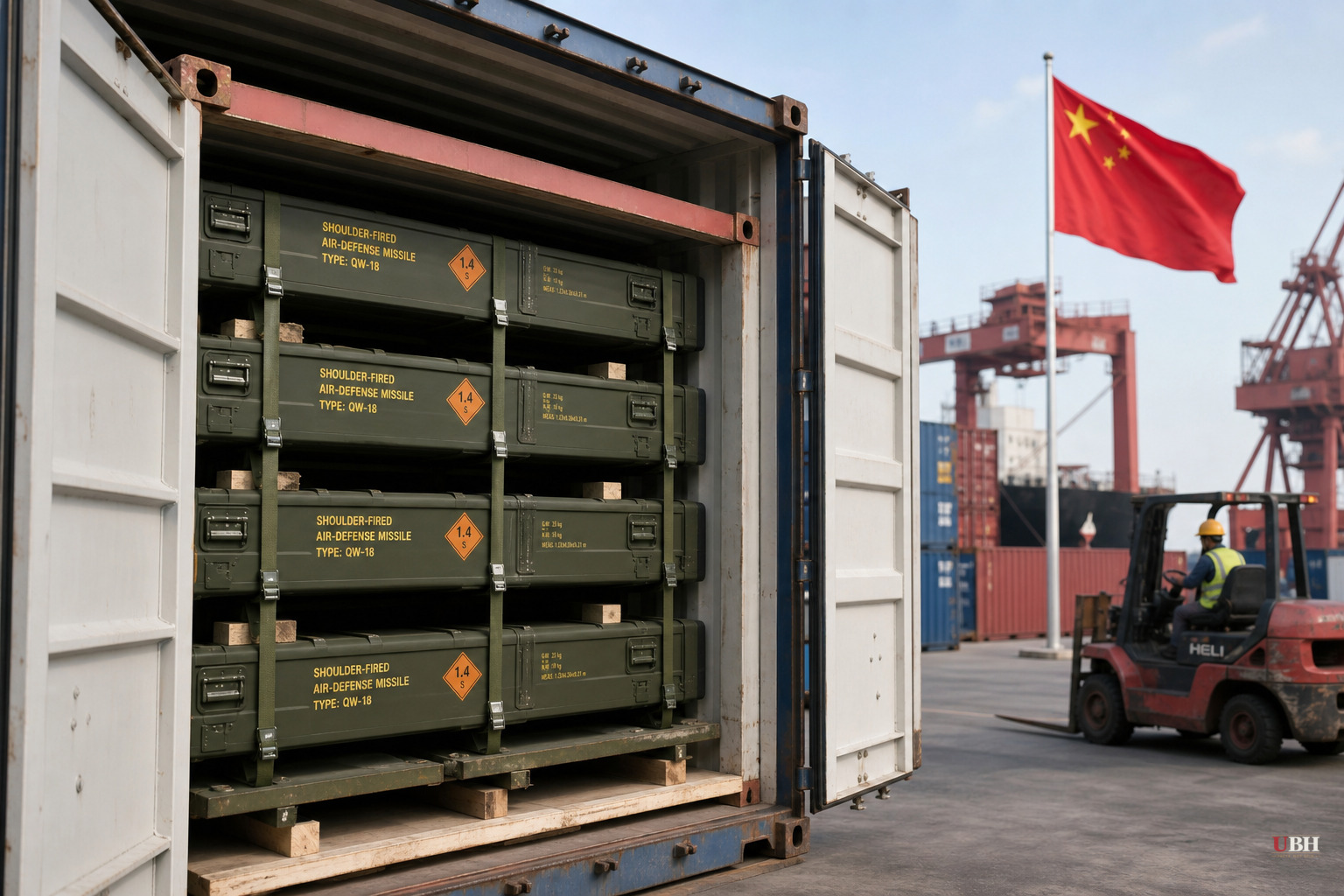
While that news broke, Reuters reported that Iran is expected to receive within weeks a first shipment of up to 400 Chinese-made shoulder-fired air-defense missile launchers. Three sources familiar with the deal told Reuters the contract, valued between $60 million and $70 million, covers 300 to 400 man-portable air defense systems, including Chinese-made QW-12 and FN-16 missiles.
Reuters described this as one of Tehran's largest known efforts to rebuild its short-range air defenses since its war with the United States and Israel began. That war exposed serious gaps in Iran's ability to protect military sites and strategic infrastructure, according to the sources cited by Reuters.
MANPADS are short-range, man-portable weapons designed to shoot down low-flying aircraft, helicopters, and drones. They are not a substitute for the longer-range, more sophisticated air-defense networks that failed to stop U.S. and Israeli strikes. But they do give Iran a cheaper, faster way to plug gaps around specific sites, and 300 to 400 launchers is a meaningful quantity for a country trying to rearm quickly.
Gulf states turn to Beijing, not Washington
Reuters also reported that Gulf Arab states are increasingly looking to China, not the United States, to use economic leverage over Iran to reopen the Strait of Hormuz and the Red Sea. Three regional sources told Reuters that Gulf states are frustrated: the war that began with U.S.-Israeli strikes on Iran has damaged Tehran, but it has also disrupted Gulf states' own energy exports and put them at greater risk from Iran and its allies threatening the Bab el-Mandeb waterway.
According to Reuters, Gulf sources say the war has exposed the limits of American power in the region, which is why they're pushing Beijing to play a bigger role. China's Foreign Minister Wang Yi has reportedly held dozens of calls and meetings with counterparts seeking a new ceasefire, and special envoy Zhai Jun has held talks in Gulf capitals as well as in Iran itself.
Gulf states relying on Washington for security guarantees for decades now shopping their problem to Beijing is a real data point about how allies in the region assess American staying power right now, whatever the reason.
The rebuilding question the Journal is asking
The Wall Street Journal's editorial board framed the strategic stakes bluntly: the outcome of the broader Iran conflict will be shaped partly by what Iran's allies do next. The Journal asked whether China will help rebuild Iran's missile arsenal even as the U.S. has degraded it, whether Russia will help revive Iran's nuclear program in exchange for Iran's help fighting Ukraine, and whether either country will hand Tehran more advanced air defenses beyond MANPADS.
Those are open questions, not settled facts. No source here confirms Russia is currently transferring nuclear assistance to Iran, and no source confirms China is providing anything beyond the shoulder-fired missile launchers reported by Reuters. But the pattern—Gulf states courting China for leverage, China simultaneously arming Iran—is the kind of contradiction that should make policymakers in Washington uneasy regardless of party.
The Hamas disarmament commitment is confirmed by the Board of Peace's own statement. The Chinese missile-launcher shipment is reported by Reuters, sourced to three people familiar with the deal, not yet independently verified through customs records or public Chinese or Iranian government confirmation. The Gulf outreach to Beijing is also based on Reuters' reporting from three regional sources, not an official Gulf state announcement.
None of that makes the reporting less credible. Reuters has a long track record on this kind of sourcing in the region. But readers should know these are sourced accounts of ongoing diplomatic and military maneuvering, not documents or on-record government statements.
The next concrete marker to watch: whether the first shipment of Chinese launchers actually arrives in Iran within the coming weeks, as Reuters' sources predicted, and whether Hamas begins visibly relinquishing weapons under the Board of Peace's plan on any announced schedule. Both are testable, near-term facts that will either confirm or undercut this week's competing headlines.
Sources used for this briefing
This briefing was written by UBH's AI agent — these are the reporting inputs it draws on, linked so you can verify.


