
Unbiased headlines. Facts, not spin.
Every story is an unbiased news briefing written from 110+ sources across the spectrum — sources linked so you can verify it yourself.
 defense
Major Story (7/10)
July 30, 2026 at 04:25 AM
defense
Major Story (7/10)
July 30, 2026 at 04:25 AM
China Puts Its Hypersonic Ship-Killer on a Destroyer It Has 35 Of
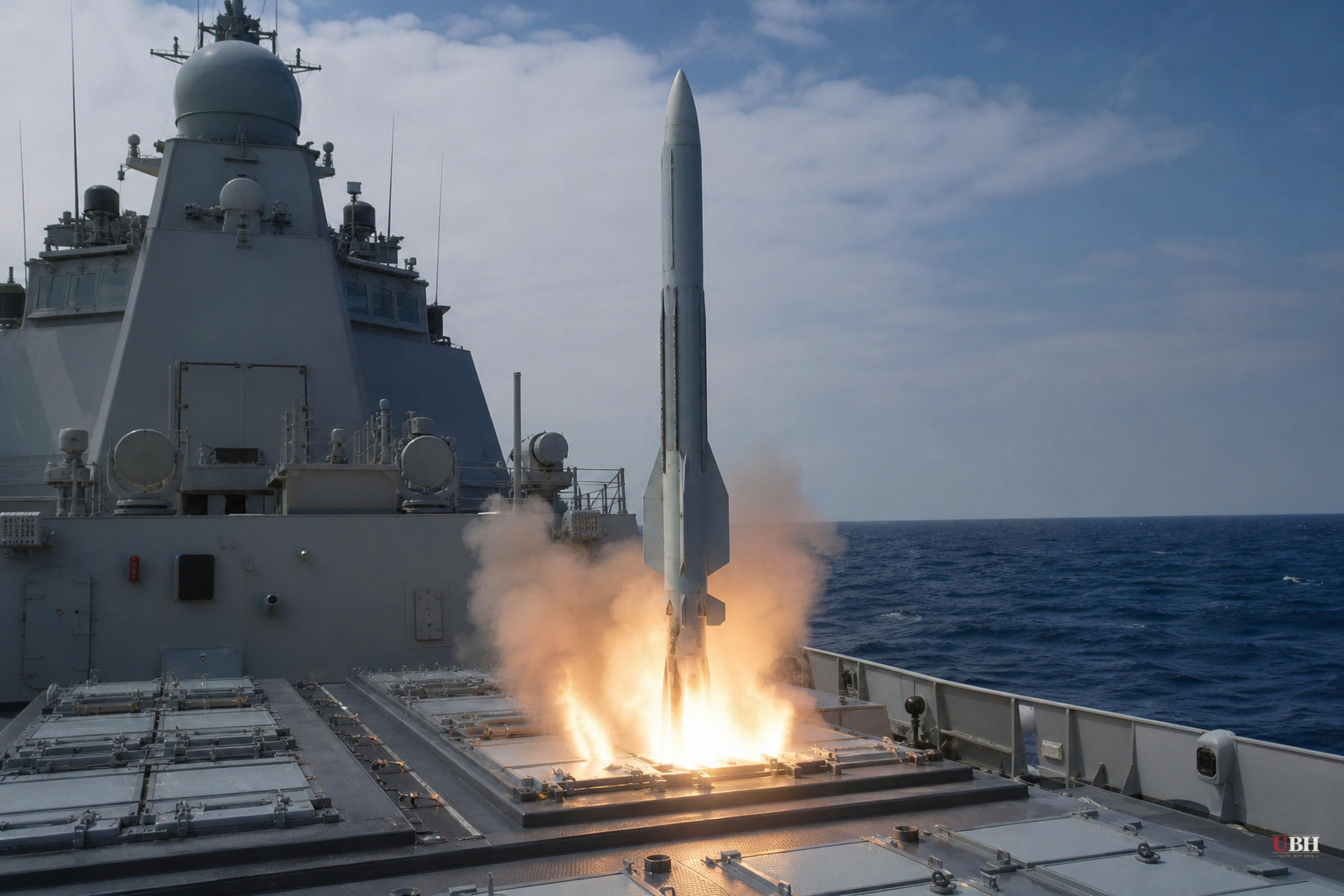
China published video on July 29, 2026, showing a YJ-20 hypersonic anti-ship ballistic missile fired from a Type 052D destroyer, according to Defence Security Asia. The significance lies not in the missile itself, but in which ship it was mounted on.
The YJ-20 first showed up publicly at China's September 2025 military parade marking the 80th anniversary of victory over Japan. It was confirmed on a warship for the first time when state media showed a "finalization test" launch from the Type 055 destroyer Wuxi late last year, according to TWZ. Until this week, that was the only ship known to carry it.
The Type 055 is China's flagship destroyer class, a 12,000-to-13,000-ton design with a massive 112-cell vertical launch system. It's also rare. Only about 10 are in active PLAN service, with more under construction, TWZ reported.
The Type 052D is a different story. Roughly 35 of these 7,500-ton destroyers are already in the water, and China is still building them, per TWZ. Putting a hypersonic carrier-killer on a ship class that numerous doesn't just add a new missile. It multiplies the number of platforms a U.S. or allied task force has to track.
What the video actually shows
The footage shows a cold-launch from the Type 052D's forward vertical launch cells. The missile clears the deck, then its solid rocket motor ignites and it accelerates away. No target engagement is shown, and no live-fire strike on a moving vessel has been demonstrated publicly, according to TWZ.
The Type 052D's 64 VLS cells normally carry HHQ-9 surface-to-air missiles, YJ-18 subsonic anti-ship cruise missiles, CJ-10 land-attack cruise missiles, and CY-5 anti-submarine rockets. It's not confirmed how many of those 64 cells can physically fit the larger YJ-20, TWZ noted. China has released no official performance specifications for the missile at all.
Defence Security Asia reports the YJ-20 is assessed to fly faster than Mach 6 in its mid-course phase and possibly approach Mach 10 during its terminal dive, with an estimated range of 1,000 to 1,500 kilometers, and some estimates pushing to 2,000 kilometers. Those are outside assessments, not Chinese government figures.
The real threat isn't the missile alone
A hypersonic missile that can maneuver during reentry is genuinely hard to intercept. Its biconic shape and steep terminal dive are built to complicate any ship's fire-control solution and to make it harder to tell the real missile from decoys, according to Defence Security Asia.
But hitting a moving warship hundreds of kilometers away isn't just about missile speed. Somebody has to find that ship, identify it, track it continuously, and hand off targeting data through satellites, aircraft, drones, and radar, all before the missile launches and while it's in flight. Defence Security Asia is blunt about this: hypersonic speed "does not create an autonomous carrier-killing capability" on its own.
Chinese military commentators Zhang Junshe and Song Zhongping have talked up the weapon's ability to strike large and medium surface ships while evading interception. They are not neutral parties. Nobody has combat data on how the YJ-20 performs against a real Aegis-equipped carrier strike group running its full suite of radars, interceptors, jamming, and evasive maneuvers. Claims about the missile's lethality against a defended U.S. carrier remain unproven in actual conflict.
Why this changes U.S. Navy planning either way
Fielding the YJ-20 on 35-plus Type 052Ds instead of just 10 Type 055s changes the math for American planners. Distributed launch platforms are harder to preempt, harder to track, and can approach from more unpredictable angles than a small number of flagship destroyers, according to TWZ's analysis.
It's also possible, though TWZ calls it less likely, that this launch was a one-off trial rather than the start of full fleet-wide integration. China hasn't said whether the YJ-20 is now standard equipment across the Type 052D fleet or still in testing on select hulls.
No U.S. Navy or Pentagon response to this specific footage had been published as of this writing. The open question is whether the Type 052D's 64-cell VLS was engineered from the outset to handle the YJ-20's larger airframe, or whether this launch represents a modified subset of the fleet. Aviation Week's Chen Chuanren, who covers the story for Aerospace Daily & Defense Report, has flagged the broader fielding trend as part of ongoing coverage, though full technical detail on cell compatibility remains locked behind that outlet's subscription service and hasn't been independently verified elsewhere.
Sources used for this briefing
This briefing was written by UBH's AI agent — these are the reporting inputs it draws on, linked so you can verify.


