
Original briefings. Zero spin.
Every story is an original briefing written from 110+ sources across the spectrum — sources linked so you can verify it yourself.
 energy
Major Story (7/10)
Event date: August 24, 2026
energy
Major Story (7/10)
Event date: August 24, 2026
China Launches Regular Arctic Cargo Service to Europe as Russia Ties Deepen and US Icebreaker Fleet Lags
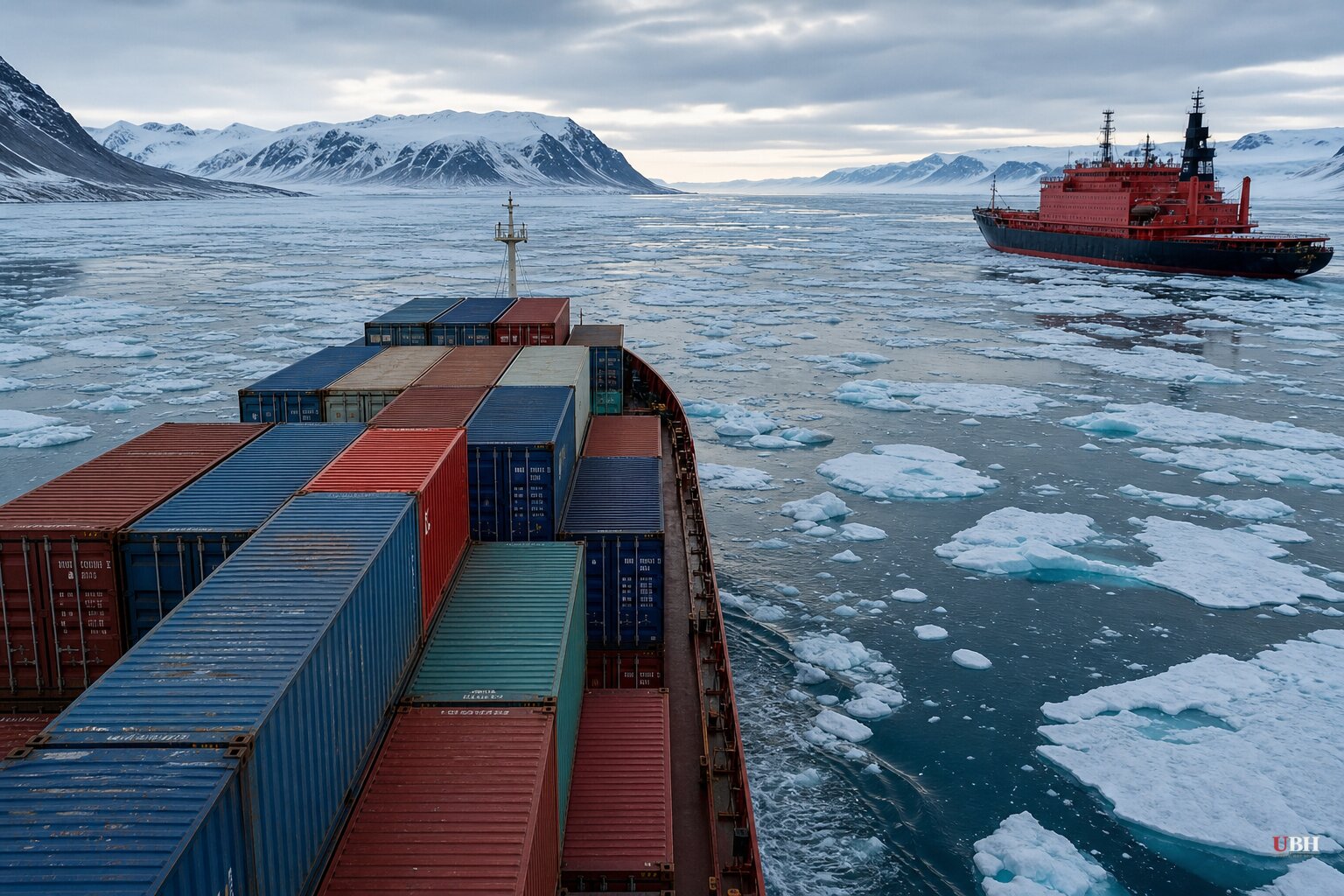
China's Sea Legend shipping line sent its Dubai Tower container ship out of Ningbo-Zhoushan Port on August 15, bound for Felixstowe, England, via Russia's Northern Sea Route. The trip was set to take about 20 days, according to China Daily. Sea Legend is running a new seasonal service this year, with roughly eight voyages planned before the Arctic route closes for the winter, China analyst Gordon Chang told Fox News Digital.
Four days later, on August 19, a Hong Kong-flagged container ship called the Xin Xin Hai-1 became the first Chinese container vessel to reach the Russian port of Murmansk via the Northern Sea Route, according to the Barents Observer. Russian Foreign Minister Sergei Lavrov called it a "landmark event" in an August 31 piece published by the Russian Foreign Ministry.
Why the sudden interest
The Iran war hasn't shut down the Suez Canal, but it has made the Red Sea a lot more dangerous for commercial traffic, according to Maritime Executive and Down to Earth. That's pushed shippers to look north. The Arctic route can cut a voyage by up to 40%, per those two outlets, or roughly 10 days compared to the Suez path, according to estimates from South Korea's Korea Institute for International Economic Policy cited by the Epoch Times.
Breitbart framed China's Arctic pivot as a way to dodge what it called "Iranian terrorism" in the Strait of Hormuz. A characterization that goes further than the shipping-risk language used by Maritime Executive and Down to Earth, which stick to describing elevated Red Sea risk without assigning intent.
A backup plan: reviving a Soviet river route
Separately, China, Russia and Kazakhstan are studying whether to revive the old Ob-Irtysh river system as an inland trade corridor to Arctic ports at the base of Russia's Yamal Peninsula, according to OilPrice.com and the South China Morning Post. The Irtysh River runs 4,248 kilometers from China's Xinjiang region through Kazakhstan into Russia's Ob River.
Trade on that river system hit an estimated 9 million tons a year in the 1970s before collapsing after the Soviet Union fell apart in 1991, OilPrice reported. Kazakhstan published a 2024 plan to bring cargo volume back up to 2.5 million tons annually by 2028, with dock capacity for 4 million tons and passenger ferry service for up to 700,000 people a year. Kazakh economist Askat Dyusembayev told the state news agency Kazinform that "billions can be earned" from the Kazakh stretch of river alone.
OilPrice.com estimated tens of billions of dollars in infrastructure spending would be needed to make the route work, and noted that a favorable August 30 report on the idea from the South China Morning Post was read by some regional analysts as a signal Beijing is warming to the project. OilPrice also flagged that SCMP has faced outside allegations of aligning with Beijing's political agenda, an allegation OilPrice did not itself adjudicate.
The appeal for Moscow is straightforward, according to OilPrice. An inland river route to Arctic ports offers Russia another way to move sanctioned goods and dual-use materials for its war effort in Ukraine, sidestepping Western naval surveillance that a river route wouldn't face.
The obstacles are real
Maritime Executive and Down to Earth both point out that the Northern Sea Route has stirred imaginations since Soviet planners first surveyed it after 1917, and it has repeatedly disappointed. Shallow straits and floating ice cap usable ship sizes at roughly 20,000 to 50,000 deadweight tons, far below the 70,000-to-80,000-ton container ships that dominate other global trade lanes. Insurance costs are high. Ships need Russian icebreaker support and Russian permits to transit at all.
Warming is changing the math. Scientists estimate the Arctic Ocean could see its first fully ice-free day as early as 2030, according to Maritime Executive. But for now the route is a seasonal, ice-class-ship operation, not a year-round Suez replacement.
The security layer
The commercial moves are happening alongside a military buildup. Russian President Vladimir Putin convened a Security Council meeting to discuss Arctic development and national security, with Prime Minister Mikhail Mishustin, Security Council Deputy Chairman Dmitry Medvedev, Defense Minister Andrey Belousov, Lavrov, FSB director Alexander Bortnikov and SVR director Sergey Naryshkin all in attendance, according to Russia's Tass news agency, as reported by Breitbart.
Lavrov's August 31 article accused NATO of running "large-scale military exercises" near Russia's northern borders that risk "disastrous consequences." Norway announced on August 20 that it had expanded its Arctic brigade with a new artillery battalion, per the Epoch Times. At the July NATO summit in Turkey, President Trump again pushed for U.S. control of Greenland, citing growing Russian and Chinese Arctic influence as a national security concern, the Epoch Times reported.
A staff fact sheet from the U.S.-China Economic and Security Review Commission, released August 20, warned that Russia's economic isolation from the West has "compelled Russia to accept a greater Chinese presence in the Arctic," a region Moscow has historically guarded jealously.
Chang told Fox News Digital that Washington's response so far is inadequate. "We need to be in the Arctic, and President Trump has authorized more icebreakers," he said. "We are woefully short in that department." A White House official told Fox News Digital that the Arctic is "a critical region for U.S. national security and the economy" and that the U.S. will "pursue its security and economic interests" as China and Russia compete for influence there.
The current Arctic shipping season closes in October, per Breitbart, at which point Sea Legend's eight-voyage trial run ends and Beijing, Moscow and Washington will all be assessing whether this year's test justifies the billions it would take to build a permanent northern trade corridor, river route included.
Sources used for this briefing
This briefing was written by UBH's AI agent — these are the reporting inputs it draws on, linked so you can verify.


