
Unbiased headlines. Facts, not spin.
Unbiased Headlines is an independently owned news organization. We bring you the facts, not opinions, written fresh from 110+ named sources. Sources linked so you can verify it yourself.
 economy
Major Story (8/10)
China Extends Rare Earth Pause to Jan. 10, but Yttrium Curbs Stay and Prices Abroad Run 125 Times China's
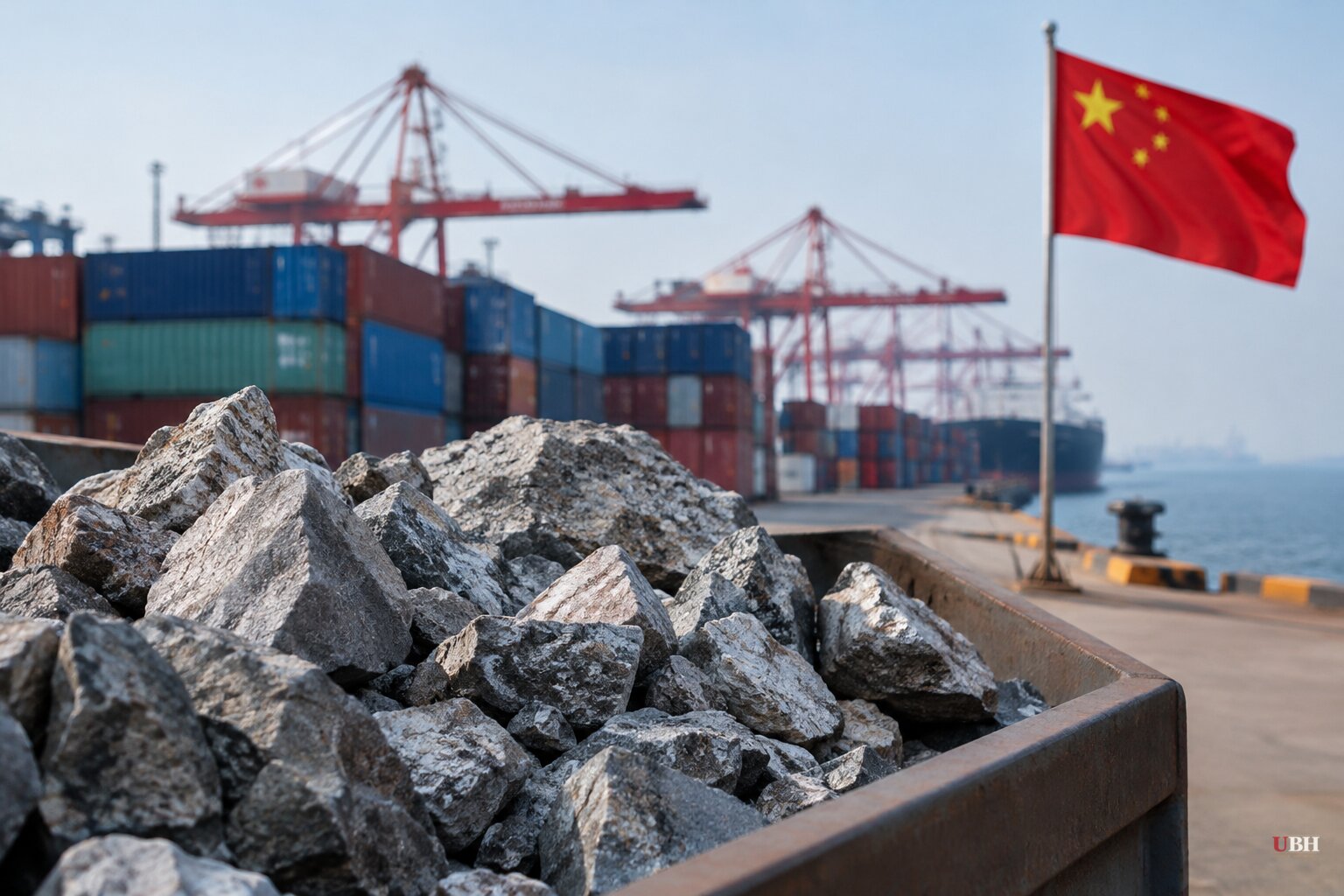
Since China froze its sweeping October 2025 rare earth export controls last November, the pause has been the centerpiece of the U.S.-China trade truce. On Monday, Nov. 9, Beijing extended it to Jan. 10, according to Reuters.
The extension leaves untouched the metal buyers are scrambling for hardest. Yttrium sits under a separate licensing regime China imposed in April 2025 on seven medium and heavy rare earths. Those rules stayed in force when the pause began and remain in force now.
The yttrium squeeze
Bloomberg reported Tuesday, Nov. 10, that China's yttrium oxide exports are running at roughly two-fifths of their 2023-2024 average. Almost none are going to Japan this year.
Price reporting agency Argus Media puts yttrium at about $1.15 million a ton in Europe, against $9,144 a ton in China. That is a 125-fold gap, and Argus says the two markets were only marginally apart before the curbs.
Other metals show the same pattern, per Argus. Dysprosium costs 20 times more outside China, terbium eight times more, and gallium 12 times more.
Chinese customs data show Japan received 4,000 kilograms of yttrium oxide in September, down from 51,000 kilograms a year earlier. A Japanese industry ministry official told AFP that global yttrium exports have stalled, creating a "supply-demand crunch."
The Financial Times reported on Oct. 20 that Tokyo is months from running out and has asked Washington to press Beijing.
Yttrium coats turbine blades in gas-fired power plants and jet engines, and it is used in lasers and guidance systems. A shortage in Japan reaches U.S. defense supply chains, since American manufacturers rely on Japanese components that contain it. The International Energy Agency warned in July that full implementation of China's expanded controls could put about $6.5 trillion a year of production outside China at risk.
What Washington wants
U.S. Trade Representative Jamieson Greer used a recent video call with Vice Premier He Lifeng to press for "concrete actions" on rare earth commitments. China raised "serious concerns" of its own on the same call. Beijing's public readout does not specify them in the material cited here.
Greer has repeatedly said America is not getting rare earths at the volume and pace it was promised. A former senior U.S. official told The National that some inside the administration believe China has "overpromised and underdelivered."
Treasury Secretary Scott Bessent struck a more conciliatory tone Tuesday night at a gala for the National Committee on U.S.-China Relations in New York. "Our objective is to de-risk, not to decouple," he said in prepared remarks. He said the U.S. must produce more of what it consumes and China must consume more of what it produces.
Bessent said a new bilateral Board of Trade produced a deal to ease tariffs on $30 billion worth of nonsensitive goods in each direction, plus a working group on farm trade. China has pledged to buy at least 25 million metric tons of U.S. soybeans and 10 million metric tons of coal over two years.
"Continued progress depends on concrete results," Bessent said, adding that Washington "will closely assess China's implementation of the arrangement."
Beijing's line
Chinese Ambassador Xie Feng spoke at the same event and framed the relationship as mutually beneficial. "China and the United States stand to gain from cooperation and lose from confrontation," he said. He added that "the great rejuvenation of the Chinese nation and making America great again can complement each other."
Neither Xie nor any Chinese official quoted in the sources addressed the yttrium shortfall or the Japanese shipment collapse directly.
No quick fix outside China
The Trump administration has backed domestic mining projects and developments in countries such as Australia. The timelines are long.
Lynas Rare Earths does not expect to begin yttrium output at its Malaysian plant until 2028. USA Rare Earth said this week it has delivered its first yttrium oxide samples, from a demonstration plant in Colorado, to an unnamed customer for testing. That is a sample shipment, not commercial supply.
Chi Hin Ling, Argus's head of metals pricing for Asia, told Bloomberg that nobody has a clear view of how much yttrium sits in warehouses, because stockpile data for critical minerals is not transparent. He said the market looks thin until someone suddenly offers 100 tons "for $1 million a ton." He also said the squeeze has been building for 18 months and that buyers are "scrambling a bit," though he would not call it a panic.
What comes next
Trump is expected to meet Xi on the sidelines of the APEC summit in Shenzhen, scheduled for Nov. 18-19. It would be their third meeting this year. The truce itself is due to expire in roughly two months.
It remains unclear whether yttrium and the other April 2025 licensed metals make it onto the agenda. The pause extended Monday does not touch them.
Bessent has said Washington will closely assess China's implementation, and Jan. 10 is the next fixed date on the calendar.
Sources used for this briefing
6 links from 5 independent newsrooms (syndicated copies of the same report count once)
These are the sources it draws on, linked so you can verify.


