
Unbiased headlines. Facts, not spin.
Unbiased Headlines is an independently owned news organization. We bring you the facts, not opinions, written fresh from 110+ named sources. Sources linked so you can verify it yourself.
 economy
Major Story (7/10)
Spain's Unions Stage First General Strike in 14 Years Over Housing Costs
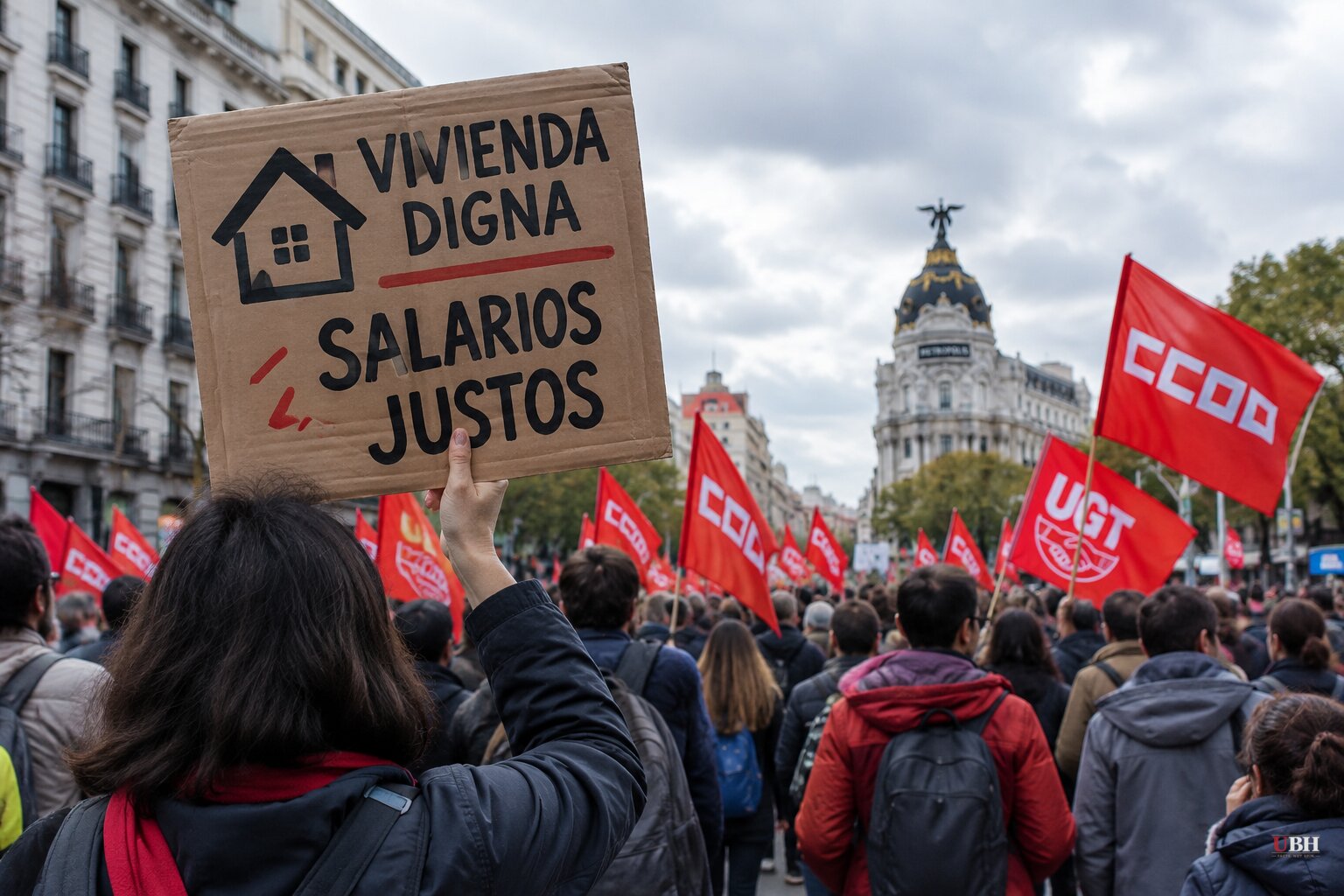
Spain's two largest unions, UGT and CCOO, began a 24-hour nationwide general strike at midnight today, Wednesday, Nov. 11. It is the country's first since November 2012, when workers protested austerity.
The walkout comes less than three weeks before a snap national election on Nov. 29. Prime Minister Pedro Sánchez, a Socialist who has led a minority government since 2023 and has been in power about eight years, called the vote last month after tenant-protection measures he proposed were rejected.
What shut down
In Barcelona, public transport was at a standstill or facing long delays during the morning rush. Grupo TMB, which runs the city's metro and buses, said it was suspending all services until early afternoon. In Madrid, city buses were hit hardest. Madrid's Metro was required to keep 80% of trains running at peak hours and 50% the rest of the day.
Barcelona's port halted cargo handling. Unions said the stoppages also reached ports such as Algeciras, plus plants including Seat in Martorell, Grifols in Parets and Nestlé in Girona. Many schools and universities closed or ran at minimal capacity.
UGT and CCOO said participation was strongest in strategic sectors: 90% in automotive and port work, 85% in meat processing, 82% in waste collection and 75% in energy.
Those figures come from the unions. CEOE, the main business federation, said the impact varied by region and sector and that participation was "low" in most sectors.
The demands
Housing is the headline issue. The average rent in Spain has almost doubled in the past 10 years, according to the AP.
The unions and tenant groups are asking for a minimum-wage increase from 1,220 to 1,300 euros, caps on rents, limits on property purchases by investment funds, indefinite rental contracts and a ban on evicting tenants who have nowhere else to live, according to France's RFI. Local reports cited by logistics firm Kuehne+Nagel say the unions are also seeking general pay raises of 4% to 7%.
"There is one issue that is dividing the country: the struggle to access housing," CCOO Secretary General Unai Sordo said on Cadena Ser radio.
Sandra Mora, a spokesperson for the Tenants' Union, told RNE: "We, the workers — who are also renters or who also pay mortgages — are the ones with the power to halt production and bring the economy to a standstill."
The eviction that lit the fuse
The protests trace to the televised eviction of Maricarmen Abascal, an 87-year-old Madrid pensioner. She died several days later. Her case became a national symbol for people who say rents are unaffordable and homeownership is out of reach.
Activists used the outrage to launch a five-week occupation of Madrid's Puerta del Sol, with hundreds of tents. Similar camps appeared in other cities. UGT and CCOO then backed the call for a general strike.
Clashes at Mercamadrid
The first hours brought roadblocks with burning tires in Barcelona and scuffles between pickets and police at Mercamadrid, the country's main wholesale produce market on Madrid's outskirts.
UGT chief Pepe Álvarez said police were "preventing the constitutional right to strike" by cornering the picket there. CCOO said officers fired pepper spray at pickets and arrested one. A police spokesperson confirmed one arrest at Mercamadrid but did not confirm the use of pepper spray.
Political pressure on Sánchez
The strike lands on a government already under strain. A train collision last month killed dozens in one of Spain's deadliest rail disasters. It was the second this year, and it led to the resignation of Sánchez's transportation minister.
Madrid's schools are also dealing with a teachers' strike that began nearly a month ago over working conditions. Separate Renfe train-driver strikes are affecting Catalonia's regional rail on Nov. 10 and 12.
Sánchez's side has pointed to the tenant protections it proposed and that were rejected. Whether voters blame the government, its opponents or the market for the housing squeeze is what the Nov. 29 vote will test.
Spain is not alone. Cost-of-living and housing protests have spread across Europe this fall, with riots in France and unrest in Italy, Germany and elsewhere. Spain's strike has so far been marked by minor incidents rather than that scale of violence.
What comes next
Unions have called evening marches. Madrid's is set for 6 p.m. from Atocha to Plaza de España. Barcelona's is set for 5:30 p.m. from the Jardinets de Gràcia. Other cities are planning gatherings as well.
The 24-hour walkout ends at midnight. The union and CEOE participation claims conflict, and the election on Nov. 29 will show whether the housing anger translates into votes.
Sources used for this briefing
8 links from 7 independent newsrooms (syndicated copies of the same report count once)
These are the sources it draws on, linked so you can verify.


