
Unbiased headlines. Facts, not spin.
Unbiased Headlines is an independently owned news organization. We bring you the facts, not opinions, written fresh from 110+ named sources. Sources linked so you can verify it yourself.
 economy
Notable (6/10)
Nairobi Sends 4,000-Strong 'Green Army' to Clear Drains as Kenya's Short Rains Meet a Forecast Super El Niño
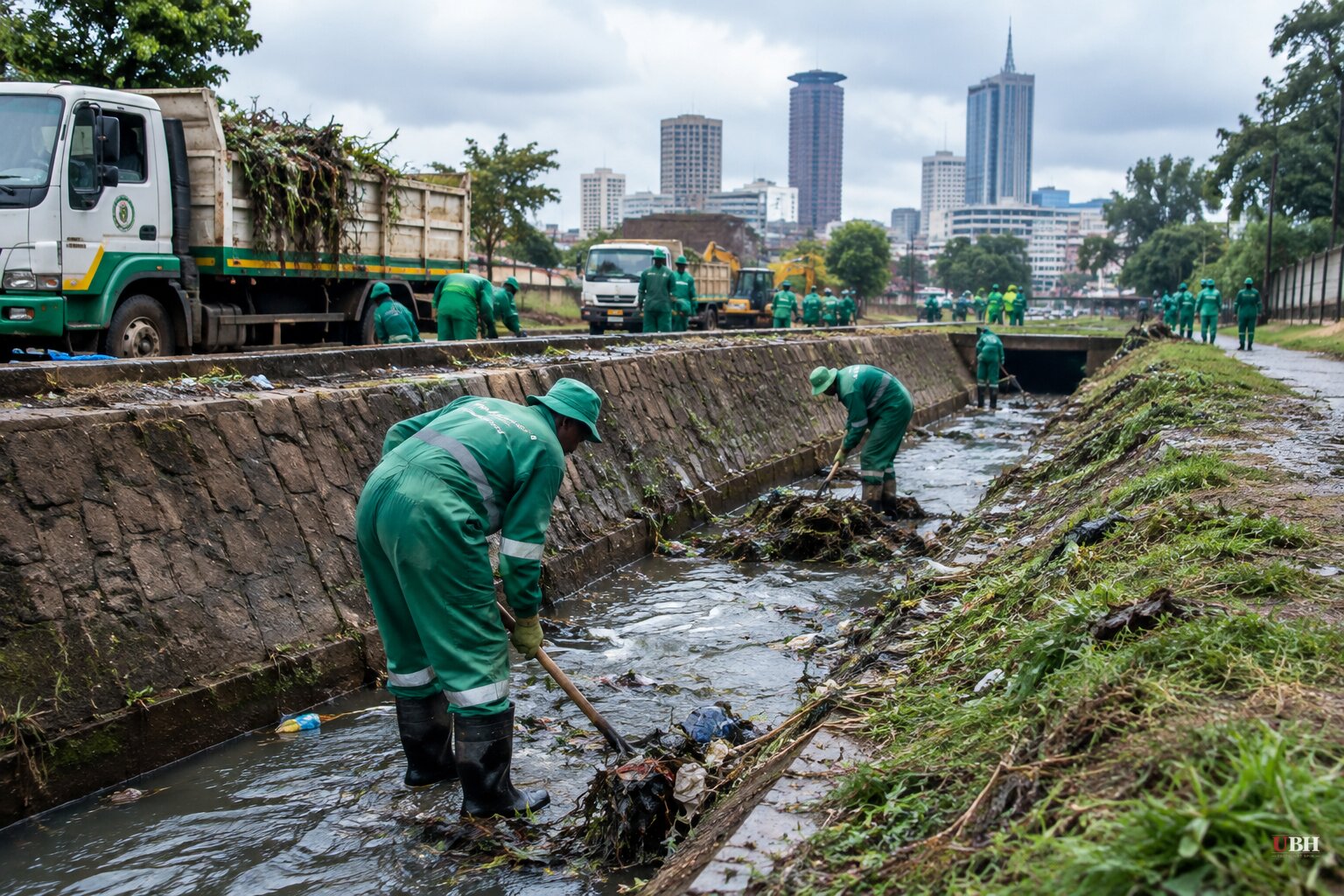
Forecasters have warned that this year's El Niño could be one of the strongest on record, and Kenya is one of the places that will absorb the rain. Its short rainy season, which normally runs from October to December, has begun, and Nairobi is clearing trash out of its rivers and drains to blunt the damage.
Globally, this year's "Super El Niño" will likely peak in November or December and continue into early 2027. In southern Kenya, that means the threat of rains even more intense than usual.
A city of rivers and clogged drains
Nairobi has almost six million people and is built on hilly ground crossed by three major rivers. It floods even in ordinary years.
March's long rains showed how bad it can get. Accounts of the death toll differ: one tally counts more than 60 deaths nationwide, while another puts the figure at more than 100 in rain-induced flash floods. Blocked drains and inadequate sewage systems were widely blamed, because the excess water had nowhere to go.
Bramwell Simiyu, the chief officer of disaster management for Nairobi County, says drainage systems have been "untouched for many years." He puts the problem in numbers. "The infrastructure we've had in place for decades was tailored for a population of not more than 2 million people," Simiyu says. "We're now talking about a daytime population of close to 7 million."
Who is doing the work
The county has mobilized its "Green Army," a youth-employment program of more than 4,000 people. The workers are generally assigned to trash pickup and city greening projects. For El Niño they have been clearing drainage channels and dismantling illegal structures such as food stalls, which are built by the community without government permits and are at an increased risk of collapsing during natural disasters.
Alex Oyando, 30, is one of them. He and his colleagues recently widened a drainage ditch along a busy road lined with clothing stalls, where fabric, plastic bottles and other litter regularly pile up and trigger flash floods. "These drainage troughs are full of different things," Oyando says. "When we remove the dirt, the water can flow, and it prevents flooding."
He says the pay is lower than what he could make elsewhere, but the shifts are manageable and not too grueling. Many of his colleagues live or grew up in the low-income neighborhoods that flood hardest, and Oyando says that when it rains, it's not unusual for his street to fill with water and flood his home.
A separate effort, Climate Worx, runs under the office of President William Ruto and aims to rehabilitate Nairobi's rivers. Crews in high-visibility vests have been shoveling garbage out of the riverbed in Kibera and disposing of it far from the water. That work has intensified since August, when warnings about the possible scale of this year's El Niño grew.
On the national level, Kenya's government has put in place a $385 million plan to widen Nairobi's waterways, build affordable housing and improve the city's trash pickup and sewer system by the end of 2027.
The cost of the clearing
The demolition of illegally built structures has caused an outcry. Tobias Sifuna, a supervisor for Green Army teams in the Kamukunji area, calls it a necessary step, saying the kiosks are built illegally, without authorization from the county government. But nearby communities rely on them for income and daily shopping. Wycliffe Ochieng, a 32-year-old fruit vendor, says many workers in central Nairobi now have nowhere to buy an affordable hot lunch during the day.
Ochieng lost his own grocery stand in the March floods, and a friend who owned a food stall died trying to escape. "We are all scared," he says. "I fear if El Niño comes, I won't come back again."
Kibera: a few metres from the river
Floods hit informal settlements hardest, especially those along rivers such as Kibera and Mathare. Houses there often sit a few metres from the water. Some are on the riverbank slopes, and flash floods can sweep them away.
Agnes Shikoli, 62, lives in a corrugated-iron house in Kibera a couple of metres from the Ngong river. In March the water rose halfway up her six-foot wall and ruined her television. Her sister, Beatrice Khalayi, 58, died of electrocution when her house flooded.
"I feel like it can kill us," Shikoli says. "These houses aren't made of stone. They can fall on us, or the water can drown us."
Simiyu says removing the rubbish from the drains "will save lives." He also says up to $192 million is needed to upgrade the sewerage and drainage system entirely, though there is little sign that either the cash-strapped national or city government will be able to raise that kind of money. In the worst case for low-income settlements, he says, up to about 100,000 people are at risk; moderate projections are about 5,000 households, or about 20,000 people. Anyone forced to leave their homes will be relocated to 167 designated holding grounds, where a stockpile of relief food and supplies will be distributed.
Timing
Nobody knows exactly when the rains will come or how much rain there will be. Kenya's meteorological department warns that November is usually the peak rainfall month of the short rainy season. A regional forecast from the Intergovernmental Authority on Development warned in September of "an 81% probability of a very strong El Niño during October–December 2026." So far, the heavy rains predicted have not occurred, but experts remain concerned.
One sign of the season: October was unseasonably hot in Nairobi, and hot days usually suggest an unusually strong rainy season ahead.
The peak of the El Niño and Kenya's short rains overlap through December. Whether the cleared channels and the $385 million waterway plan are ready for that window is the open question for Nairobi's most flood-exposed neighborhoods.
Sources used for this briefing
7 links from 7 independent newsrooms (syndicated copies of the same report count once)
These are the sources it draws on, linked so you can verify.


