
Unbiased headlines. Facts, not spin.
Unbiased Headlines is an independently owned news organization. We bring you the facts, not opinions, written fresh from 110+ named sources. Sources linked so you can verify it yourself.
 economy
Notable (6/10)
Chile Truckers and Bus Operators Strike Indefinitely Over Diesel Prices as Talks With Kast Government Stall
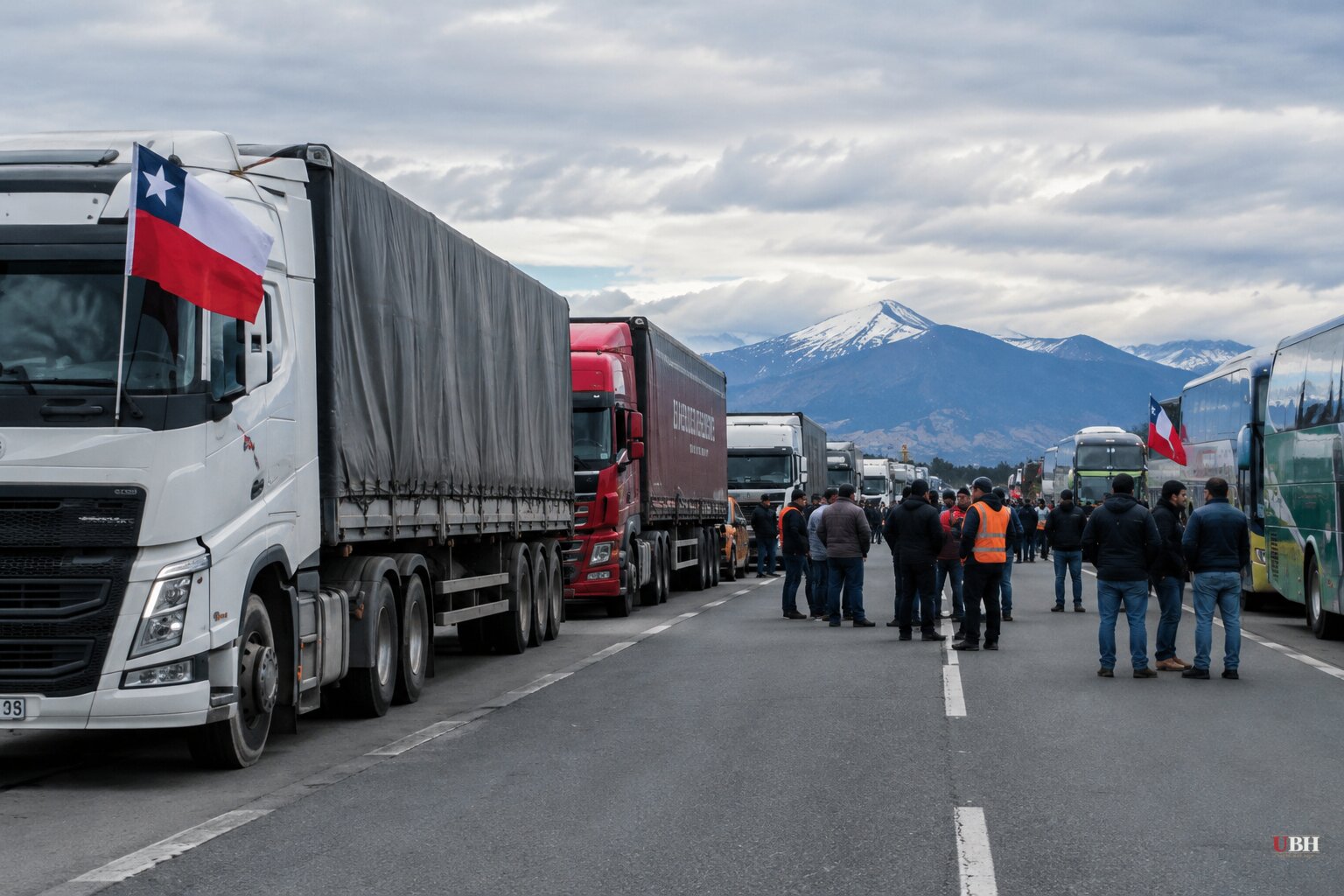
Chile's transport sector is on an indefinite strike, and the government has not yet offered anything the strikers will accept.
Partial road blockades began building Monday, Nov. 9. By Tuesday, hundreds of truckers and bus drivers were gathered at points along Route 5, the highway running the length of the country. Government officials and protest leaders met Tuesday afternoon, and the talks collapsed. They sat down again Wednesday morning, Nov. 11.
What the strikers want
The action is organized by the No+TAG civic movement and the Fuerza del Norte trade union, which represents around 80% of Chile's lorry drivers. Independent trucking associations, crane operators from Grúas Unidas de Chile and dump-truck haulers from the north joined the Tuesday session at the Transport Ministry.
They have three demands. First, scrap the specific fuel tax, a per-liter levy. Second, bring back the MEPCO price-stabilization mechanism, historically funded from surplus revenue at state energy company ENAP. Third, cut TAG electronic toll rates, which the groups say concession companies no longer need to recoup their investments.
No+TAG spokesman Andrés Alarcón said the government asked the groups to stand down while ministries worked on a solution. The groups refused. "There is no point of agreement with the government that could offer any perspective to find solutions for everyone," he said after Tuesday's talks. "The strike continues."
The diesel squeeze
Industry groups say the average price of diesel has risen 74% since March, driven by the war in Iran. Chile imports nearly all its fuel. A separate tally of 53% growth through 2026 has also circulated, and the Chilean peso price per liter has climbed more than 400 pesos since late July to roughly 1,589, according to the World Socialist Web Site. The figures differ, but every account points the same direction.
The trouble for small operators is that their revenue has not moved. Trucker groups say cargo rates have been largely frozen since 2021 or 2022.
Juan Cornejo, president of the Association of Intercity Bus Owners, which represents 14 mid-sized companies, said: "We've reached our limit. We've spent more than a month working with negative numbers."
Claudio Elguezabal, a 47-year-old lorry driver who joined a protest near Santiago, said he is not making a profit. "Sometimes you even have to put in your own money to cover the client," he said.
The government's position
Economy Minister Daniel Mas has called for more dialogue while warning that patience has a limit. "At some point, we will have to clear the highways," he said. He added that the protests are hurting economic activity and exports: "We need to get the country moving again."
The demands carry a price tag the state would have to cover. Eliminating a fuel tax and refilling a stabilization fund both mean lost revenue or new spending. The strike lands on a president eight months into a four-year term, with economic activity shrinking and poll numbers sagging, according to Bloomberg.
The World Socialist Web Site, writing from the left, blames the Kast government's austerity program and says it altered MEPCO's parameters on taking office in March so the full price shock reached consumers. That claim comes from that outlet alone.
Exports already taking a hit
The strike did not start nationwide. Independent drivers at the port of San Antonio, Chile's main gateway for exports, stopped work on Oct. 28. Their blockade of container depots forced the first "Cherry Express" vessel, scheduled to sail to China on Nov. 9, to divert to Valparaíso. San Antonio handles nearly half of Chile's fruit exports.
Frutas de Chile, the industry body, warned that a prolonged standoff would hurt crop quality. The port was already at 90% of storage capacity.
The San Antonio blockade ended late on Friday, Nov. 6, after nine days, with an 8% adjustment to overland freight rates and a commitment to build an indexing mechanism. The wider strike began days later.
Fresh blockades have since appeared in San Antonio and Valparaíso, and more truckers joined in Talagante and Melipilla outside Santiago. Disruptions on Route 5 near Tiltil and on Route 68 were reinforced, with pressure expected near Paine.
Growers were already struggling. Heavy El Niño rains cut the cherry crop and its quality. On Nov. 2, the Agriculture Ministry declared an agricultural emergency in parts of the Maule region.
What comes next
No agreement from Wednesday's meeting has been announced. The 8% freight deal at San Antonio shows that a rate adjustment can end a blockade. The nationwide groups want tax and toll changes that only the government can deliver, and Mas has said the government will at some point have to clear the highways.
Sources used for this briefing
7 links from 7 independent newsrooms (syndicated copies of the same report count once)
These are the sources it draws on, linked so you can verify.


