
Unbiased headlines. Facts, not spin.
Unbiased Headlines is an independently owned news organization. We bring you the facts, not opinions, written fresh from 110+ named sources. Sources linked so you can verify it yourself.
 economy
Major Story (7/10)
EU Proposes Digital Fairness Act With Fines Up to 6% of Turnover for Dark Patterns and Addictive Design
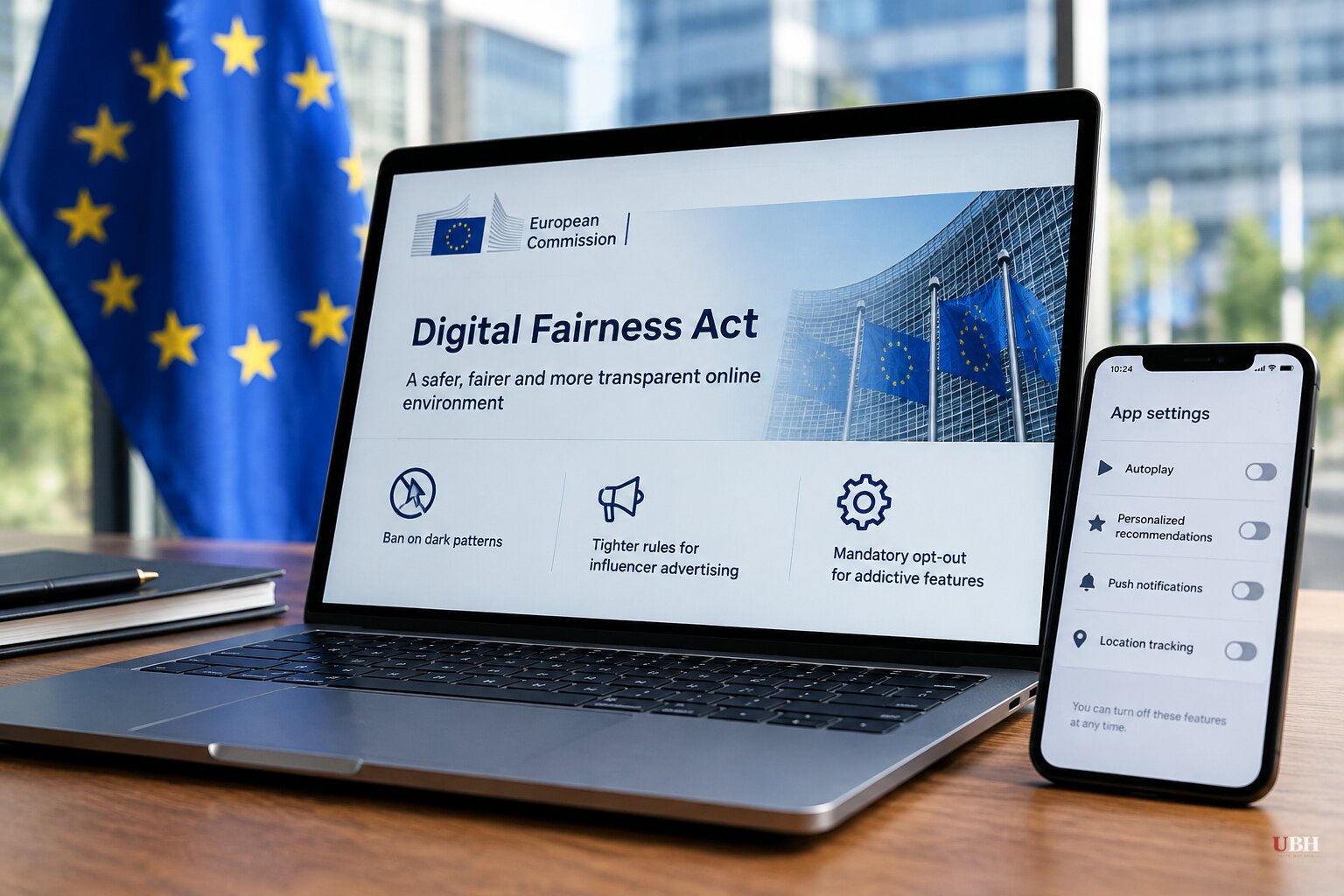
The European Commission today, Nov. 11, unveiled the Digital Fairness Act (DFA), a draft law aimed at manipulative online design, hidden advertising and what Brussels calls addictive features. Companies that break the rules in large-scale cases face fines of up to 6% of annual turnover.
Consumer protection chief Michael McGrath presented the package at a press conference. "We are not making it harder to do business, we are making it harder to do business unfairly," he said.
What the draft would require
The proposal covers a long list of practices:
- Dark patterns banned. That means tricking users into unwanted purchases or into opting in to settings without their knowledge.
- Addictive features can be turned off. Users would get the right to disable autoplay, infinite scrolling and notifications not directly tied to their own activity. Persistent reminders that push people to keep coming back are also targeted.
- Influencers must label ads. Paid promotions must be clearly marked, such as "advertisement," and cannot be dressed up as personal recommendations. Influencers cannot promote dangerous or illegal products, or products presented as suitable for minors when they are not. Brands and agencies would have to verify that creators comply.
- Drip pricing banned. Users would see the full price of an order before checkout.
- Free trials. Platforms must remind consumers when a trial ends, with the end date and the cost of continuing.
- Minors and games. Pay-to-win and pay-to-progress features and loot boxes would be banned for minors. In-game virtual currencies would have to show their real-world value.
- Personalization. Bans that already cover online platforms under the Digital Services Act, on personalized ads aimed at minors or based on sensitive data, would extend to all websites and apps. Companies could not charge minors or vulnerable consumers higher personalized prices by exploiting their circumstances.
- Human help and AI agents. Consumers could demand a human customer service representative. Someone who uses an AI agent to buy a product would have the same rights as if they had bought it themselves.
McGrath said the Commission could investigate and sanction companies when an issue affects two-thirds of the EU's 450 million people.
The money
The Commission put a large price tag on the problem, though the figures measure different things. Brussels said it hopes the measures could save EU consumers up to €13.7 billion ($15.3 billion) a year. Separately, official data cited ahead of the launch showed "problematic" digital practices cost individuals as much as €10.3 billion ($11.5 billion) a year.
McGrath has previously pointed to data showing 97% of popular platforms use dark patterns. "At a time when households are under pressure from the cost of living, consumers must be able to trust that the prices they see are the prices they pay," he said in a statement.
Pushback and the enforcement question
Not everyone is cheering. Some businesses have criticized the DFA because it overlaps with existing laws and because of a proposed plan to keep children safe from online dangers. The Commission has also come under questioning over its expanding digital rulebook after unveiling plans to ban children under 13 from social media and to force companies to make platforms safe for minors, on top of the sweeping Digital Services Act.
Spanish lawmaker Laura Ballarin Cereza answered that the proposal is meant to make a "safer online space for everyone, children and adults alike." She said it will "fill the gaps," because "consumer law is meant to act as a safety net."
Consumer groups back the law but worry about follow-through. Agustin Reyna of the European Consumer Organisation called it a "much-needed tool to give consumers back control of how much time and money they spend online." The Euroconsumers group said: "Strong rules only matter if they are properly enforced."
That concern has a background. EU lawmakers and consumer advocates have pressed the Commission over what they describe as a failure to enforce its existing online content and competition rules. The DFA would add another set of obligations to an enforcement system that already faces those complaints.
What happens next
The draft is a proposal, not law. It must be agreed with EU member states and the European Parliament in the coming months before it can take effect. Companies are likely to focus on how the 6% ceiling is applied, how the DFA fits alongside the Digital Services Act, and what the final text says about the minors' provisions.
Sources used for this briefing
6 links from 6 independent newsrooms (syndicated copies of the same report count once)
These are the sources it draws on, linked so you can verify.


