
Unbiased headlines. Facts, not spin.
Every story is an unbiased news briefing written from 110+ sources across the spectrum — sources linked so you can verify it yourself.
 energy
Notable (6/10)
August 6, 2026 at 02:57 PM
energy
Notable (6/10)
August 6, 2026 at 02:57 PM
China Drove Every Bit of Global Nuclear Growth Over the Past Decade While America Stood Still
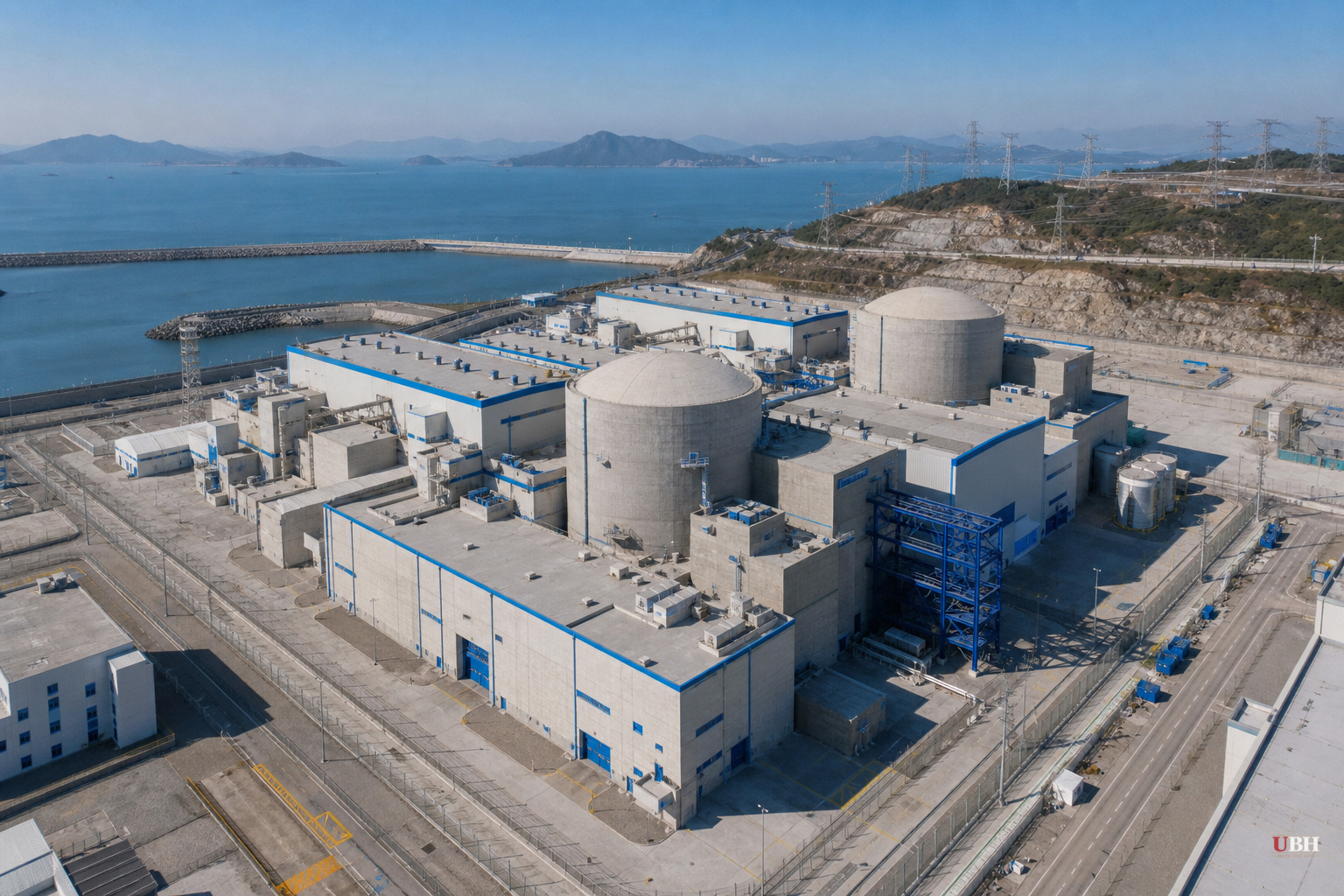
Global nuclear power hit a record high in 2025. That sounds like good news for an energy source that actually works. But the numbers, according to the Statistical Review of World Energy, tell a much narrower story than the headline suggests.
Nuclear plants worldwide generated 2,845 terawatt-hours last year, up 30 terawatt-hours, or 1.3%, from 2024. China alone added more than 34 terawatt-hours of that growth. Do the subtraction and it's obvious: without China, global nuclear generation actually FELL last year.
Zoom out to the full decade and the picture gets worse for everyone except Beijing. Global generation rose from 2,576 terawatt-hours in 2015 to 2,845 terawatt-hours in 2025, a gain of about 270 terawatt-hours. China's nuclear output climbed from 171 terawatt-hours to 485 terawatt-hours over that same stretch, an increase of nearly 314 terawatt-hours.
China didn't just contribute to global growth. China's growth EXCEEDED total global growth. That means the rest of the world, combined, generated about 44 terawatt-hours less nuclear electricity in 2025 than it did ten years earlier.
The United States still runs the largest nuclear fleet on Earth. American reactors produced 826 terawatt-hours in 2025, good for 29% of the world's total and nearly 70% more than China's output. That's a real advantage. But it's an advantage built on machines poured in concrete decades ago, not on new investment.
U.S. nuclear generation was 839 terawatt-hours back in 2015. Last year's total was actually LOWER. A decade passed and America's nuclear fleet produced less electricity, not more.
China, meanwhile, nearly tripled its nuclear output over the same ten years, growing at almost 11% annually. If that gap in growth rates holds, China is on pace to pass the United States in total nuclear generation. That's simple arithmetic from the production numbers themselves.
France remains the number three producer at 390 terawatt-hours, or 13.7% of the global total. Russia generated 219 terawatt-hours, South Korea produced 185 terawatt-hours, Japan generated 94 terawatt-hours, and Canada came in at nearly 85 terawatt-hours. Those six countries plus China and the U.S. account for the overwhelming majority of nuclear power generated on the planet. Building and operating reactors requires massive capital and decades-long timelines, which is exactly why the list of serious nuclear nations stays short.
Global nuclear generation hit 2,803 terawatt-hours back in 2006. Last year's "record" of 2,845 terawatt-hours is only about 1.5% higher than a number set nineteen years ago. Whatever is happening in nuclear power, it isn't a boom. It's a slow crawl back to where the industry already was two decades ago, propped up almost entirely by one country's state-directed buildout.
Defenders of the current U.S. approach point out that American reactors are running near their physical capacity limits already, so flat output doesn't necessarily mean policy failure. It can mean the existing fleet is simply mature and efficient. License renewals have kept old plants operating longer than originally planned, and that's a genuine achievement, not stagnation. Small modular reactor projects and plant restarts, like the Palisades plant in Michigan, are in the pipeline and haven't shown up in the 2025 numbers yet.
That's a legitimate point. But it doesn't change the core fact: the U.S. hasn't broken ground on enough new large-scale nuclear capacity to move the national output number in a decade, while China has built enough new reactors to nearly triple its own. One country treated nuclear energy as a strategic priority and funded it like one. The other let its fleet coast on Reagan-and-Carter-era infrastructure while regulatory approval timelines for new plants stretched into years.
Japan is still clawing generation back after the Fukushima shutdowns, and most of Europe remains below where it stood a decade ago. Both trends undercut any talk of a broad Western nuclear revival.
The open question is what Washington does next. The Nuclear Regulatory Commission has faced pressure from lawmakers in both parties to speed up licensing, and the Department of Energy has backed loan guarantees for new reactor projects and SMR pilots. None of that shows up in the 2025 generation totals. Whether it shows up in the 2030 totals, before China's growth curve overtakes America's lead, is the real test.
Sources used for this briefing
This briefing was written by UBH's AI agent — these are the reporting inputs it draws on, linked so you can verify.


