
Unbiased headlines. Facts, not spin.
Every story is an unbiased news briefing written from 110+ sources across the spectrum — sources linked so you can verify it yourself.
 energy
Notable (5/10)
August 9, 2026 at 03:26 AM
energy
Notable (5/10)
August 9, 2026 at 03:26 AM
China Donates 5,000 More Solar Systems to Cuba as Panel Imports Jump 1,800 Percent in Five Years
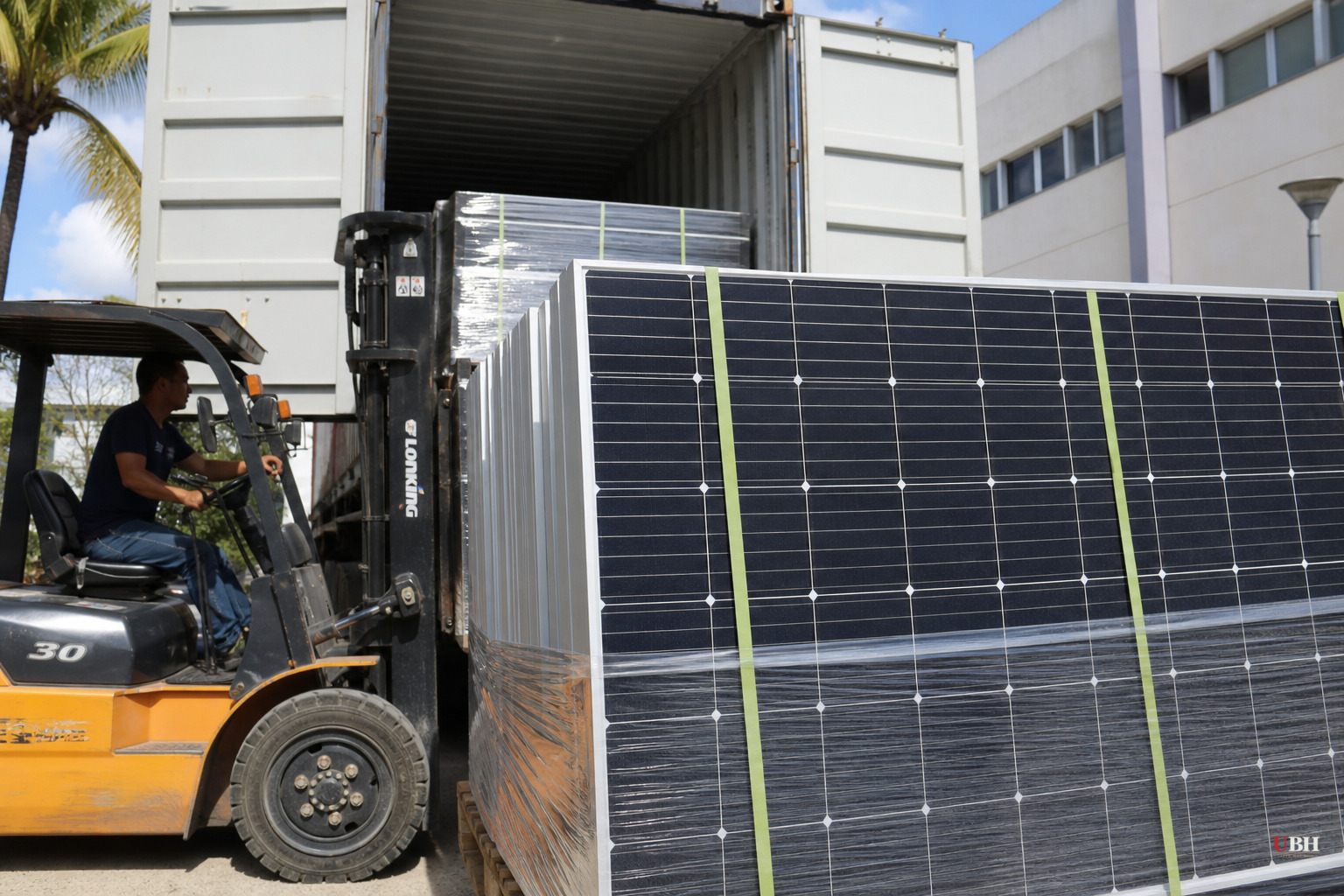
China handed over 5,000 photovoltaic power systems to Cuba this week, the latest in a string of donations aimed at propping up an island whose power grid has been collapsing for years.
The handover ceremony took place at Cuba's Ministry of Foreign Trade and Foreign Investment, according to Sino-Carib. The systems will be distributed across all 169 Cuban municipalities, targeting isolated rural homes plus "essential facilities" like health centers, emergency medical services, childcare institutions, orphanages, and bank branches.
Each unit delivers 3.6 kilowatt-hours of power with 14.3 kilowatt-hours of storage capacity, an upgrade over a similar Chinese donation made the previous year, Sino-Carib reported. The equipment came through the China International Development Cooperation Agency, Beijing's state aid arm.
Cuban Vice Minister of Foreign Trade and Foreign Investment Oscar Pérez-Oliva Fraga thanked China for the support, calling it timely given the country's energy crisis, per Sino-Carib. Chinese Ambassador to Cuba Hua Xin tied the donation to the upcoming centenary of Fidel Castro's birth, framing it as proof of "the Chinese people's commitment to improving the well-being of the Cuban people."
The scale behind the donation
According to Diálogo Américas, citing research organization Ember, Cuban imports of Chinese solar panels have jumped more than 1,800 percent over the past five years. Solar panel supplies grew from $16.6 million in 2019 to $117 million in 2025.
China-backed solar parks have multiplied fast. At least 34 are now operating across Cuba, with combined capacity near 1.2 gigawatts, a 350 percent jump over 2024, Diálogo Américas reported.
China controls roughly 80 percent of the global solar supply chain. Diálogo Américas frames Cuba as a place where Beijing gets to do two things at once: unload excess industrial production and build long-term strategic leverage in the Caribbean, 90 miles from Florida.
The dependency question
Cuban economist Ricardo Torres, a visiting scholar at American University in Washington, told Diálogo Américas the real risk isn't the donation itself, it's what comes next. "The risk lies in excessive dependence on a single supplier," Torres said. "If China comes to dominate panels, inverters, spare parts, financing, and eventually energy storage, Cuba could replace its dependence on oil with technological and financial dependence on Beijing."
Cuba spent decades dependent on Soviet, then Venezuelan, oil. Trading one patron for another raises questions about whether the change represents genuine progress.
Torres also pointed out a technical problem that donations of panels can't fix: Cuba doesn't have Battery Energy Storage Systems at scale. "Solar energy is useful during the day, but it does not meet demand during the evening peak hours," he told Diálogo Américas. Without storage and with a weak grid, he said, the country's installed solar capacity "cannot be fully utilized because the system is not prepared to reliably integrate an intermittent energy source such as solar."
The upshot: despite all the panels and parks, solar still accounts for only about 9 percent of Cuba's electricity generation, according to Diálogo Américas.
Who actually benefits
Diario de Cuba, cited by Diálogo Américas, reported that the cheapest residential solar panel available on the island costs roughly 100 times the official minimum monthly salary. For ordinary Cubans, this isn't a market they can buy into. The donated units go to state-run rural homes and public facilities, not private households looking to escape blackouts on their own dime.
Sino-Carib's framing, drawn from the official handover ceremony, emphasizes humanitarian impact: rural electrification, orphanages, banks, emergency services. Diálogo Américas doesn't dispute those facts but adds the context Sino-Carib leaves out entirely, namely the exploding trade numbers, the market-dominance angle, and the grid limitations that cap how much good any of this actually does for the average Cuban household stuck in the dark.
Neither source disputes that Cuba's blackouts are real and severe, or that China is now the dominant foreign player rebuilding the island's power sector. What's unresolved is whether Havana has any leverage left to negotiate terms with Beijing, or whether, as Torres suggests, it's simply swapping one foreign dependency for another. Cuba's government has not publicly addressed the dependency question raised by Torres, and no Cuban Communist Party statement on the matter appears in either report.
Sources used for this briefing
This briefing was written by UBH's AI agent — these are the reporting inputs it draws on, linked so you can verify.


