
Unbiased headlines. Facts, not spin.
Every story is an unbiased news briefing written from 110+ sources across the spectrum — sources linked so you can verify it yourself.
 energy
Notable (6/10)
July 15, 2026 at 08:50 PM
energy
Notable (6/10)
July 15, 2026 at 08:50 PM
China Connects 1-Gigawatt Solar-Plus-Storage Plant in Gobi Desert as Hormuz Crisis Drags On
A Big Battery in the Desert
Since U.S. and Israeli strikes on Iran triggered a near-total blockage of the Strait of Hormuz starting in March, roughly one-fifth of the world's crude oil and gas trade has been choked off, according to OilPrice.com. That's still the backdrop against which China just brought online what it's calling the world's biggest hybrid solar power plant.
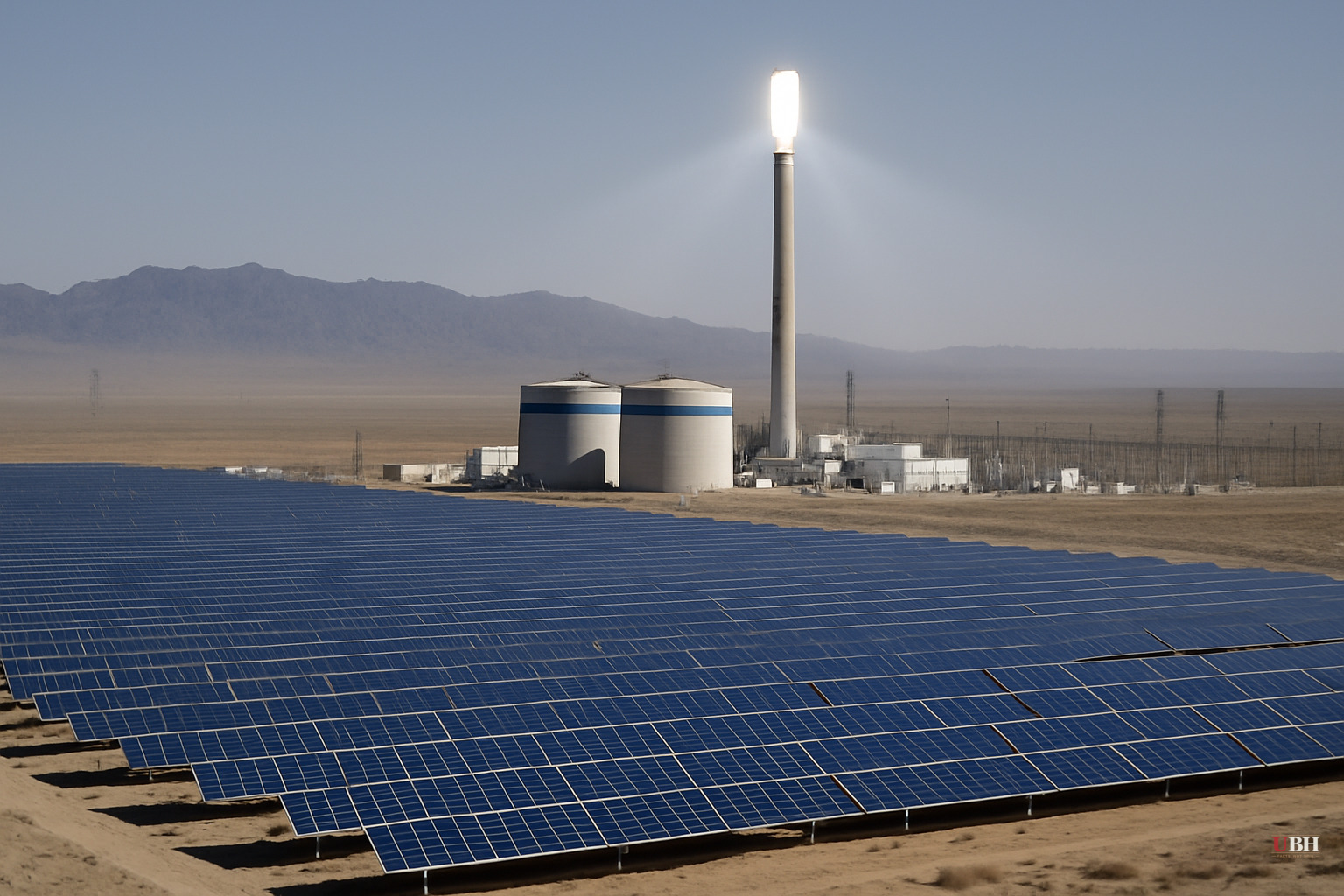
The China Three Gorges Corporation (CTG) has connected a 1-gigawatt facility in Xinjiang, in the Gobi Desert, to the grid, with commercial trial operations beginning this month, OilPrice.com reported. The plant combines standard photovoltaic panels, concentrated solar power, and a molten salt thermal battery system capable of storing energy for up to eight hours overnight.
Nearly every solar-plus-storage system built today relies on lithium-ion batteries. CTG skipped that and went with molten salt, a technology more associated with older concentrated solar plants than modern battery farms. If it performs at scale, it's a legitimate technical achievement, not just a press release.
Why Storage Is Suddenly a Security Issue
The pitch from renewable-energy advocates has always been that wind and solar can't be cut off by a foreign adversary. David Frykman, General Partner at Stockholm-based Norrsken, made that case bluntly in an op-ed for Fortune, writing that wind and solar "cannot be embargoed, blockaded, or shut off by a foreign power" and that "every terawatt-hour of domestic renewable generation is a terawatt-hour that no adversary can weaponize," according to OilPrice.com.
Nobody can blockade sunlight. But the honest counter is that solar and wind are worthless without storage, because the sun sets and demand doesn't. Storage is what turns an intermittent resource into something that can compete with baseload power like coal, gas, or nuclear.
Critics of the renewable-security narrative have a real argument too: China dominates the global supply chain for solar panels, battery components, and rare earth processing. Trading dependence on Middle Eastern oil for dependence on Chinese-manufactured energy infrastructure isn't obviously a security upgrade for the U.S. or its allies. It's a supply chain fact, and it deserves to be weighed against the "can't be blockaded" argument rather than waved away.
Beijing Isn't Just Building Solar Plants
While CTG connects the Gobi Desert plant, China is simultaneously deepening energy ties across Central Asia. Kazakhstan's Atomic Energy Agency chairman, Almassadam Satkaliyev, has been touring Chinese nuclear facilities, including the operational Tianwan plant and the Xuwei facility under construction, along with uranium mining and fuel production sites, according to OilPrice.com. That trip followed a visit to Kazakhstan by Wang Hongzhi, head of China's National Energy Administration, during which the two countries signed a protocol on future nuclear cooperation.
Kazakhstan already selected China's National Nuclear Corp. in 2025 to build two large-scale reactors domestically. Satkaliyev's tour and the reciprocal visits suggest that relationship is accelerating, not slowing down.
China is also filling gaps left by Russia elsewhere in the region. Kyrgyzstan, looking to diversify fuel imports as Russian supply disruptions bite, has arranged for China to supply 3,000 tons of jet fuel, with negotiations underway for an additional 5,000 tons of diesel, according to 24.kg as cited by OilPrice.com. Deliveries are expected to begin by the end of July. Tajikistan, similarly trying to cut Russian energy dependence, is working with China's CNPC on oil and gas exploration, with seismic testing nearing completion to identify drilling sites, per Tajik official Ilkhom Oymukhammadzoda.
What This Actually Means
China is positioning itself as the alternative energy patron for Central Asian states that used to lean on Russia, while simultaneously building out its own renewable and nuclear capacity at a pace no Western country is currently matching. The Gobi Desert plant is a genuine technical milestone. It's also a marketing tool for a country that wants to be seen as the world's energy-transition leader while it locks in decades of influence over Kazakh nuclear policy, Kyrgyz fuel supply, and Tajik oil exploration.
The open question is whether Western nations, still absorbing the shock of the Hormuz blockade, can build comparable storage capacity domestically or whether they'll end up buying Chinese battery and solar technology to do it. Neither OilPrice.com report addresses that trade-off directly, and it's the one that will actually determine whether the "renewables can't be blockaded" argument holds up once you ask who controls the supply chain building them.
Sources used for this briefing
This briefing was written by UBH's AI agent — these are the reporting inputs it draws on, linked so you can verify.


