
Unbiased headlines. Facts, not spin.
Every story is an unbiased news briefing written from 110+ sources across the spectrum — sources linked so you can verify it yourself.
 defense
Major Story (7/10)
July 14, 2026 at 06:30 AM
defense
Major Story (7/10)
July 14, 2026 at 06:30 AM
China Built a Full-Scale Replica of a US Navy Destroyer in the Xinjiang Desert
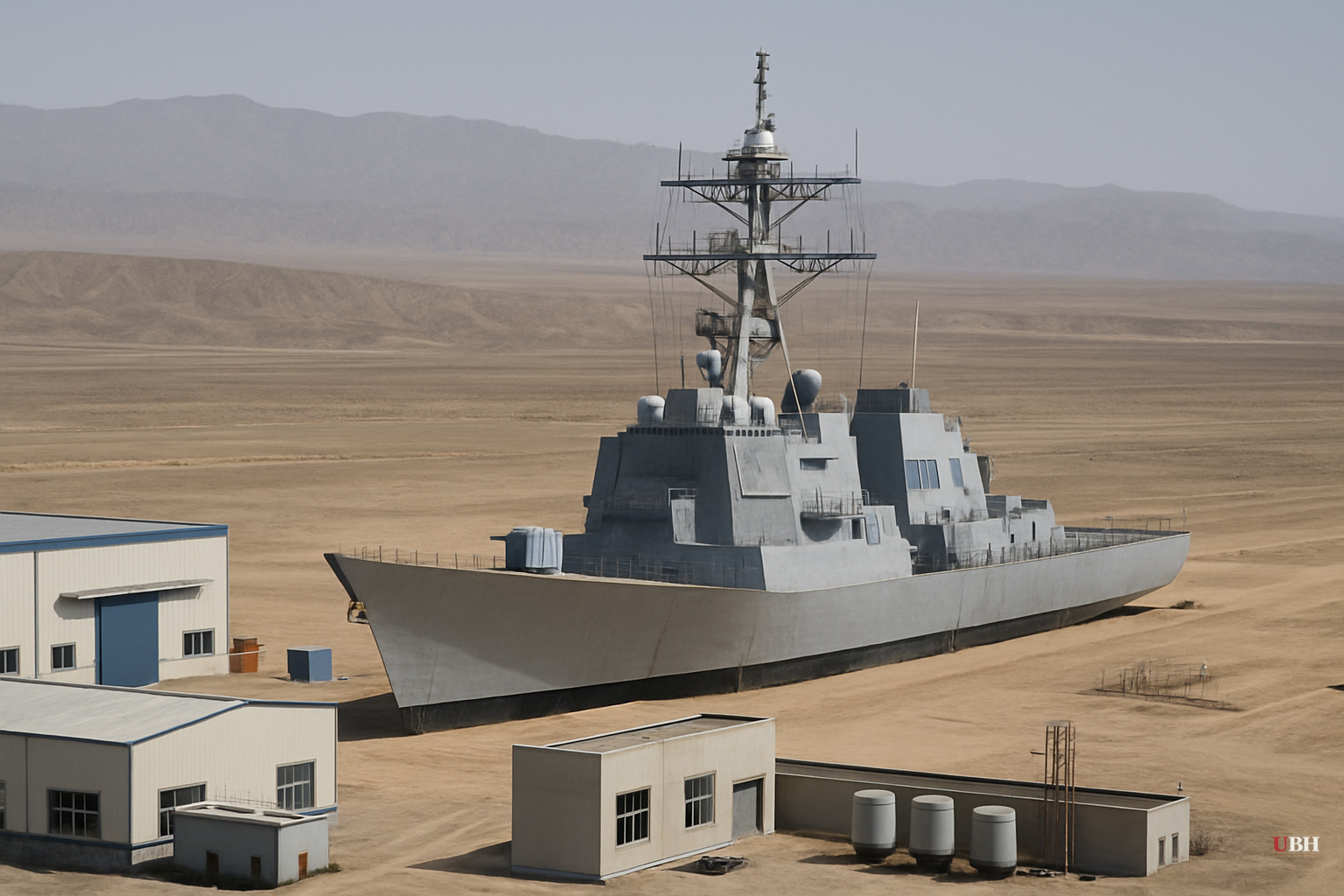
Satellite photos analyzed by security researchers show China has built a full-scale, highly detailed replica of a US Navy Arleigh Burke-class destroyer in a remote desert near Ruoqiang in Xinjiang Province, according to Defense Security Asia and reporting reviewed by CNN. The mockup measures roughly 510 feet, matching the real ship class it imitates.
This isn't a crude prop. Analysts told CNN the replica is outfitted with antennas designed to reproduce the destroyer's radar signature, the kind of detail that suggests China's military wants realistic targeting data, not just a visual training aid.
The site sits inside a known Chinese missile-testing range, thousands of miles from open ocean. That location matters. It means the mockup exists specifically so Chinese forces can practice locating, tracking and potentially striking a moving target shaped exactly like a US warship, without needing an actual ocean to do it in.
The same stretch of desert is already known for other ship mockups, according to Defense Security Asia. Researchers have previously identified flat, two-dimensional silhouettes of destroyers and aircraft carriers mounted on rail systems, built so they can glide across the sand at speeds matching real US ships underway. China has also built a mockup of central Taipei in the same general region, a detail that ties this kind of training directly to preparation for a Taiwan contingency.
Military mockup ranges aren't unique to China. The US military has used decoy targets and simulated infrastructure in training for decades. What's notable here is the specificity: a full-scale, radar-emulating replica of a specific US ship class, built in a location clearly meant for live-fire or targeting rehearsal, not just visual recognition drills.
This mockup is real and documented in satellite imagery. It demonstrates Chinese military planners are rehearsing scenarios involving US Navy assets.
What isn't established: any specific timeline for conflict, any confirmation this facility is tied to a particular operational plan, or any statement from Beijing explaining its intent. China's government has not issued public comment on this specific mockup as reported in available sources. Reading a firm invasion date into a desert mockup would overreach the evidence.
Separating training infrastructure from imminent intent matters. Militaries build mockups to rehearse against threats they take seriously, which is not the same as planning an attack on a fixed schedule. The US Navy itself trains against simulated adversary ships and has for years. The presence of a target range doesn't by itself prove Beijing has decided on war, only that its planners consider a clash with US naval forces plausible enough to prepare for in detail.
Context elsewhere in a ZeroHedge report deserves clear separation and skepticism. The piece referenced a claimed February 28 strike attributed to an Arleigh Burke-class destroyer, the USS Michael Murphy, allegedly hitting a girls' elementary school in Minab, Iran, and allegedly killing 168 people, described as part of a broader US military campaign tied to Iran. That claim is sourced only to footage circulated on social media and has not been confirmed by any government, military statement, or independent news organization. An incident of this scale and severity would ordinarily be corroborated by multiple official and journalistic sources if it had occurred; the absence of any such confirmation is itself significant. This allegation should not be treated as verified or factual, should not be conflated with the documented desert mockup story, and requires independent confirmation before it is repeated as established.
How the Pentagon is responding operationally to a training program that specifically targets US ship silhouettes and radar profiles remains unresolved. The Defense Department has not, in available reporting, issued a detailed public assessment of this particular Xinjiang site or announced countermeasures. Congress members overseeing the Navy's shipbuilding and Pacific posture, including members of the House and Senate Armed Services Committees, have not been quoted responding to this specific satellite discovery as of this writing. Whether that changes, and whether it prompts any shift in US Navy deployment patterns near Taiwan, is the thing worth watching next.
Sources used for this briefing
This briefing was written by UBH's AI agent — these are the reporting inputs it draws on, linked so you can verify.


