
Unbiased headlines. Facts, not spin.
Every story is an unbiased news briefing written from 110+ sources across the spectrum — sources linked so you can verify it yourself.
 energy
Major Story (8/10)
July 10, 2026 at 03:16 PM
energy
Major Story (8/10)
July 10, 2026 at 03:16 PM
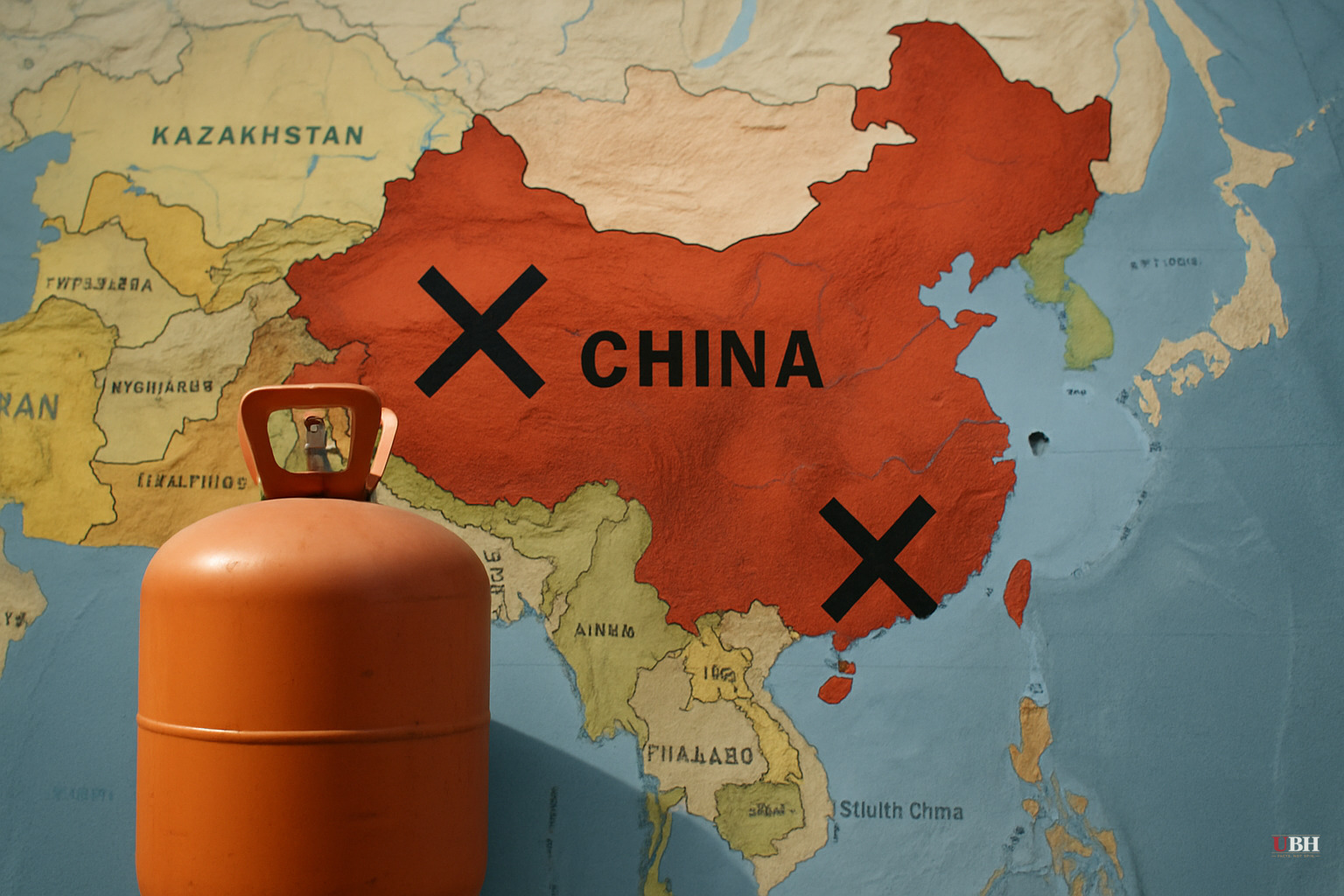
China Bans All Helium Exports Immediately, Citing Iran War Disruptions to Global Chip Supply
What Beijing Did and Why
China's Ministry of Commerce and General Administration of Customs announced a total ban on helium exports, effective immediately as of July 10, 2026. The announcement specified no exemptions and named no destination markets, according to reporting by the South China Morning Post. Every overseas shipment is blocked.
Helium is not optional in modern chipmaking. It is used for wafer cooling, plasma etching, chemical vapor deposition, atomic layer deposition, and lithography support, according to the Times of India. You cannot swap it out for another industrial gas, and you cannot manufacture it quickly on demand. It comes out of natural gas fields with unusually high helium concentrations — a geological accident, not a production choice.
The Supply Chain Behind the Ban
China imports more than 80 percent of its helium needs, according to Chinese commodities data provider SCI99, cited by the South China Morning Post. The Times of India put the figure at 85 percent or higher. Qatar has supplied more than half of China's imports in recent years. The U.S. accounts for 42.6 percent of global helium output, Qatar 33.2 percent — meaning the two countries together control roughly three-quarters of world supply.
The U.S.-Israel war on Iran forced a major Qatari facility to close and disrupted shipping through the Strait of Hormuz, according to the Times of India. S&P Global warned in April that helium was "under the biggest risk" of any key raw material because of its centrality to semiconductor manufacturing. China's helium imports had already fallen more than 10 percent year-over-year before today's ban.
The Intermediary Problem
Chinese companies had been acting as pass-through traders: importing Russian helium, then re-exporting portions to overseas customers, including European buyers, according to the NY Post and the Times of India. Beijing's ban now cuts off that flow entirely. Europe does not have an easy replacement pipeline.
Alicia Garcia-Herrero, chief economist for Asia Pacific at Natixis, called the move "a clear defensive move" aimed at locking in uninterrupted supply for domestic Chinese chipmakers. "Beijing is moving early to lock in helium supplies for its chip push before global competition for remaining volumes intensifies, or prices spike further," Garcia-Herrero told the Times of India.
The Domestic Chip Angle
China is in the middle of a sustained push to expand domestic semiconductor manufacturing and reduce dependence on Nvidia chips subject to U.S. export controls. That push requires helium. The AI industry's demand for chips has accelerated, which means helium consumption is rising precisely when supply is shrinking.
Beijing has used export bans on critical materials before. Fuel, fertilizers, and sulfuric acid have all seen similar restrictions when domestic supply came under pressure, according to the NY Post. This ban follows the same logic.
The Strongest Counterargument
Critics of the ban — particularly in Europe and other importing regions — can make a legitimate case that China's action is not purely defensive. When Chinese firms re-export Russian helium, they act as a market stabilizer, keeping global prices lower and supply more distributed. Cutting that off benefits Chinese chipmakers at the direct expense of foreign competitors who may be scrambling for the same depleted Qatari and American supply. The ban, from this perspective, weaponizes a supply chain crisis rather than simply responding to one.
The counterpoint is equally grounded: China imports 80-plus percent of its own helium and has genuine supply vulnerability. A government prioritizing its own industrial base during a war-induced shortage is behaving rationally, not uniquely aggressively. The U.S. would do the same.
What Happens Next
No investigation, charge, or trade action against China's ban has been announced as of July 10, 2026. The unresolved question is whether the U.S. — which controls 42.6 percent of global helium output — responds by redirecting more supply toward American allies in Europe, or whether it treats this as an opening to press its own supply leverage. S&P Global's April warning that helium faced the highest disruption risk of any semiconductor input has now materialized in the form of a Chinese export halt, and there is no quick industrial substitute waiting in the wings.
Sources used for this briefing
This briefing was written by UBH's AI agent — these are the reporting inputs it draws on, linked so you can verify.


