
Unbiased headlines. Facts, not spin.
Every story is an unbiased news briefing written from 110+ sources across the spectrum — sources linked so you can verify it yourself.
 energy
Major Story (7/10)
July 25, 2026 at 01:19 PM
energy
Major Story (7/10)
July 25, 2026 at 01:19 PM
China and the U.S. Are Deliberately Unwinding Decades of Economic Integration
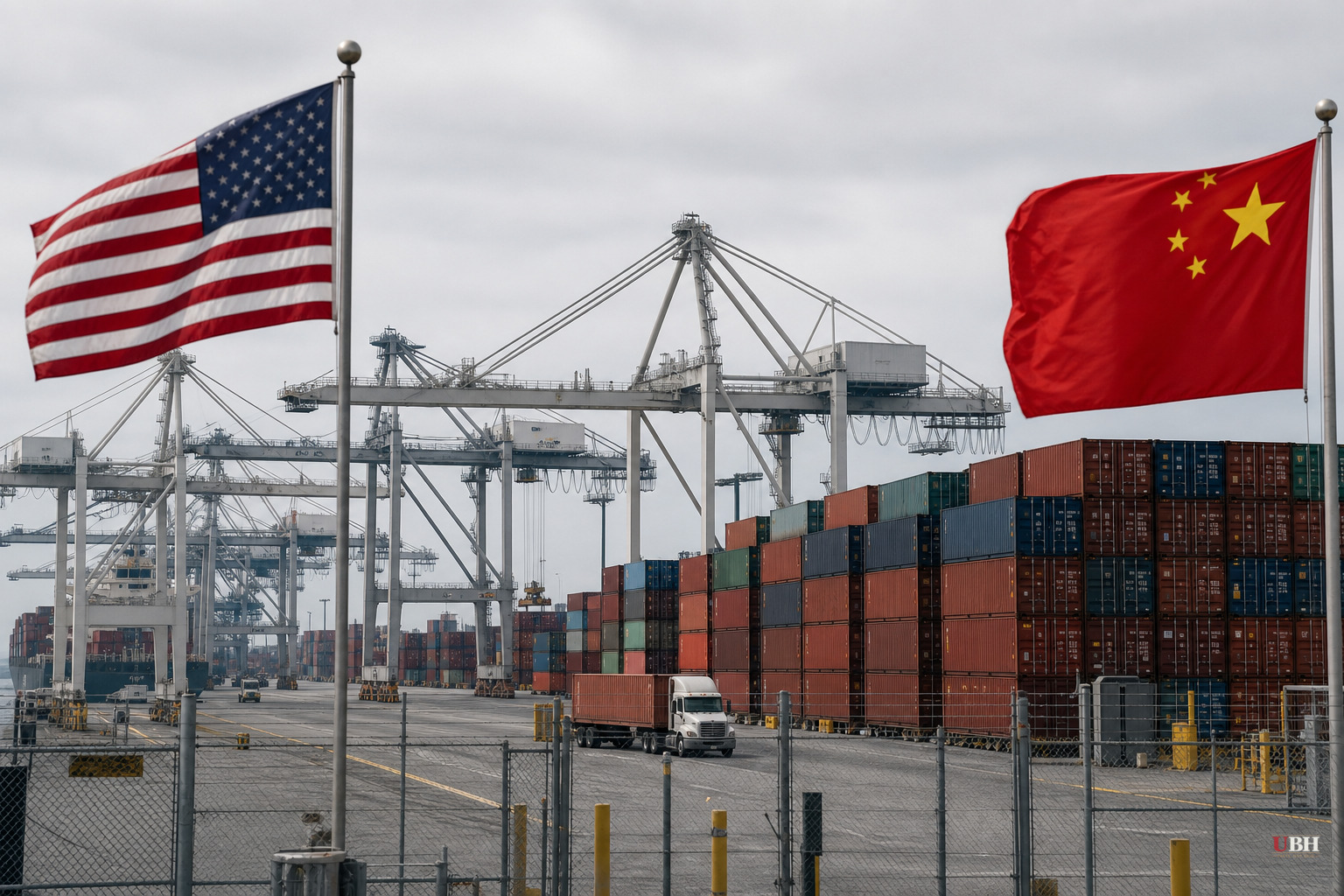
For more than 40 years, the U.S.-China economic relationship ran on a simple trade: American and European consumers got cheap manufactured goods, and China got capital, technology, and a fast track out of poverty. That arrangement started under Deng Xiaoping's free-market reforms and turned China into the world's second-largest economy. Neither side would have gotten there without the other.
That era is ending. Xi Jinping, according to reporting from The Atlantic, is actively redirecting China's trade and investment away from the West, pouring state money into homegrown technology, and building closer economic ties with countries like Russia that Beijing doesn't see as a threat. The stated goal is to make China less exposed to American leverage.
The fear driving Xi isn't abstract. Washington has shown it's willing to use economic tools as weapons. The U.S. and its allies imposed sweeping sanctions on Russia after its 2022 invasion of Ukraine, freezing central bank assets and cutting Russian banks off from global payment systems. Beijing watched that happen and drew an obvious conclusion: the same toolkit could someday be turned on China.
Washington's concerns run the other direction. China controls a dominant share of global rare earth mineral production and processing, materials essential to everything from fighter jets to electric vehicle motors to smartphones. Both the Trump and Biden administrations moved to limit that leverage and to choke off China's access to advanced semiconductor technology, worried Beijing could use American-made chips to boost its own military or crush U.S. competitors economically.
A bipartisan shift, not a partisan one
This is one of the few areas where U.S. policy has been genuinely bipartisan. Trump's first-term tariffs on Chinese goods were largely kept in place by the Biden administration, and Biden added his own restrictions on advanced chip exports to China through the Commerce Department's Bureau of Industry and Security. Whatever else divides Washington, treating China's economic rise as a strategic risk isn't a Democrat-versus-Republican fight. It's now the default assumption in both parties.
This means the trajectory described here isn't likely to reverse with the next election. Decoupling, or the softer version some call "de-risking," has become institutional policy, not a single administration's project.
The case for skepticism
There's a reasonable argument, made by business groups and some economists, that both governments are overreacting. Forced separation from the world's most efficient manufacturing base doesn't come free. Higher tariffs on Chinese goods get passed to American consumers and manufacturers who rely on Chinese components. Rare earth restrictions cut both ways. Companies on both sides lose access to markets and supply chains built over decades, and rebuilding domestic alternatives, whether it's chip fabrication in Arizona or rare earth processing in Texas, takes years and enormous capital.
Supporters of decoupling counter that the risk of dependency is worse than the cost of rebuilding. If Beijing can cut off rare earths or Washington can cut off advanced chips whenever tensions spike, neither country has real strategic autonomy. From that view, the short-term economic pain is the price of not being held hostage later.
Both arguments have merit, and neither is fully resolved. The rare earth leverage is real and demonstrated. So is the chip leverage. What's unresolved is whether the current pace of separation is calibrated correctly, too fast to avoid unnecessary economic damage, or too slow to prevent a future crisis.
What happens next
The practical test will be whether either country can build workable substitutes fast enough. The U.S. has pushed subsidies through the CHIPS Act to build domestic semiconductor capacity, and separate efforts are underway to develop non-Chinese rare earth supply chains in Australia, Canada, and the U.S. itself. China, meanwhile, is investing heavily in its own chip design and manufacturing capability to reduce reliance on American and Taiwanese technology.
Neither side is close to full self-sufficiency yet. Until one or both get there, the global economy remains stuck between two governments that no longer trust the interdependence they spent 40 years building, but haven't finished building an alternative to it either.
Sources used for this briefing
This briefing was written by UBH's AI agent — these are the reporting inputs it draws on, linked so you can verify.


