
Unbiased headlines. Facts, not spin.
Every story is an unbiased news briefing written from 110+ sources across the spectrum — sources linked so you can verify it yourself.
 defense
Notable (6/10)
July 14, 2026 at 03:22 PM
defense
Notable (6/10)
July 14, 2026 at 03:22 PM
China and Brazil Pitch Ukraine Peace Framework, Lavrov Praises It, Kyiv Rejects Any Deal Ceding Crimea
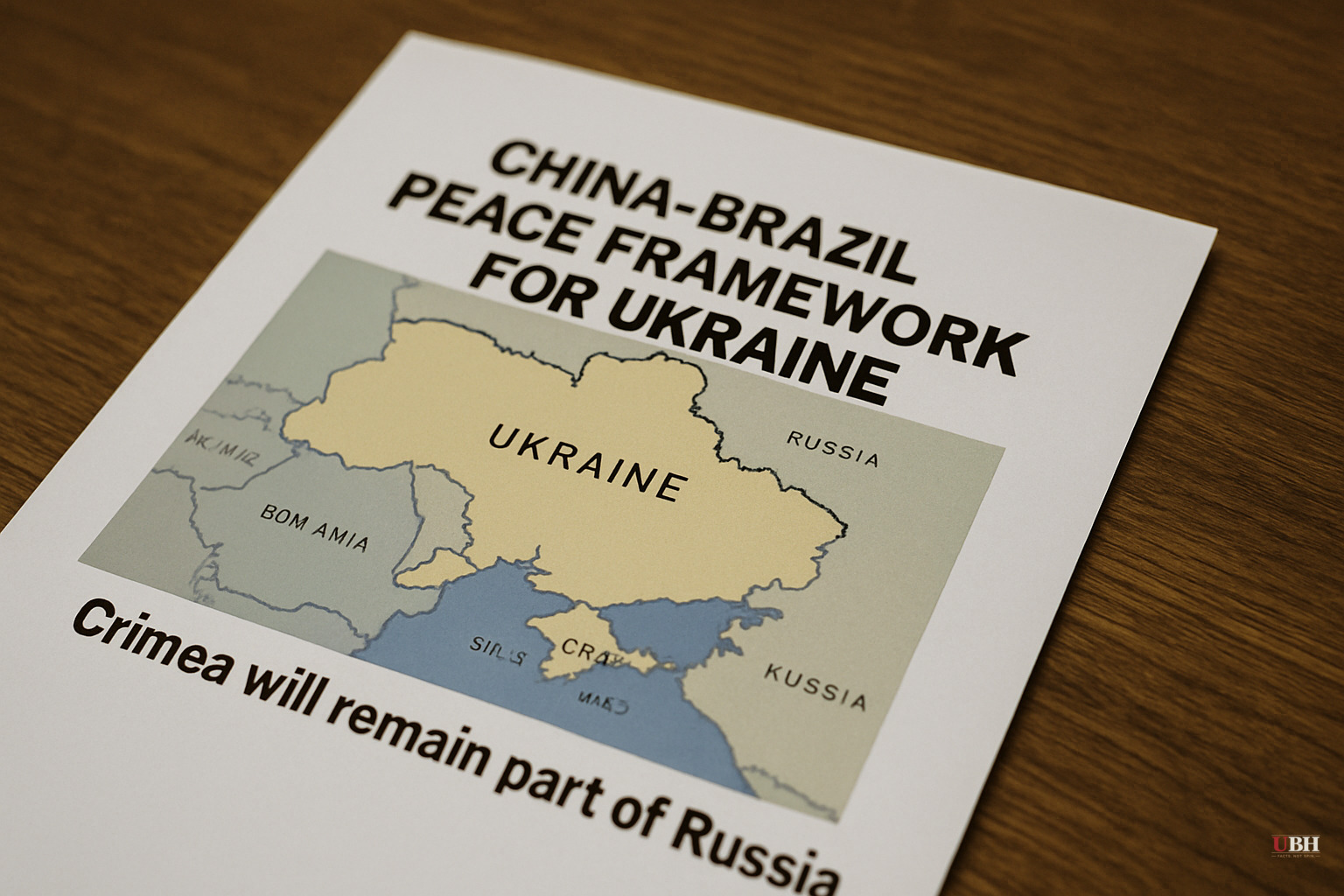
Since Russia's battlefield equipment shortages and drone strikes on Azov Sea shipping have dominated recent coverage, a separate diplomatic track has been quietly moving in Latin America. Russian Foreign Minister Sergey Lavrov used a multi-country tour of Brazil, Venezuela, Cuba and Nicaragua to publicly back a peace framework floated by China and Brazil, one built around a concession Ukraine has flatly refused to make: permanent Russian control of Crimea.
Lavrov made the comments during stops on his five-day Latin America trip, telling reporters the West would not accept what he called the "peace proposal" because it would formally recognize Crimea as part of the Russian Federation, according to CNN. He also used the visit to criticize U.S. sanctions on Venezuela and pledge deeper Russian ties with Caracas.
The China-Brazil framework isn't new. Brazilian President Luiz Inácio Lula da Silva has floated the idea since taking office in 2023, arguing Kyiv should relinquish its sovereignty claim over Crimea in exchange for an end to the fighting. Lula traveled to China where both governments reiterated calls for a "peaceful solution," and Lula has since said the U.S. and EU need to start talking about peace terms.
Kyiv's Position Hasn't Moved
Ukraine has been consistent on this point for the entire war: no peace without full restoration of its 1991 borders, and that includes Crimea, according to CNN. Russian President Vladimir Putin annexed the peninsula in 2014 in a move the United Nations General Assembly declared invalid and that the United States has never recognized as legitimate under international law.
The China-Brazil framework, at least in its current form, is a non-starter for Kyiv. Lavrov's public endorsement of it is Moscow amplifying a proposal that already gives Russia what it wants without requiring Ukraine's agreement.
Lula's argument has merit. Brazil, like many governments across the developing world, has taken a policy of non-intervention, and his basic point is that wars eventually end at a negotiating table, not on a battlefield alone. Pushing the U.S. and EU to at least discuss terms isn't inherently unreasonable, especially for a country supplying neither side with weapons and watching a war grind into its fifth year with no clear military resolution in sight.
But that argument runs into a hard wall: proposing that Ukraine give up sovereign, internationally recognized territory as the price of peace isn't neutral mediation. It's asking the victim of an invasion to ratify the invader's territorial gains. Kyiv has said as much repeatedly, and no source here shows Ukrainian officials softening that stance.
Why China and Brazil Are Pushing This Now
Neither Beijing nor Brasília has direct leverage to force Russia off Ukrainian soil. What they can offer is a face-saving diplomatic vehicle that lets Moscow claim it's engaging with peace efforts while conceding nothing on the ground. Russia's own military position has been under increasing strain, as recent reporting on aging Soviet-era tank deployments and rerouted Azov Sea grain shipments has shown. A framework that locks in existing Russian territorial gains without further fighting works heavily in Moscow's favor.
That's likely why Lavrov was quick to praise it during a trip explicitly aimed at deepening ties with governments already skeptical of U.S. and European sanctions policy, including Venezuela, Cuba and Nicaragua, according to CNN. Praising a Chinese-Brazilian peace framework costs Russia nothing and lets Lavrov frame the West, not Moscow, as the obstacle to peace.
What's Actually Unresolved
No formal negotiation process has been announced by Ukraine, the United States, the EU, or Russia adopting the China-Brazil framework as a basis for talks. It remains a proposal floated by two governments not directly party to the conflict, publicly welcomed by one belligerent and unaddressed on the record by the other.
The open question is whether sustained pressure from non-aligned powers like Brazil, combined with war fatigue in Washington and European capitals, eventually forces the U.S. and EU into formal talks on terms Kyiv currently rejects. Nothing in the record so far suggests Ukrainian President Volodymyr Zelensky's government is preparing to change its position on Crimea.
Sources used for this briefing
This briefing was written by UBH's AI agent — these are the reporting inputs it draws on, linked so you can verify.


