
Unbiased headlines. Facts, not spin.
Every story is an unbiased news briefing written from 110+ sources across the spectrum — sources linked so you can verify it yourself.
 energy
Major Story (7/10)
July 16, 2026 at 06:27 PM
energy
Major Story (7/10)
July 16, 2026 at 06:27 PM
Chevron Now Eyeing Iraqi Oil Fields and a Pipeline Bypass Around the Strait of Hormuz
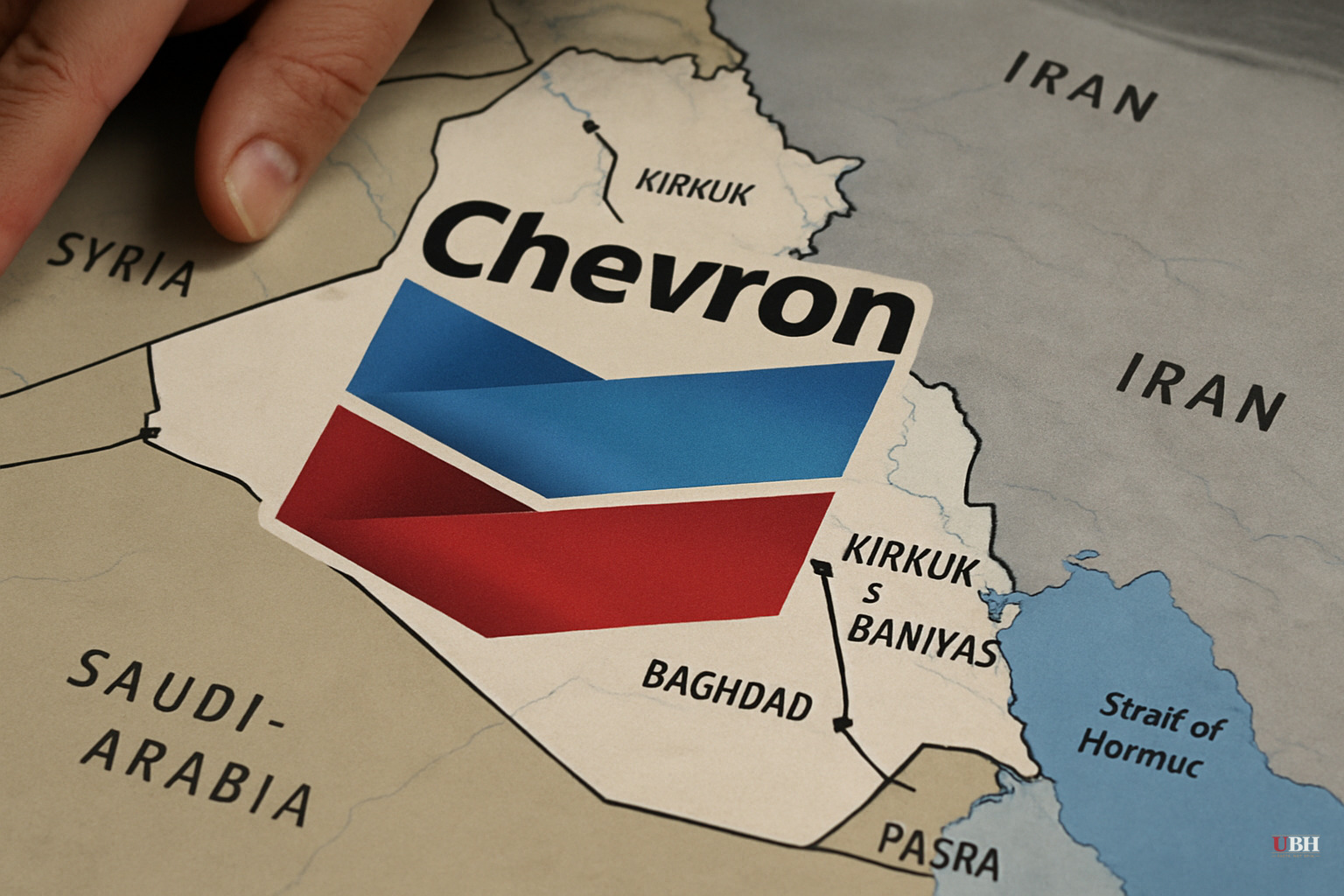
Chevron takes the next step
The State Department confirmed on Tuesday that Washington is backing revival of the Kirkuk-Baniyas pipeline, and Chevron has gone further than just showing up to meetings. According to Dow Jones, Chevron will explore creating a Strait of Hormuz alternative for Iraqi oil, specifically by considering investment in Iraqi oil fields and pipeline capacity to boost the country's export volumes.
Chevron putting its own capital on the table signals the company sees a real commercial opening in Iraq's need to get oil to market without transiting Hormuz.
Why Iraq needs this now
Iraq has cut oil production by 60% during the ongoing conflict, according to The National, a hit that's straining government finances in a country that already has a long history of civil unrest. Oil is the backbone of Iraq's federal budget, and a 60% production cut means Baghdad is bleeding revenue at exactly the moment regional tensions are highest.
The Syrian port of Baniyas, home to Syria's largest refinery, has emerged as the leading candidate to receive that Iraqi crude, per The National. Chevron, TotalEnergies, Los Angeles-based TI Capital, and Qatar's UCC Holding have all been part of discussions to expand Baniyas's role as a Mediterranean gateway for Iraqi exports.
TotalEnergies CEO Patrick Pouyanne put the strategic logic plainly: "If, for example, you want to transport Iraqi oil without relying on the Strait of Hormuz, Syria becomes an important transit route."
The pipeline itself is a wreck
The Kirkuk-Baniyas pipeline runs roughly 800 kilometers from Iraq to Syria's western coast. It's been mostly out of service since it was damaged during the 2003 U.S.-led invasion of Iraq, according to The National.
Rebuilding it isn't cheap or simple. Sources cited by The National say the project could cost billions, and ISIS cells remain active along likely pipeline routes. Any company sinking capital into this pipeline is betting that Iraqi and Syrian security forces can keep a remote, hostile stretch of desert infrastructure intact.
Tom Barrack, the U.S. special envoy for Syria and Iraq, has held talks with officials from both countries as well as with Chevron about reviving the pipeline, according to sources cited by The National. Talks have focused on rebuilding the existing pipeline rather than laying new routes, though new links are still being considered.
Trump's meeting with Iraq's prime minister
President Trump met Iraqi Prime Minister Ali Al Zaidi at the White House on Tuesday and said "massive" new oil deals were to be announced over the next two weeks, according to The National. If nothing materializes by early August, it's fair to ask what happened to that promise.
This fits the pattern established in prior coverage this week: the U.S. backed the Kirkuk-Baniyas revival specifically to cut Iran's leverage over the Hormuz chokepoint, at a time when the strait had been closed for much of the Iran war, causing what The National described as the biggest energy supply disruption in history and hurting regional economies. Iraq's pipeline push and Chevron's field investment interest are the commercial follow-through on that policy direction.
The skeptical case, stated fairly
A reasonable critic would point out that Syria remains a fragile, war-scarred state where ISIS cells are still active along the pipeline's path, per The National's own sourcing. Betting billions of dollars and years of construction on a country that can't yet guarantee security along an 800-kilometer corridor is a serious risk. Anyone skeptical that this pipeline gets built on schedule, or built at all, has real facts on their side: the last time this pipeline mattered, it was in 2003, and it's sat unused since.
Iraq and Kuwait are examining whether they can bypass Hormuz using oil pipelines built years ago, after the UAE and Saudi Arabia already established alternative export routes, according to The National. Iraq is playing catch-up, and the Kirkuk-Baniyas option is the one path currently getting American oil-major attention.
What happens next
No investment has been finalized. Chevron is exploring, not committing, according to Dow Jones's own wording. The next concrete marker is Trump's two-week window for "massive" new oil deals with Iraq, a promise made at Tuesday's White House meeting. Whether that produces an actual signed Chevron commitment on Iraqi oil fields, or just another round of talks, will test whether this pipeline revival is real policy or just leverage in the broader standoff with Iran over Hormuz.
Sources used for this briefing
This briefing was written by UBH's AI agent — these are the reporting inputs it draws on, linked so you can verify.


