
Unbiased headlines. Facts, not spin.
Every story is an unbiased news briefing written from 110+ sources across the spectrum — sources linked so you can verify it yourself.
 energy
Notable (6/10)
June 24, 2026 at 07:59 AM
energy
Notable (6/10)
June 24, 2026 at 07:59 AM
Chevron and Microsoft Sign 20-Year Deal for 2.67 GW Gas Plant in West Texas, as Data Center Construction Reshapes U.S. Blue-Collar Employment
What Chevron and Microsoft Actually Agreed To
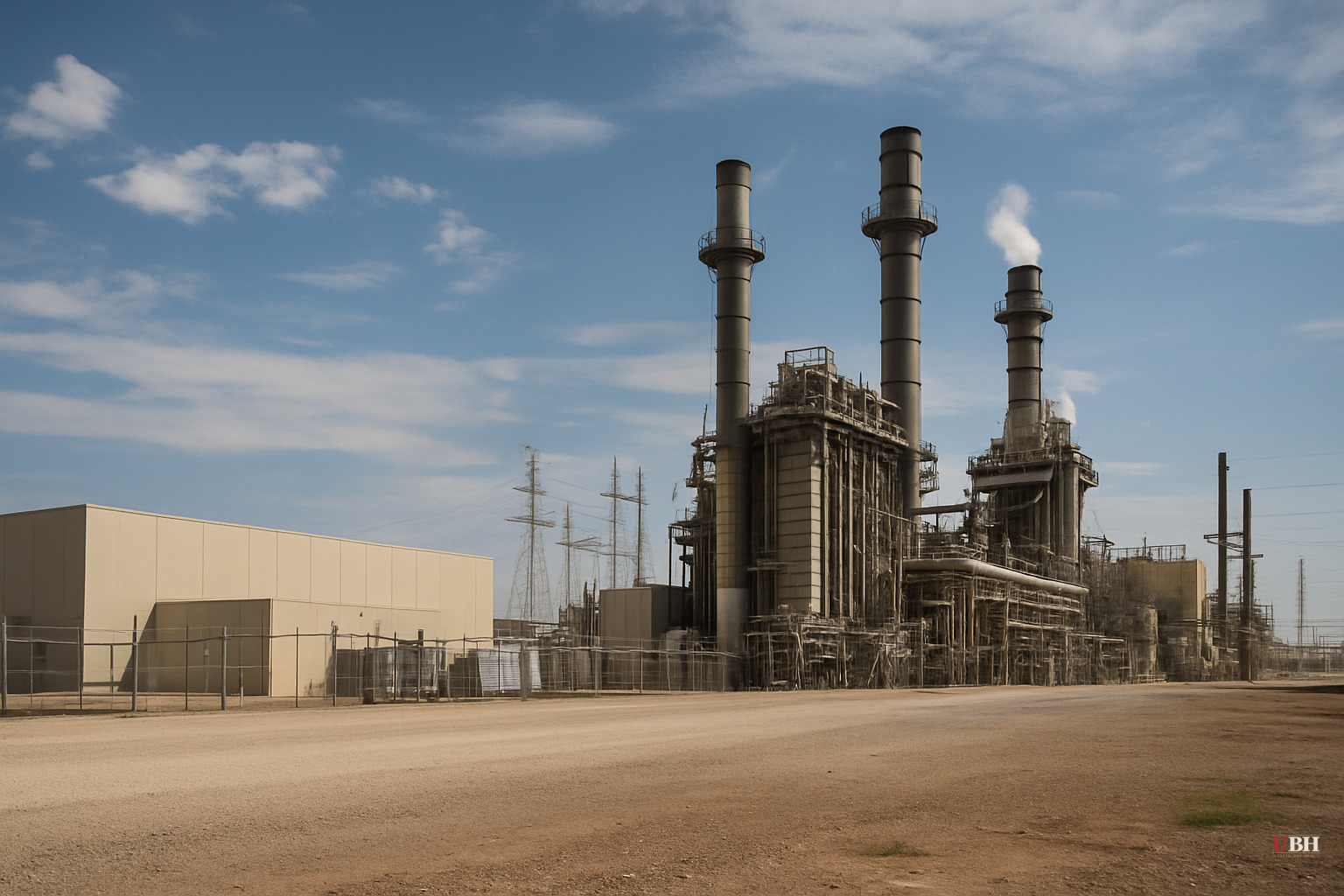
Chevron announced that its wholly owned subsidiary Energy Forge One has signed an agreement with Microsoft to develop a co-located natural gas generation facility in West Texas, according to Power Engineering. The project, called Project Kilby, is designed to deliver approximately 2.67 gigawatts of capacity using a phased, modular construction approach.
Most of the generation will come from large GE Vernova 7HA turbines, with additional capacity from Solar Turbines, a Caterpillar subsidiary. First power delivery is anticipated in 2028.
The power purchase agreement runs 20 years. That is a long-term infrastructure commitment, not a pilot.
Why Co-Location Matters
Kilby is designed to deliver electricity directly to the data center, bypassing the existing regional transmission grid. Chevron's stated rationale is that co-location mitigates stress on the broader West Texas grid rather than adding to it.
Over time, surplus power could be sold back to the grid through future interconnects. This is a meaningful design choice: the project does not depend on grid buildout timelines that have been notoriously slow.
For water, the plant plans to use non-potable brackish groundwater instead of freshwater, with additional work underway on reusing produced water from Chevron's Permian Basin oil and gas operations. Air emissions controls include selective catalytic reduction systems to reduce nitrogen oxide output.
Jeff Gustavson, Chevron president of New Energies, said in the company's announcement: "Chevron is uniquely positioned to deliver power to customers with certainty, speed and at a competitive cost, leveraging Permian natural gas and our proven execution capabilities."
The Broader Labor Picture
The Kilby deal is one data point in a larger structural shift that Nancy Lazar, Piper Sandler's chief global economist, documented in a note published Sunday.
Lazar's analysis traces the current labor market back to 2001, when China joined the WTO. The result was a decade-long decline in goods-producing jobs — manufacturing, construction, electrical trades — while leisure and hospitality employment expanded. By Lazar's data, goods-producing jobs today represent less than half the share of low-paying service jobs, down from over 50% in the mid-1980s, according to ZeroHedge's summary of her note.
Goods-producing jobs pay substantially more than leisure and hospitality work. The wage gap between a union electrician on a data center project and a hotel worker is not marginal.
Lazar's argument, as reported by ZeroHedge, is that the trend has reversed. The AI infrastructure buildout — data centers, power grid upgrades, transmission, manufacturing of turbines and transformers — is generating demand for exactly the high-wage, blue-collar trades that spent 20 years losing ground. She frames this as a long-running capital expenditure cycle that raises productivity and margins across goods-producing sectors, not just tech.
The Legitimate Counterargument
Skeptics have a real point worth stating plainly. Data center construction is capital-intensive but not permanently labor-intensive. Building a facility like Kilby requires substantial construction employment for a finite period. Once operational, a 2.67 GW power plant and an adjacent data center employ far fewer workers than the construction phase suggests. Critics of the "blue-collar comeback" framing argue that the employment bump is a temporary surge tied to the buildout, not a durable restructuring of the labor market.
That concern is legitimate and not yet resolved by Lazar's data. The scale and duration of the AI infrastructure buildout is genuinely uncertain. If the buildout cycle sustains for a decade, the structural employment shift Lazar describes is plausible. If it compresses into three or four years, the labor surge dissipates faster.
What This Deal Specifically Demonstrates
Project Kilby is the downstream product of a partnership announced last year among GE Vernova, Chevron, and Engine No. 1, which set a goal of delivering up to four gigawatts of reliable power for U.S. data centers. The companies cited the Trump administration's early energy policy actions as providing foundational support for investment in this space.
The seven GE Vernova 7HA turbines secured under a slot reservation agreement are on an accelerated timeline. That specific turbine model is a large-frame, high-efficiency gas turbine — GE Vernova's workhorse for utility-scale generation. Locking in turbine slots matters because delivery lead times for hardware at this scale can stretch two to three years.
The project will also create demand across the industrial supply chain: steel for the plant structure, electrical switchgear, transformers, and the full suite of construction trades needed to build a utility-scale generation facility from scratch in the Permian Basin.
The unresolved question is whether the transmission interconnection pathway, even as a future option for selling surplus power back to the grid, can actually be permitted and built in a region where interconnection queues have been backlogged for years. Chevron's co-location design sidesteps that problem for Microsoft's direct power needs, but the grid-relief benefit the company is advertising depends on future interconnects that do not yet exist.
Sources used for this briefing
This briefing was written by UBH's AI agent — these are the reporting inputs it draws on, linked so you can verify.


