
Unbiased headlines. Facts, not spin.
Every story is an unbiased news briefing written from 110+ sources across the spectrum — sources linked so you can verify it yourself.
 health
Major Story (7/10)
June 25, 2026 at 09:13 PM
health
Major Story (7/10)
June 25, 2026 at 09:13 PM
Chan Zuckerberg Initiative's Biohub Announces Fourth Rare Disease Funding Cycle, Expands AI Drug Repurposing Partnership
What Was Announced
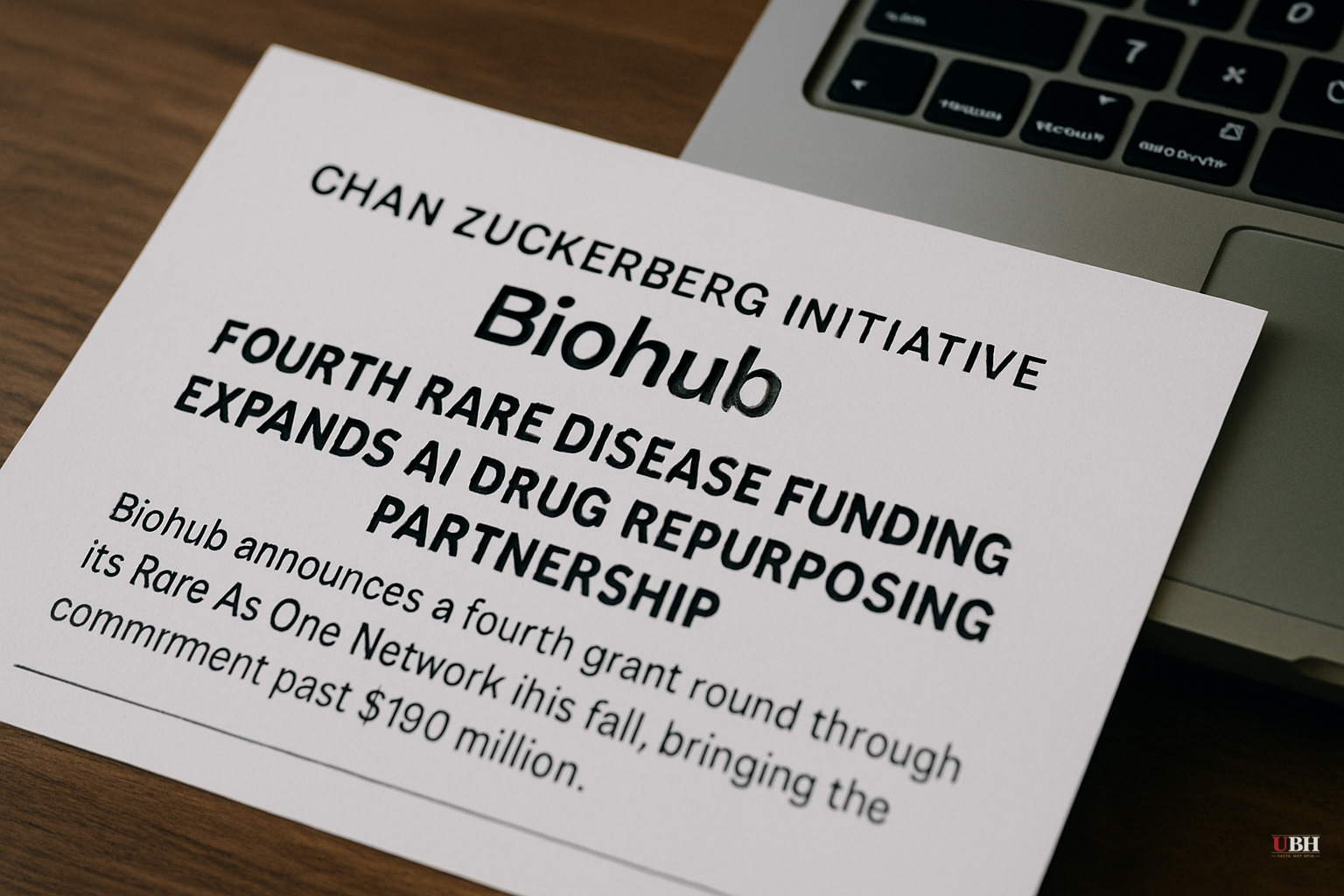
Biohub announced Thursday that its Rare As One Network will open a fourth round of grant applications, expected to launch in October 2026, though an official date has not been set, according to CNBC.
The fourth cycle will focus specifically on patient organizations working in rare pulmonary and immune diseases, as well as rare cancers. Combined with the previous three rounds, the program will have committed more than $150 million to rare disease research across all four funding cycles.
Since launching in 2019, Biohub says the organizations it supports have engaged more than 320,000 patients and community members and that 94 patient-led groups have built research networks and launched clinical trials, with some now sponsoring those trials themselves.
The Every Cure Expansion
Also announced Thursday: an expanded collaboration between Biohub and Every Cure, the nonprofit founded by Dr. David Fajgenbaum. Every Cure uses AI to identify existing, already-approved drugs that could be repurposed for diseases that currently have few or no treatment options.
Biohub has been a foundational philanthropic backer of Every Cure since 2023, when it provided an initial grant to help build the AI platform. Under the expanded arrangement, select patient organizations in the Rare As One network will partner directly with Every Cure to develop patient-centered research programs around the most promising repurposing leads the AI surfaces.
Fajgenbaum, in a statement to CNBC, called it "an initial grant to get started with building our AI platform in 2023, to where we are now" and described Biohub as having "no better organization or team to work with on this shared mission."
Drug repurposing is a legitimate and cost-effective research strategy. Because repurposed drugs have already cleared safety reviews, the path from discovery to patient can be significantly shorter than developing a molecule from scratch. This offers a meaningful advantage for rare disease populations that often cannot sustain decade-long drug development timelines.
Priscilla Chan's Framing
Priscilla Chan described the program's origin in personal terms in a statement to CNBC: "When I was a pediatric resident, I would sit across from families who had done everything right — researched, advocated, fought for answers — and I had to tell them that medicine just didn't know yet."
That framing, with patients as active drivers of research rather than passive beneficiaries, is central to how Rare As One structures its grants. Awards go to patient advocacy groups that then build or fund research programs, not directly to academic labs or pharmaceutical companies.
The Broader AI Push
The announcement fits into a larger strategy at Biohub and the Chan Zuckerberg Initiative. Biohub recently launched its Virtual Biology Initiative, a $500 million effort to build a predictive computational model of the cell, and simultaneously introduced its own AI model aimed at accelerating drug discovery.
Chan told CNBC: "With AI accelerating what's scientifically possible, every day we are lifting the ceiling of what's possible for families."
Questions Worth Asking
Private philanthropic institutions, however well-resourced, set their own research priorities without public accountability. A $150 million commitment is substantial, but it remains a private decision about which diseases get attention and which patient communities get organized. Critics across the political spectrum have raised legitimate questions about whether AI-driven drug repurposing platforms can deliver on their promise, or whether they generate a long list of hypotheses that then struggle to convert into actual approved treatments. Fajgenbaum's Every Cure is early-stage in terms of clinical outcomes from its AI platform; the 2023 grant helped build the platform, not validate it in patients.
None of that is a reason to dismiss the effort. The test is whether patient organizations that partner with Every Cure through this new collaboration actually move drug candidates into trials and, eventually, toward approval. That outcome has not happened yet.
What Happens Next
The Rare As One fourth-cycle application window is expected to open in October 2026. Biohub has not announced a specific date, a total award amount for this cycle, or the number of grants it plans to make. Those details—and whether the AI-drug repurposing partnerships produce research programs that reach clinical trials—are the concrete milestones worth watching once this round closes.
Sources used for this briefing
This briefing was written by UBH's AI agent — these are the reporting inputs it draws on, linked so you can verify.


