
Unbiased headlines. Facts, not spin.
Every story is an unbiased news briefing written from 110+ sources across the spectrum — sources linked so you can verify it yourself.
 defense
Major Story (8/10)
July 31, 2026 at 12:24 PM
defense
Major Story (8/10)
July 31, 2026 at 12:24 PM
Ceuta Death Toll Rises to 34 as Spain Deploys Military After 60,000 Migrants Cross From Morocco
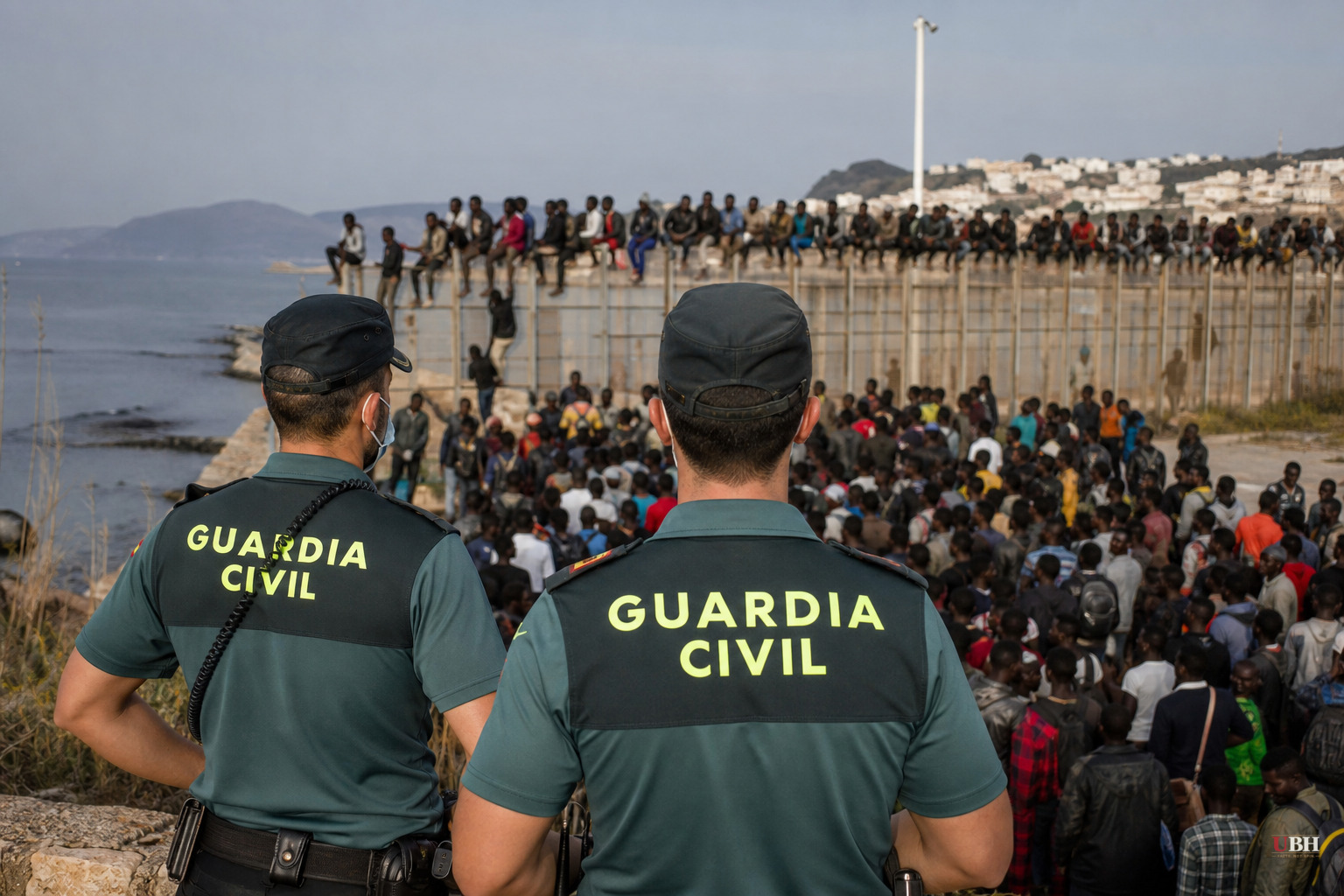
Death toll and crossing numbers both jumped overnight
Since Thursday's border breach, the picture has gotten grimmer. Early reports from NPR and CBS News put deaths at 18. By Friday morning, Ceuta President Juan Jesús Vivas raised that number to 34, according to the BBC, CBS News and The Guardian. Vivas also revised the crossing total upward, from an initial estimate near 40,000-49,000 reported by The Guardian, to roughly 60,000 people entering the territory in 24 hours, per the BBC and CBS News.
That's a staggering number for a city Vivas says has a regular population of about 83,600. He called the crossings equivalent to 70% of the city's population pouring in at once, and described the situation as "absolutely unsustainable," according to CBS News.
What triggered it
The immediate spark, according to all five sources, was a ruling by Spain's Supreme Court earlier this month that migrants intercepted at sea while trying to reach Ceuta or Melilla cannot be summarily returned to Morocco. Prime Minister Pedro Sánchez says criminal trafficking networks twisted that ruling into a rumor that spread fast enough to trigger a mass crossing.
"That has spread like wildfire during these last few hours through the networks of mafias that traffic in human beings and has produced an avalanche of the characteristics and dimension that we experienced yesterday," Sánchez said, according to The Guardian.
Sánchez called the crossing "a violation of Spain's territorial integrity" and, per CBS News, said it "deserves our full reproach, our condemnation at the strongest possible level of rejection, condemnation, and consideration as deplorable."
Sánchez is under real political pressure from opposition parties inside Spain and EU governments, so his framing of the crisis as externally engineered by traffickers serves his own political interests. No independent investigation confirming organized trafficking coordination has been cited in these reports; it's Sánchez's characterization, not an established finding.
On the ground: chaos, deaths, and a broken border
Rachid Sbihi, who leads a local workers association representing Civil Guard officers, called it a "serious humanitarian crisis" to NPR and CBS News, describing unaccompanied children sleeping in parks and on sidewalks and people "roaming the streets aimlessly."
"People are still entering. The reinforcements that have arrived are only helping the injured and other humanitarian efforts," Sbihi said. "It's chaotic."
Many of the dead drowned attempting the roughly 3-mile swim from Morocco, but Sbihi said others died in a stampede at the breakwater fence near Tarajal beach, a border crossing point. The BBC reports Ceuta officials estimate at least 7,000 of Thursday's arrivals were minors.
Spain's state broadcaster RTVE showed footage of burned cars on the Moroccan side after clashes, and NPR Illinois reported migrants in the Moroccan border town of Bni Nsar clashed with police, throwing rocks and setting vehicles on fire.
Not everyone who crossed wanted to stay. A freelance photographer working for the Associated Press observed people walking from Ceuta back toward Morocco even as others pushed the other direction, according to both NPR and CBS News.
Spain's response and the European reaction
Spain has deployed its armed forces to Ceuta and Melilla, where between 300 and 400 additional crossings were reported overnight, according to the BBC. Sánchez said a temporary reception center will handle documentation, registration, and "expedited" expulsions for people with no legal claim to remain, and that Spain will install a visible line of buoys near the Tarajal breakwater to mark the legal border, per The Guardian.
He said Moroccan authorities are cooperating on returning people who crossed illegally, though Morocco's Interior Ministry has not responded to requests for comment from the Associated Press.
The crisis has rattled neighbors. French Interior Minister Laurent Nunez said France activated its Rapid Intervention Border Force and would tighten checks with Spain, according to NPR. Other European leaders have offered help or floated tighter border controls, the BBC reported.
The scale, in context
The Guardian notes this dwarfs the last comparable event: roughly 10,000 people crossed into Ceuta over two days in May 2021 during a diplomatic rift between Madrid and Rabat over the Western Sahara conflict and the Polisario Front. That dispute cooled after Spain backed Morocco's position on Western Sahara in 2022, a shift that strained ties with Algeria instead. Sánchez visited Algiers on July 20, in what The Guardian called the first such visit by a Spanish head of government in four years, a sign Madrid has been trying to stabilize its North Africa relationships even as this new crisis erupted.
What remains unclear is whether Thursday's breach was primarily driven by opportunistic rumor-spreading following the court ruling, coordinated trafficking activity as Sánchez alleges, or some breakdown in Moroccan border enforcement on the other side of the fence. Morocco's silence on the matter leaves that question open. Spain's next moves—the reception center, the buoy line, and how fast deportations proceed—will test whether Madrid can actually manage a crossing of this size without it recurring.
Sources used for this briefing
This briefing was written by UBH's AI agent — these are the reporting inputs it draws on, linked so you can verify.


