
Unbiased headlines. Facts, not spin.
Every story is an unbiased news briefing written from 110+ sources across the spectrum — sources linked so you can verify it yourself.
 defense
Notable (6/10)
August 14, 2026 at 10:30 PM
defense
Notable (6/10)
August 14, 2026 at 10:30 PM
CENTCOM Builds Multinational Kamikaze Drone Task Force After Losing 45 Reapers to Iran
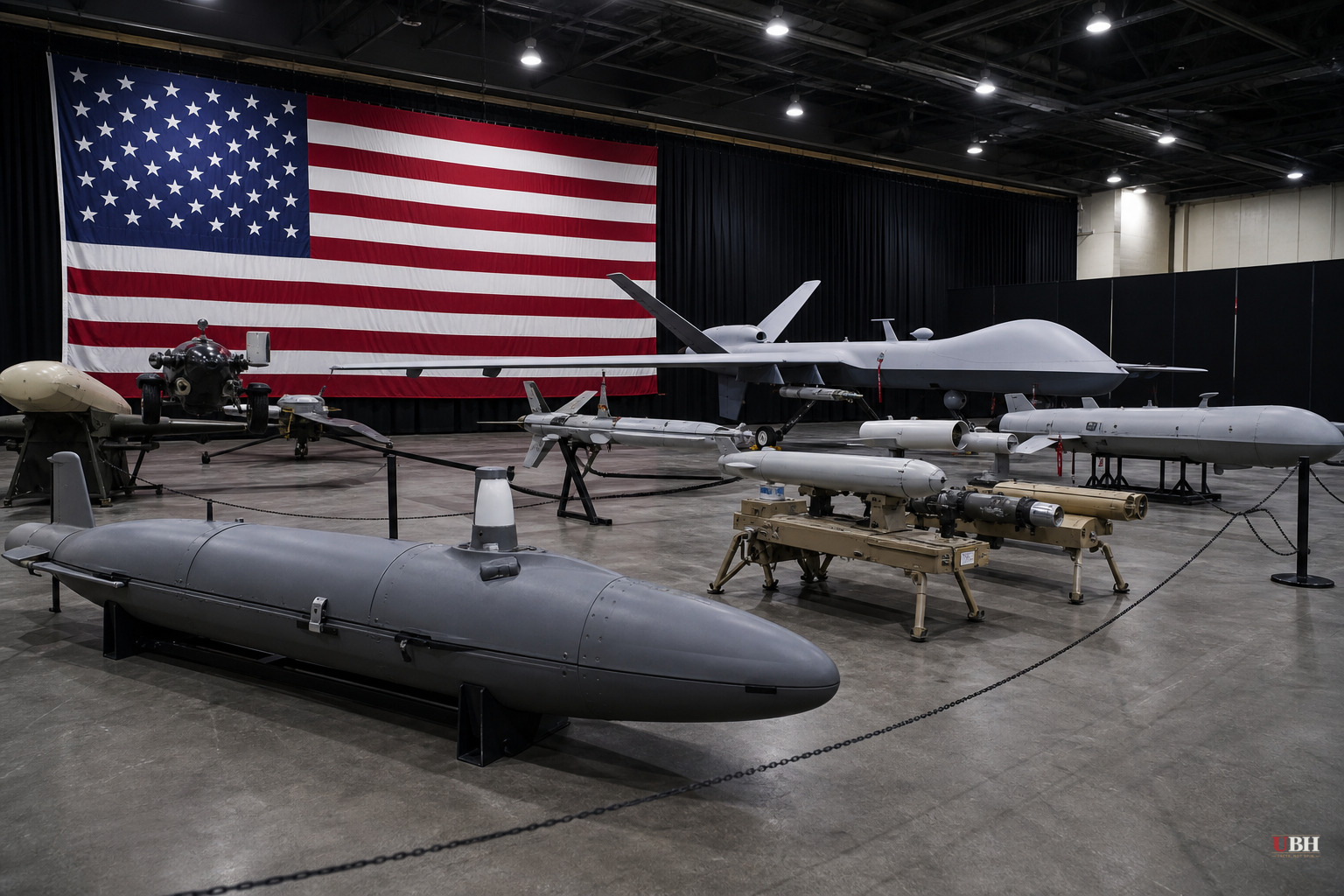
U.S. Central Command announced on August 13 that it's standing up Task Force Falcon Strike, described as the first-ever multi-domain, multinational attack drone task force in the Middle East, according to a CENTCOM statement.
The unit will run one-way attack drones, sometimes called kamikaze drones or loitering munitions, across air, surface and underwater domains. Personnel will come from the U.S. and unnamed regional partners, according to CENTCOM.
Adm. Brad Cooper, CENTCOM's commander, said the task force will build on an earlier effort. "Task Force Falcon Strike will expand on Scorpion Strike's success given the tremendous innovation happening among our regional allies and partners," Cooper said in the CENTCOM release. "Integrating and deploying our new capabilities together will help us rapidly realize the new possibilities that are on the horizon."
What Scorpion Strike Already Did
Falcon Strike isn't starting from scratch. CENTCOM created Task Force Scorpion Strike in December 2025 as the military's first dedicated one-way attack drone squadron in the region, according to Military.com and Navy Times.
Scorpion Strike notched several firsts. It launched an aerial attack drone from a U.S. Navy warship for the first time last December. It flew missions during what the military had initially called Operation Epic Fury, a name U.S. officials have since retired, according to Military.com. In July, Corsair unmanned surface vessels struck Iran's Bandar Abbas port, hitting a submarine and ship maintenance facility, marking the first U.S. use of a drone boat as an attack weapon, according to The War Zone.
The centerpiece weapon is LUCAS, the Low-Cost Uncrewed Combat Attack System, a reverse-engineered copy of Iran's Shahed-136 kamikaze drone, according to The War Zone and Breaking Defense. The U.S. is now flying a knockoff of the same Iranian drone that has been attacking Gulf shipping and infrastructure for years.
Why Now
Falcon Strike's launch comes nine months after Scorpion Strike, and the timing aligns with mounting pressure in the region. Houthi forces claimed a drone strike this week on Saudi Aramco's Jazan oil refinery, a 400,000 barrel-per-day complex, according to Forbes. The UAE separately accused Iran of firing drones at two Abu Dhabi-owned oil tankers transiting the Strait of Hormuz on Thursday, Forbes reported.
CENTCOM has not named which regional partners are joining Falcon Strike. Navy Times, The War Zone and Military.com all confirmed the release gave no specifics on participating nations or which systems each partner will contribute. The War Zone reported CENTCOM declined to provide further details when asked directly.
The Reaper Problem
The task force announcement comes days after The Washington Post reported, citing three officials, that the U.S. military lost at least 45 MQ-9 Reaper drones, roughly 25% of its fleet, in the war with Iran, according to Military.com's reporting on that story. The lost Reapers cost more than $1.3 billion.
Reapers cost tens of millions of dollars each and Iran has been shooting them down. One-way attack drones like LUCAS cost a fraction of that and are built to be expendable. The Pentagon is shifting toward attritable systems because it cannot sustain billion-dollar losses on exquisite platforms.
The U.S. and Israel struck Iran on February 28, opening a conflict that Military.com describes as still without a resolution timetable despite multiple ceasefires and ongoing negotiations. Navy Times noted the war has drained U.S. munitions stockpiles and pushed military leaders to look for cheaper, faster-to-produce anti-drone technology.
The Bigger Picture
The Jerusalem Post's analysis traces this back further, noting that then-CENTCOM commander Gen. Kenneth McKenzie warned in February 2021 that commercial drones bought "at Costco right now" posed a serious threat. Russia's invasion of Ukraine a year later accelerated global drone warfare, with Ukraine becoming the testing ground for tactical drone innovation. CENTCOM has spent the years since trying to catch up rather than lead, according to the Jerusalem Post.
Forbes described Falcon Strike as a "NATO-style" coalition drone force, an apt comparison given CENTCOM's own language about building a "unified multi-domain, multinational deterrent." Whether that deterrent works depends entirely on which Gulf states sign on and how fast they can integrate their own systems, something CENTCOM has yet to disclose.
The straightforward question: which nations join, and how quickly can this task force move from announcement to operational capability while Houthi and Iranian drone strikes continue hitting oil infrastructure and tankers. CENTCOM has not set a timeline for when partner nations will be formally announced or when Falcon Strike will reach operational status.
Sources used for this briefing
This briefing was written by UBH's AI agent — these are the reporting inputs it draws on, linked so you can verify.


