
Unbiased headlines. Facts, not spin.
Unbiased Headlines is an independently owned news organization. We bring you the facts, not opinions, written fresh from 110+ named sources. Sources linked so you can verify it yourself.
 health
Notable (6/10)
Event date: October 15, 2026 ·
health
Notable (6/10)
Event date: October 15, 2026 ·
CDC Report: Detections of Brain-Infecting Fungus C. bantiana Rose Fourfold at One University of Washington Lab From 2023 to 2025
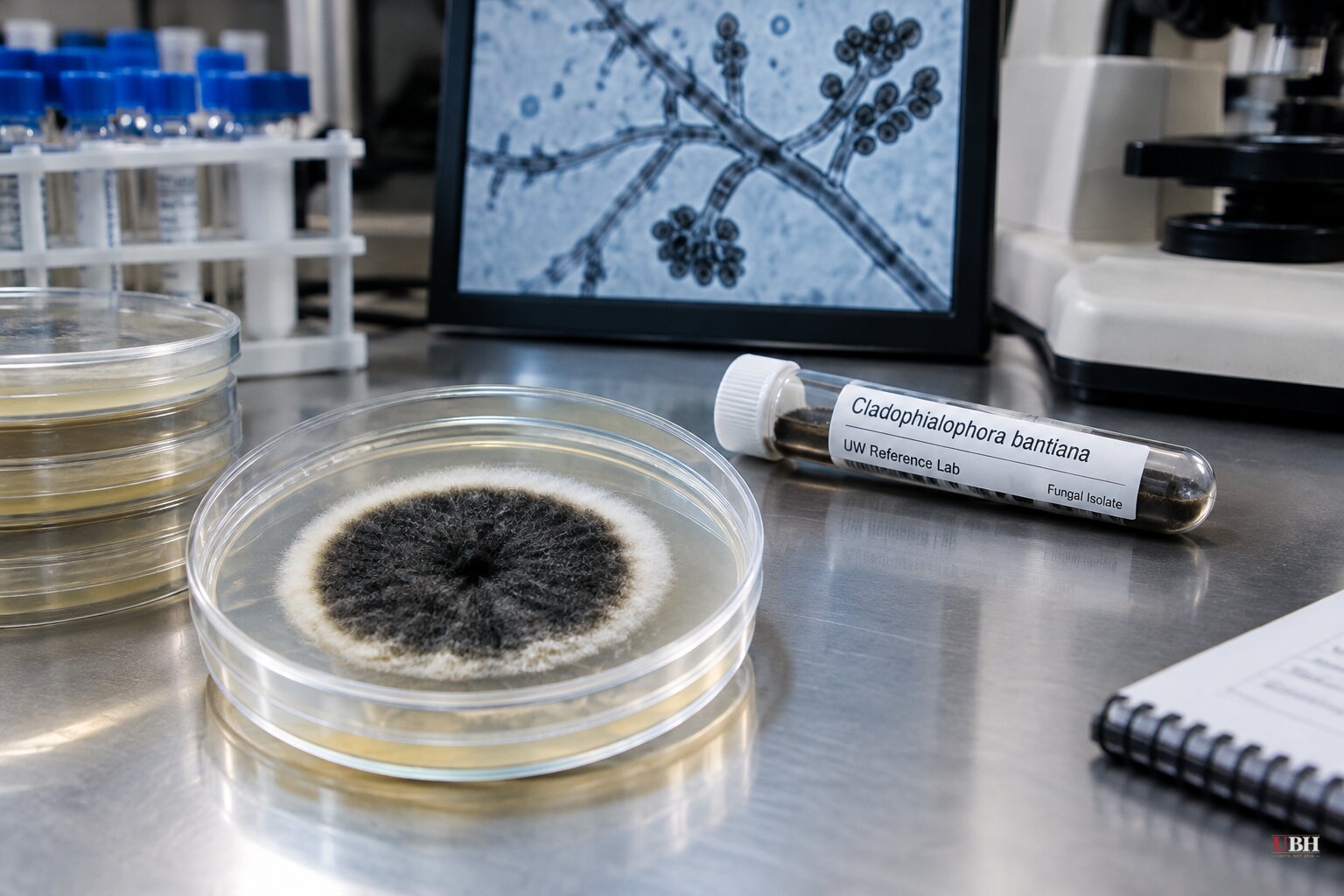
Since the CDC posted a Morbidity and Mortality Weekly Report online on Oct. 2, and then ran it in its Oct. 15 issue, one number has drawn attention: 14. That is how many cases of a rare brain-infecting mold, Cladophialophora bantiana, a University of Washington reference laboratory detected in 2025. The lab found one to five a year from 2009 through 2023.
What the report found
Researchers from the University of Washington School of Medicine and the CDC reviewed fungal PCR test results at the lab from January 2009 through July 2026. They identified 48 confirmed cases and one probable case.
The annual count rose to eight in 2024 and 14 in 2025.
The authors also checked whether more testing alone could explain the jump. From 2017 through 2023, the lab detected an average of 8.4 cases per 1,000 central nervous system specimens. In 2025 the figure was 26 per 1,000, a 210% increase. The authors wrote that the rise was not attributable to lab referral volume alone.
The fourfold figure comes from comparing detections in 2023 with 2025.
Who gets it, and where
The median patient age was 68. Cases came from 21 states and Washington, DC. California had six, Florida five, Texas five and Pennsylvania four. Totals for the remaining states were not itemized.
Of the 49 cases, 88% were found in brain tissue and 12% in lung tissue. The authors wrote that the lung detections support the presumed respiratory route of infection. Researchers also believe the mold can enter through a skin wound before traveling to the brain, where it forms abscesses.
About half of patients have no weakened immune system. Most fungal infections of the brain strike people who are severely immunosuppressed.
"What sets these infections apart is that people who have apparently healthy immune systems get the infection and are also at high risk of death," lead author Dr. Joshua Lieberman of the University of Washington told MedPage Today. "It's alarming that it occurs outside of those typical high-risk populations who have pretty profound immunosuppression."
The case-fatality rate is 60% to 70% even with aggressive treatment, according to a systematic review in Medical Mycology cited in the CDC report.
What nobody knows
The report is blunt about the gaps. "National surveillance does not exist, and neither the environmental reservoir nor the route of infection is fully understood," the authors wrote. They added that the mold has rarely been isolated from environmental sources and that many patients share no exposure history or risk factors.
The CDC report states that the reasons for the apparent increase are unknown.
Lieberman offered a possible explanation but did not claim to have established it. The rise could simply reflect more submitted specimens and better molecular testing, he said. "The other reasons that really jump to mind are a warming world and climate change," he added. He said evidence suggests some fungal pathogens are adapting to higher temperatures, and that human encroachment on the mold's environmental reservoir could raise infection risk.
That is a hypothesis from the study's lead author, not a finding.
The limits of one lab's data
The numbers come from a single reference laboratory that receives samples from around the country. That makes national incidence impossible to calculate, and a change in which hospitals send samples there could affect the counts. The authors' per-specimen analysis is their attempt to address that.
Lieberman said at least one other U.S. specialized fungal lab has also seen a rise in detections. Molds are hard to grow in the lab, so he said he suspects the cases are being undersampled. "We think that that's probably going to be an underestimate of the true incidence," he said.
The authors urged clinicians to consider the infection in patients with signs of a brain abscess, especially when cerebrospinal fluid testing and routine cultures come back without a diagnosis. Testing for fungi in tissue or spinal fluid can be ordered through clinical reference laboratories that offer molecular testing. For treatment, the report says surgical excision should be considered when possible, alongside combination antifungal therapy.
What comes next
The authors called for systematic national reporting. Until that exists, no federal agency is counting cases, and the University of Washington data cannot show whether 2025's total of 14 was a one-year spike or the start of a sustained rise.
Sources used for this briefing
7 links from 6 independent newsrooms (syndicated copies of the same report count once)
These are the sources it draws on, linked so you can verify.


