
Unbiased headlines. Facts, not spin.
Unbiased Headlines is an independently owned news organization. We bring you the facts, not opinions, written fresh from 110+ named sources. Sources linked so you can verify it yourself.
 health
Major Story (8/10)
health
Major Story (8/10)
Kenya Confirms Third Ebola Case, a 65-Year-Old Relative Who Was Already in Quarantine
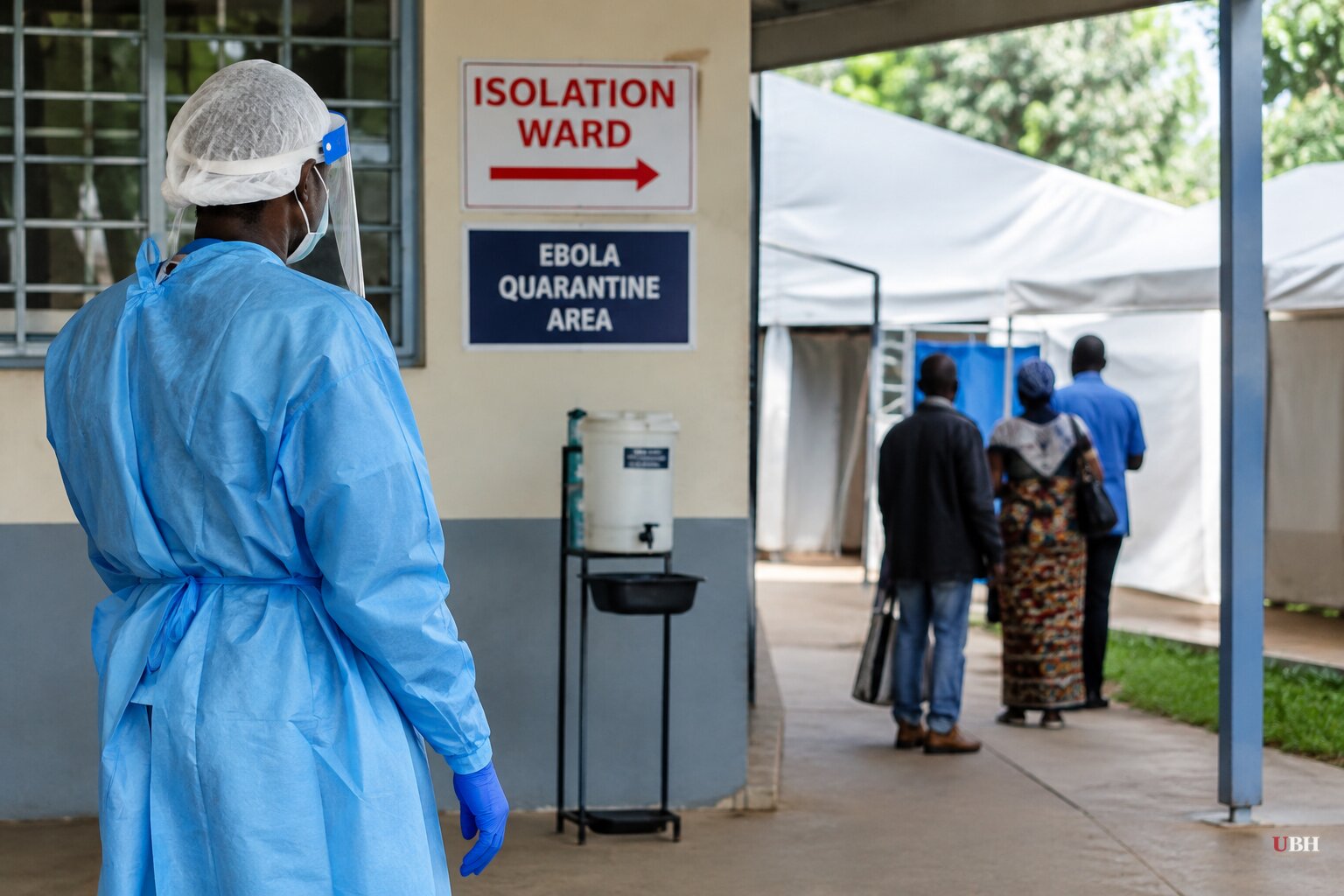
Since Kenya announced its first Ebola death on Oct. 6, the case count has grown to three, and every case traces back to a single traveler who flew into Nairobi from Congo.
The latest is a 65-year-old woman. Kenya's Health Ministry said Friday, Oct. 16, that she is a primary contact and close relative of the first and second patients. She has been in quarantine since Oct. 6.
How the third case was caught
The woman developed fever, sore throat and malaise while under observation. She was isolated and specimens were taken. Both the National Virology Reference Laboratory and the Kenya Medical Research Institute confirmed Bundibugyo virus.
She has been moved to an Infectious Disease Unit. Health Director General Dr. Patrick Amoth said she "was diagnosed early and is currently receiving supportive care improving her chances of recovery while limiting risk of further spread of the disease."
The second patient, also confirmed while in quarantine, is stable and responding to supportive care, the ministry said.
The chain back to one flight
The first patient was a Kenyan citizen who had lived in Congo for seven years and had been ill for about a month. He traveled by road through Beni to Kampala, Uganda, on Oct. 2. He flew to Nairobi on Oct. 3, and a relative drove him to a hospital, where he was isolated.
He died on Oct. 5. He was buried the next day under Kenya's safe-burial protocol for viral hemorrhagic fevers. It was the first Ebola death in Kenya's history.
At the Oct. 6 briefing, Health Minister Aden Duale said 28 people, including relatives and health workers, had been in contact with him. Another 27 passengers were on the same plane.
Contact tracing numbers
The ministry has listed 130 contacts. It says 127 of them, or 97.7 percent, have been traced and quarantined. That is above the 85 percent global benchmark the ministry cites as necessary to break a chain of transmission.
Three contacts have not been located. The ministry says the search continues.
Kenya had screened 685,027 people entering the country as of Oct. 15, the ministry said. Duale said earlier this month that only one of 267 samples tested up to that point had come back positive.
The ministry says there is no evidence of community transmission and that risk to the general public remains low. It also warned that more cases may emerge before monitoring periods end. Amoth said the third case "underscores the importance of quarantine and early reporting, as additional infections may emerge before the monitoring period ends."
The timing makes that caution pressing. Contacts are held for 21 days, a window that began in the first week of October. For those traced first, it ends toward the end of this month.
The outbreak behind it
Kenya's cases come out of the Bundibugyo outbreak in the Democratic Republic of the Congo. The Congolese health ministry said Tuesday, Oct. 13, that confirmed cases had reached 9,066, with 4,381 deaths. That is roughly a 48 percent fatality rate among confirmed cases. The U.S. Centers for Disease Control and Prevention says Bundibugyo outbreaks historically kill 30 to 40 percent of confirmed patients.
It is the second-largest Ebola outbreak on record. Officials in the region fear the true count is far higher. Breitbart reported that health officials believe unreported cases could be double or triple the confirmed figure. The West African epidemic of 2014 to 2016 killed more than 11,000 people.
There is no licensed vaccine for the Bundibugyo strain. Candidate vaccines are in early human testing, which leaves isolation, contact tracing and supportive care as the main tools.
Fear of clinics is making things worse
The outbreak is also pushing people away from care. Reuters, citing health workers in eastern Congo, reported that women and children are avoiding clinics for fear of catching Ebola or being deliberately infected. "They think the medicines we give them contain the Ebola virus," a nurse in Butembo told the news agency.
In Ituri province, deaths during childbirth rose 70 percent from May to July, according to the figures Reuters cited. UNICEF's public health emergency expert Raoul Kamadjeu warned of risks beyond Ebola itself. "We should be concerned not only about the direct impact of Ebola, but also its indirect effects on health, nutrition, child protection, and insecurity," he said. He added that UNICEF is worried about measles as vaccination rates fall.
Africa's top public health body and Congolese health authorities have also called for greater transparency in how Ebola response funds are spent, according to Reuters and AFP.
What the U.S. has said
The CDC says it is helping respond to the outbreak and has confirmed no U.S. cases. It rates the risk to the American public and travelers as low. A French doctor tested positive in June after returning from a humanitarian mission in Congo and was isolated on arrival.
What comes next
The test for Kenya is the next two weeks. The 127 quarantined contacts remain under monitoring until their 21-day windows close, and the three untraced contacts have not been found. Whether the third case is the last in this cluster depends on how those two groups fare.
The ministry has not said how many of the quarantined contacts have shown symptoms.
Sources used for this briefing
7 links from 7 independent newsrooms (syndicated copies of the same report count once)
These are the sources it draws on, linked so you can verify.


