
Unbiased headlines. Facts, not spin.
Unbiased Headlines is an independently owned news organization. We bring you the facts, not opinions, written fresh from 110+ named sources. Sources linked so you can verify it yourself.
 health
Major Story (7/10)
Event date: October 8, 2026 ·
health
Major Story (7/10)
Event date: October 8, 2026 ·
FDA Says Mifepristone Safety Report Won't Come Until March 2027 as PAs Push State Practice Rollbacks
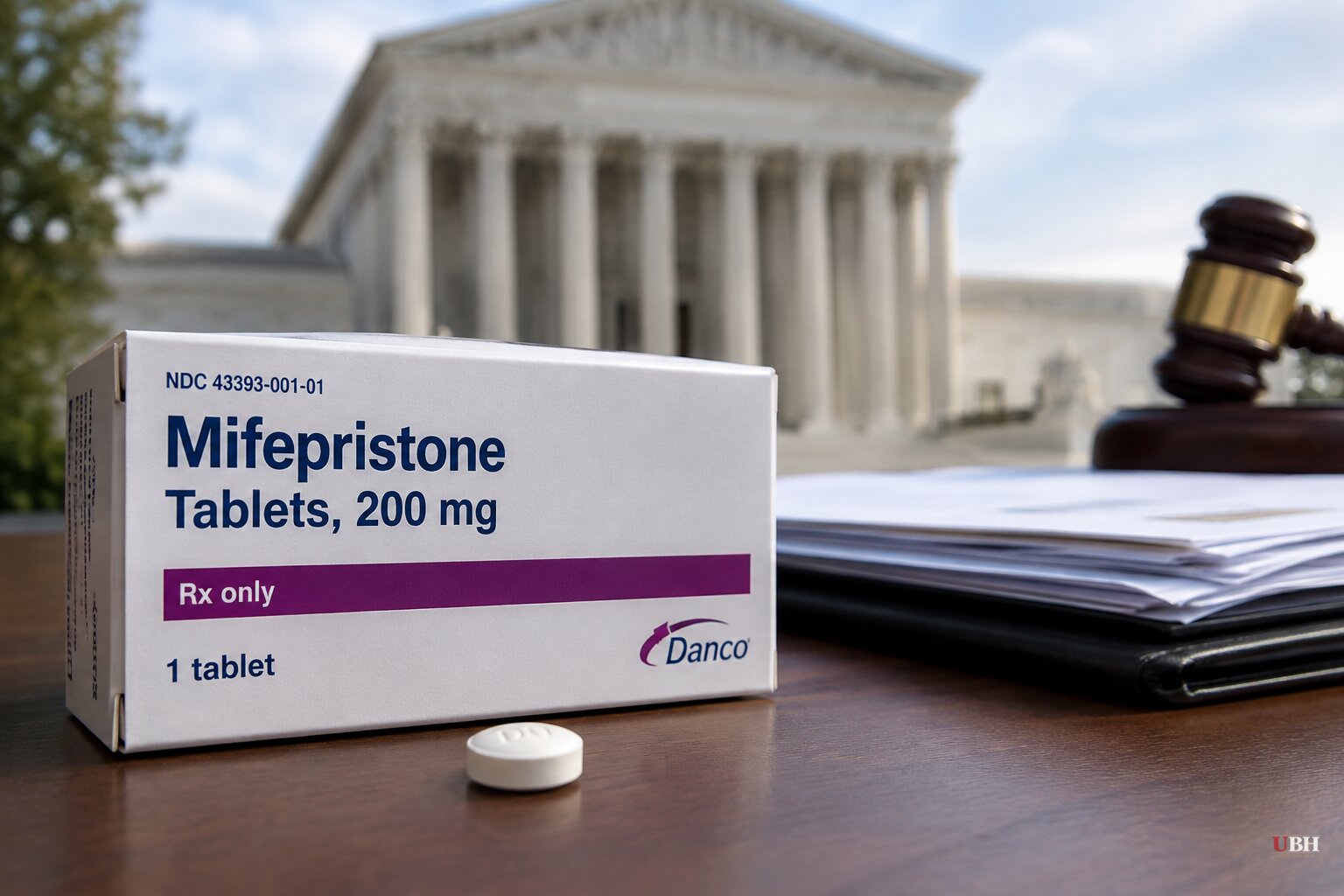
Two health-policy fights are heading into 2027 with no resolution: the FDA's review of the abortion pill mifepristone, and a state-by-state push to loosen physician supervision of physician associates (PAs).
FDA sets a March 2027 deadline on mifepristone
In a court-ordered filing, the Food and Drug Administration said it expects to finish a safety study of mifepristone by mid-December this year. A report on the findings is due "no later than March 2027." Only after that will the agency decide whether to impose new restrictions or other changes.
The filing is the first substantive public information on the reevaluation ordered by Health Secretary Robert F. Kennedy Jr.
The FDA approved mifepristone in 2000. The agency has repeatedly reaffirmed its safety and effectiveness since then, and it has eased several restrictions, including dropping the requirement that the drug be dispensed in person. Paired with misoprostol, it is the most common method of abortion in the U.S.
The update came at the direction of a federal judge in a case brought by Louisiana. The state alleges that mail delivery of mifepristone undermines its abortion ban. It is one of several state lawsuits over the drug moving through the courts.
Last month, a three-judge panel of the 5th U.S. Circuit Court of Appeals questioned the merits of Louisiana's case, including whether the state has legal standing to challenge the FDA's oversight of the drug.
Anti-abortion groups have pushed the Trump administration to revisit the pill since the president returned to office. They are not happy with the schedule. Gavin Oxley of Americans United for Life said the administration "continues to find itself on the wrong side of women's health, clearly uninterested in mitigating the ongoing harms caused by the abortion pill." He called the timeline a lack of "true leadership."
So the administration is being hit by its own side. A review ordered by a Cabinet secretary now stretches past the midterm elections, and the FDA has not said what outcome it expects.
PAs target supervision rules in a dozen states
The American Academy of Physician Associates (AAPA) is preparing its 2027 state legislative agenda. Its top priority is ending the requirement that PAs practice under physician supervision. That requirement is set by state law, not federal law.
Nine states have already removed it: North Dakota, Wyoming, Utah, Montana, Iowa, New Hampshire, Virginia, Maine and Delaware. An AAPA official said another 12 states are expected to pursue bills to modernize their PA practice acts, though not all will go after supervision alone.
Chantell Taylor, the AAPA's chief of public affairs and advocacy, said the issue does not split along party lines. "Even though the midterms will shape health policy top to bottom, there won't be a ton of shift in our priorities or our coalition partners," she said.
Taylor argues the patchwork is a problem for PAs who work across state lines. Health systems operating in several states tend to adopt the most restrictive rules everywhere, she said. "We need to raise all boats, not lower them," she said.
She also says supervision rules hold back retail clinics. According to Taylor, chains like CVS and Walgreens are "eager to open more locations," but where a state requires an on-site physician or set physician-to-PA ratios, "they're not hiring PAs or not opening clinics because the cost is not worth it."
Physician groups disagree. Kathleen Creason, CEO of the American Osteopathic Association, said in an email that the group "supports physician-led, team-based care" and values PAs. But she said it is concerned about efforts to "eliminate physician oversight requirements and authorize independent practice by clinicians who have not completed the same comprehensive education, training, and licensure requirements as physicians."
Creason noted that DOs and MDs complete four years of medical school, a comprehensive licensing exam and three to seven years of supervised residency before practicing independently. "PAs are valuable members of the healthcare team, but their training pathway is very different," she said.
Pennsylvania's version
In Pennsylvania, Gov. Josh Shapiro proclaimed Oct. 6 to 12, 2026, as Physician Associates and Assistants Week. The state has more than 12,000 licensed PAs.
On Oct. 9, state Reps. Pat Gallagher, D-Phila., and Bridget Kosierowski, D-Lackawanna, used the occasion to promote House Bill 2827. Gallagher's bill would remove what he calls "outdated administrative requirements" and let the level of collaboration between PAs and physicians be set at the practice site.
Gallagher says the goal is to "strengthen access to affordable, high-quality care while protecting patient safety." Kosierowski, a registered nurse, said hearing from PAs helps lawmakers see "where barriers remain."
The bill's text as described does not eliminate physician involvement outright. It shifts the terms of collaboration from state rules to individual practices. HB 2827 awaits consideration in the Pennsylvania House.
What comes next
The FDA's mifepristone study is due by mid-December, and the report by March 2027. The Louisiana case remains before the courts, and the 5th Circuit panel has not ruled. On the state side, the next marker is whether HB 2827 and the roughly 12 other states' bills reach floor votes when legislatures convene in 2027.
Sources used for this briefing
3 links from 3 independent newsrooms (syndicated copies of the same report count once)
These are the sources it draws on, linked so you can verify.


