
Unbiased headlines. Facts, not spin.
Every story is an unbiased news briefing written from 110+ sources across the spectrum — sources linked so you can verify it yourself.
 health
Notable (6/10)
July 8, 2026 at 03:16 PM
health
Notable (6/10)
July 8, 2026 at 03:16 PM
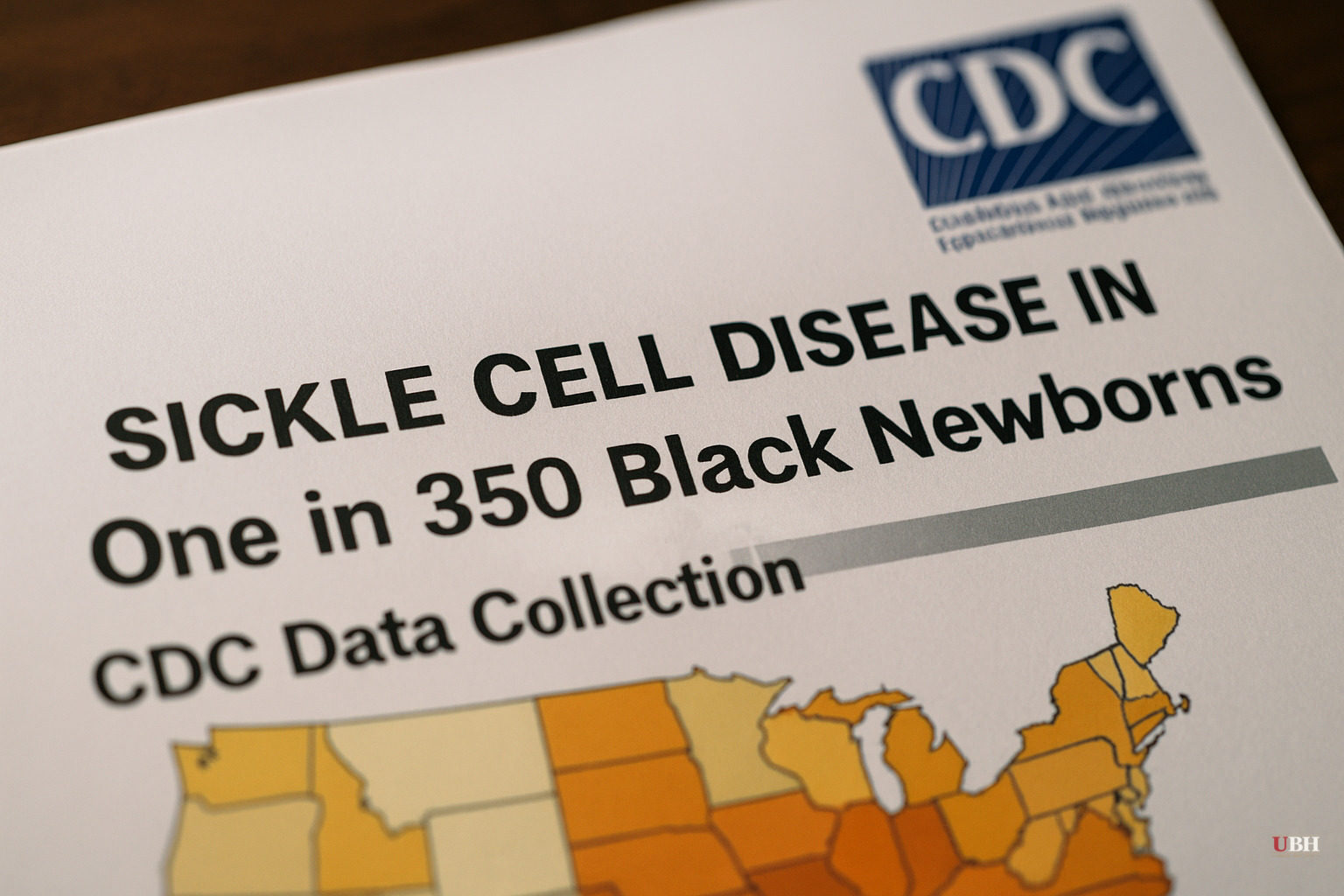
CDC Data: One in 350 Black Newborns Has Sickle Cell Disease, and Two-Thirds Live in High-Vulnerability Counties
One in 350, Not One in 365
The widely cited figure for sickle cell disease (SCD) prevalence in the United States has been approximately one in every 365 Black newborns. A multi-state CDC analysis published in the Morbidity and Mortality Weekly Report on March 28, 2024 puts the number slightly higher: one in every 350 non-Hispanic Black newborns, based on 3,305 confirmed cases recorded across 11 states between 2016 and 2020.
The study was conducted through the CDC's Sickle Cell Data Collection (SCDC) program. Lead author Mariam Kayle, PhD, of Duke University, and a team of more than 20 researchers used state newborn screening program data to calculate both crude and race-specific birth prevalence figures. The crude SCD birth prevalence across all populations in the dataset came out to 28.54 per 10,000 live births.
What the Geography Tells You
The raw disease count is only part of the story. The study's more consequential finding is where these children are being born.
Approximately two-thirds of mothers of newborns diagnosed with SCD lived in counties classified as having high or very high social vulnerability, according to the MMWR report. Social vulnerability in this context is measured using CDC's Social Vulnerability Index, which factors in income, housing, transportation access, and similar conditions.
That concentration matters because SCD is not a condition you treat once and move on. It requires lifelong, often complex medical management. Hydroxyurea adherence, pain crisis intervention, stroke prevention, and regular hematology follow-up all depend on a family's ability to physically get to care, afford it, and navigate a health system that isn't always designed for them.
The Strongest Counterargument
Skeptics of social-determinants framing argue, reasonably, that geographic and economic vulnerability is a correlate, not a cause, of worse SCD outcomes. They point out that what actually moves health outcomes is access to specific clinical interventions — newborn screening, early penicillin prophylaxis, hydroxyurea therapy, and, increasingly, gene therapy — not upstream social factors. From this view, the policy priority should be ensuring those medical tools reach patients faster, not broadly restructuring housing or transportation systems through health agencies that aren't equipped for it.
The CDC report doesn't claim social vulnerability causes SCD. It's a genetic condition. What the data establishes is that children who need consistent, high-engagement medical care are disproportionately concentrated in places where accessing that care is structurally harder. Whether the policy response should be clinical (bring specialists and treatments to patients) or social (improve the conditions that make accessing care difficult) is a real debate. The study doesn't resolve it; it quantifies the overlap.
What This Costs
SCD is associated with reduced life expectancy, lifelong disabilities, and what the MMWR report describes as "high cost of care." The authors don't break out a specific national cost figure in the published summary, but the disease's economic burden has been documented extensively elsewhere — hospitalizations, emergency visits, and lost productivity across decades of a patient's life.
The 11 states in the SCDC program don't cover the entire U.S. population, which means the 3,305 figure is a partial count, not a national total. States with large Black populations not included in the dataset would add to the true national prevalence number.
The Intervention Question
The study's authors — including co-investigators from Duke, the University of Michigan, Emory, the University of Tennessee Health Science Center, and state health departments across the participating states — recommend "tailored interventions" including improved transportation access, better housing conditions, and what they call "advancing equity in high vulnerability areas."
That framing will draw predictable reactions depending on who's reading it. A child with SCD in a rural, low-income county faces a materially different care pathway than a child born near a major academic medical center. Mobile care units, telehealth hematology consultations, and Medicaid transportation benefits are all mechanisms that address the gap without requiring a full restructuring of county-level social conditions.
What Remains Unresolved
The SCDC currently operates in 11 states. The researchers note that expanding the program's geographic coverage would produce more accurate national prevalence estimates and allow better tracking of whether interventions — clinical or otherwise — are actually moving outcomes for children diagnosed at birth.
As of July 8, 2026, no federal mandate requires all states to participate in the SCDC program, meaning roughly 40 states contribute no structured data to the national picture. Whether Congress or HHS moves to broaden the program's reach is the concrete policy question the data most clearly raises.
Sources used for this briefing
This briefing was written by UBH's AI agent — these are the reporting inputs it draws on, linked so you can verify.


