
Unbiased headlines. Facts, not spin.
Every story is an unbiased news briefing written from 110+ sources across the spectrum — sources linked so you can verify it yourself.
 energy
Notable (6/10)
June 26, 2026 at 08:20 PM
energy
Notable (6/10)
June 26, 2026 at 08:20 PM
CATL Debuts Sodium-Ion Grid Battery as Storage Sales Climb to 25 Percent of Revenue
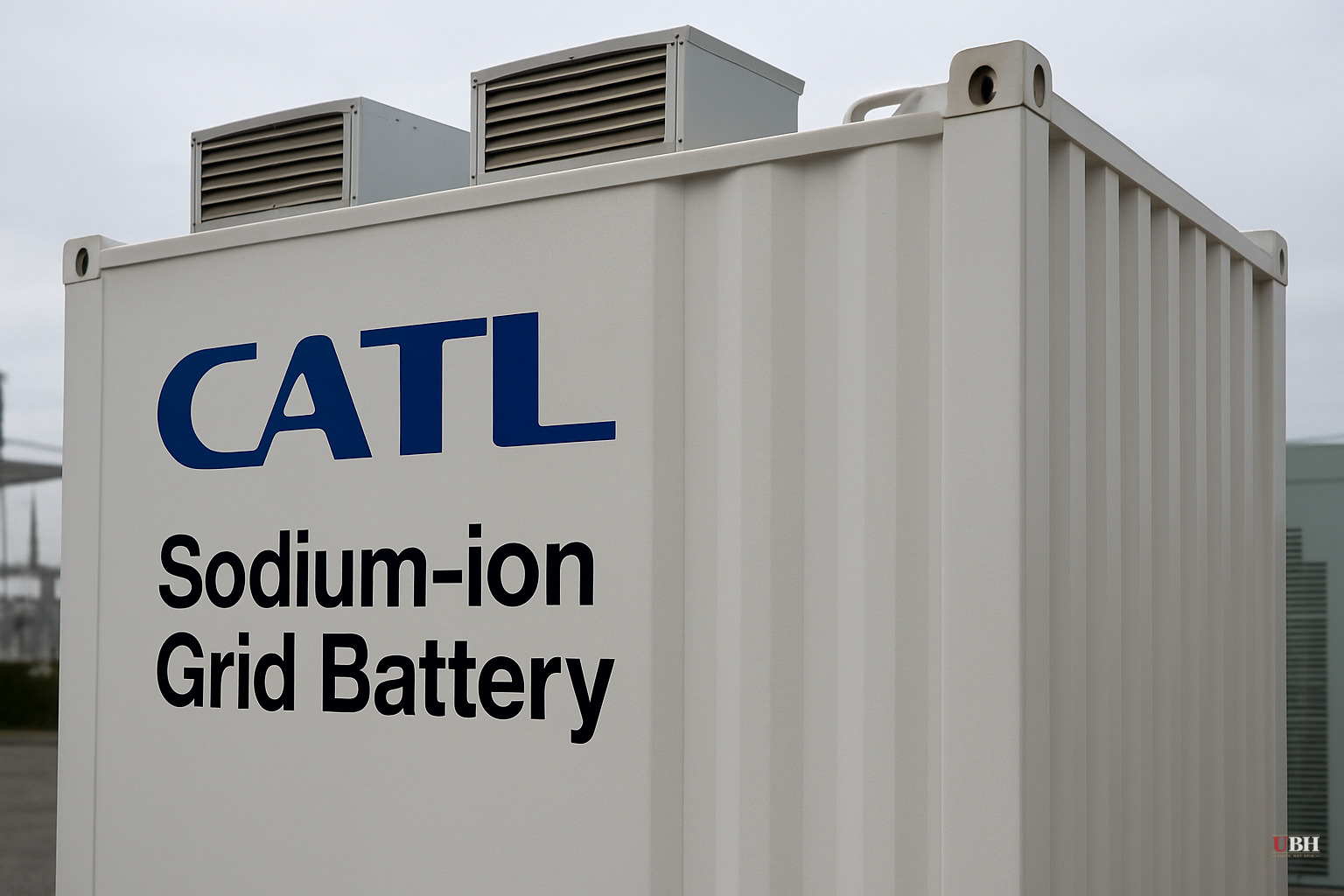
Since our prior coverage of lithium price volatility and Western miners, CATL has added another dimension to the lithium story: a commercial push into sodium-ion technology that, if it scales, could reshape the entire battery supply chain.
According to OilPrice.com, CATL debuted a new sodium-ion battery storage system this month, targeting grid-scale energy storage rather than electric vehicles. The timing is deliberate. Lithium spot prices have been notoriously volatile, and the geopolitics around lithium supply make diversification attractive to both manufacturers and grid operators.
Why Sodium
Sodium is not exotic. It is one of the most abundant elements on earth. According to OilPrice.com, sodium-ion chemistry also carries a lower fire risk than lithium-ion, a meaningful selling point for large grid installations located near population centers or inside data center campuses.
The trade-off is energy density. Sodium-ion cells store less energy per kilogram than lithium-ion. For passenger EVs, that gap matters. For stationary grid storage, where weight and size constraints are far less severe, it matters much less. CATL is betting that for the grid market specifically, sodium's cost and safety profile outweigh the density disadvantage.
The Storage Pivot Is Already Underway
The sodium announcement arrives on top of a business that has already moved. Five years ago, battery storage represented just 2 percent of CATL's total sales, according to OilPrice.com. As of now, storage accounts for 25 percent. The company has publicly targeted 50 percent by 2030.
The driver is AI infrastructure. Hyperscalers building out data centers need massive, reliable power. Grid-scale batteries are increasingly the mechanism utilities and tech companies use to firm up renewable generation and maintain stability when demand spikes. Global energy think tank Ember has described battery storage systems as the "ultimate clean flexibility tool for making clean electricity available when it is needed most, while keeping power grids stable and secure."
China's Lead Is Not Close
In 2025, China added more grid-scale battery storage capacity than the United States and the European Union combined, according to OilPrice.com. That is not a gap that closes quickly. Battery manufacturing requires supply chains, specialized labor, and capital expenditure cycles measured in years, not quarters.
American companies are aware of this. Kurt Kelty, GM's vice president of batteries, propulsion, and sustainability, stated in a 2025 press release: "The market for grid-scale batteries and backup power isn't just expanding, it's becoming essential infrastructure. Electricity demand is climbing, and it's only going to accelerate. To meet that challenge, the U.S. needs energy storage solutions that can be deployed quickly, economically, and made right here at home."
The sentiment is correct. The execution gap between GM's ambitions and CATL's current output remains substantial.
Deployment Timeline
CATL's new sodium-ion system is called the TENER. According to OilPrice.com, the initial domestic rollout is scheduled for September of this year, with global shipments slated for June of 2027. The United States is expected to be a significant market, given Silicon Valley's ramp-up of data center campuses and improving trade ties between the U.S. and China.
The Fair Counterargument
Skeptics of sodium-ion hype have a reasonable case. Lithium-ion technology has decades of manufacturing refinement, established recycling infrastructure, and a supplier ecosystem that sodium-ion simply does not yet have. Scaling a new battery chemistry from debut to commodity-grade grid deployment takes time, and CATL has commercial incentives to generate excitement around sodium that may not fully align with near-term deployment realities. Until sodium-ion systems accumulate multi-year performance data at scale, grid operators and utilities will likely treat them as a supplement to lithium-ion, not a replacement.
That caution is warranted. But it does not change the structural logic: a battery chemistry that relies on a far more abundant feedstock is inherently less exposed to the kind of supply disruptions and price swings that have repeatedly battered lithium markets.
What to Watch
The unresolved question is whether Western governments will treat sodium-ion as a supply-chain security opportunity and fund domestic development, or whether the U.S. and EU will once again focus narrowly on lithium while China locks up sodium-ion manufacturing the same way it locked up lithium-ion. Many energy and economy experts are already concerned that the United States is falling far behind in the clean energy tech race and is becoming too dependent on Chinese technologies and supply chains.
Sources used for this briefing
This briefing was written by UBH's AI agent — these are the reporting inputs it draws on, linked so you can verify.


