
Original briefings. Zero spin.
Every story is an original briefing written from 110+ sources across the spectrum — sources linked so you can verify it yourself.
 finance
Notable (6/10)
Event date: August 11, 2026
finance
Notable (6/10)
Event date: August 11, 2026
Caterpillar's Forward P/E Tops Nvidia and Microsoft After Record $20.5 Billion Quarter
The Numbers Are Real
Caterpillar posted revenue of $20.5 billion in the second quarter, up 24% from $16.6 billion a year earlier, according to Yahoo Finance. That's the first time the company has ever cleared $20 billion in a single quarter.
Earnings per share hit $7.77. Adjusted operating margin expanded to 21.9% from 17.6%. Operating cash flow came in at $4.4 billion. None of that is hype. It's reported results.
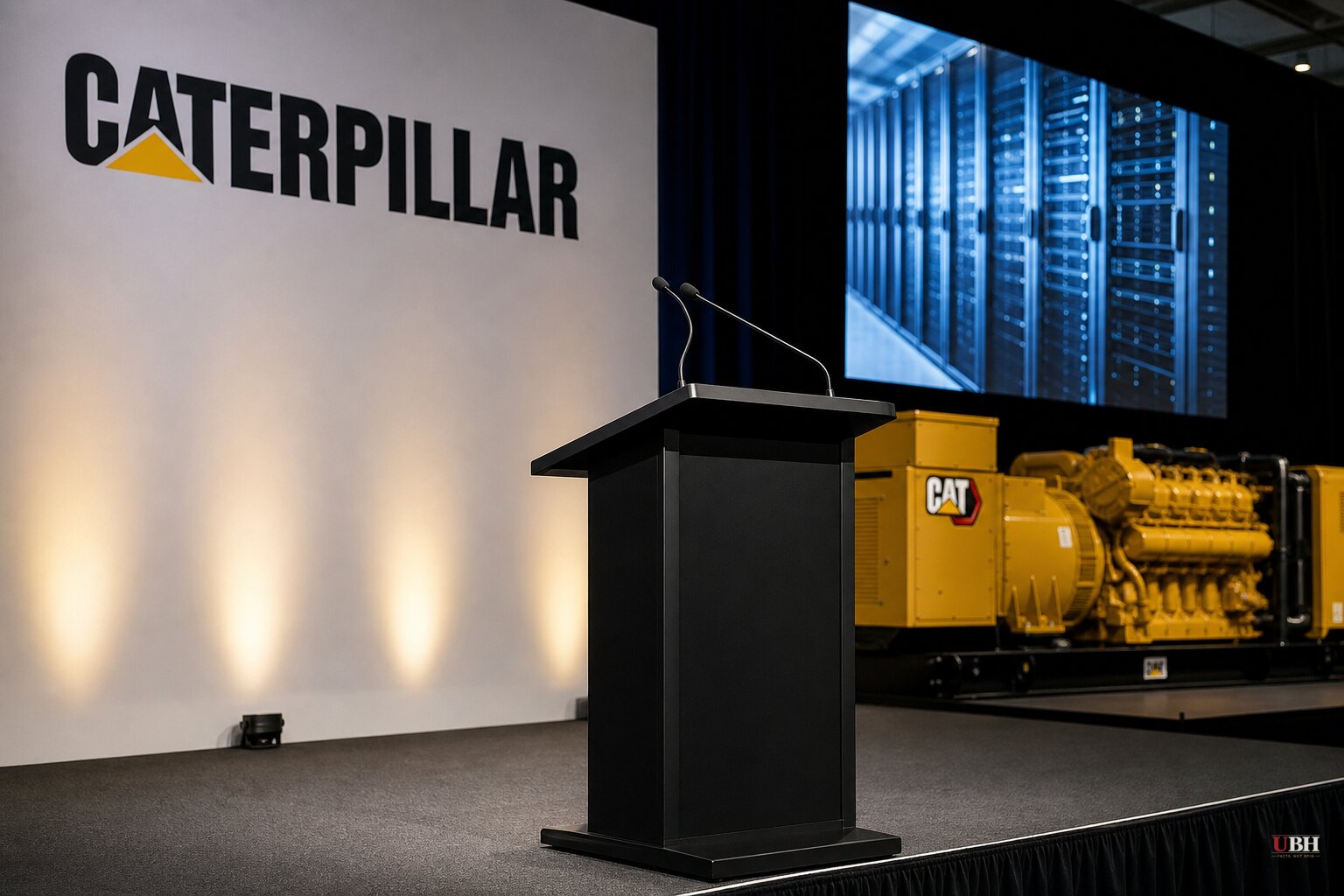
The story behind those numbers is Caterpillar's power and energy segment, which brought in $8.2 billion, up 17% year over year, according to both Yahoo Finance and Utility Dive. That's nearly matched by the construction segment's $8.3 billion, but power and energy's operating profit of just over $2 billion actually beat construction's profit, per Yahoo Finance and The Motley Fool. Within that segment, Utility Dive reported power generation retail sales specifically jumped 72% year over year, driven by "very strong demand for large gen[erator] sets and turbines used in data center applications," CEO Joseph Creed said on the company's earnings call.
Construction still grew, up 35% to $8.3 billion, with North America sales surging 50% to nearly $5.1 billion, Utility Dive reported. Resource industries, covering mining and rail, hit $4.6 billion, up 20%. Caterpillar raised full-year guidance, now tracking to "mid-to-high teens" sales and revenue growth.
The Backlog Is the Real Signal
Caterpillar's order backlog stood at $72 billion at the end of June, up 92% from a year earlier, according to Yahoo Finance. Creed told investors 59% of that backlog is expected to ship over the next 12 months, with power and energy customers placing orders through 2030.
To keep up, Caterpillar is resuming production of a 10-megawatt medium-speed gas reciprocating engine platform it stopped building in 2022 because of "limited industry opportunity," Creed said, per Utility Dive. The company plans to bring back 1.5 gigawatts of capacity, with shipments starting in the fourth quarter.
Asked directly about whether AI infrastructure spending could slow, Creed didn't hedge: "no one is slowing down at the moment," he told analysts, according to Utility Dive. That statement lands against a backdrop Utility Dive flagged directly: chip stocks sold off sharply the week before Caterpillar's earnings call, reflecting real investor anxiety about whether AI spending will pay off.
The Multiple Problem
Caterpillar shares are up nearly 90% over the past year, pushing the forward price-to-earnings ratio above 30, according to both Yahoo Finance and The Motley Fool. That's a higher multiple than Microsoft, Alphabet or Nvidia, three companies that actually build the chips and software behind the AI boom.
For decades, Caterpillar traded below the S&P 500's roughly 20x long-run average multiple, because a construction-equipment maker growing in the single digits doesn't deserve a tech premium. The market has now decided otherwise. Whether that bet holds depends entirely on data center buildouts continuing at their current pace through the rest of the decade, something no company, including Caterpillar, can guarantee.
Money Hitting the Ground
The dollars are showing up in specific places. Caterpillar completed its acquisition of Skycatch, an AI-driven spatial data software firm for mining, in July, per Utility Dive. It's also spending $100 million over five years training 118,000 employees on AI, autonomy and robotics, Caterpillar CTO Jaime Mineart said in comments reported by TechCrunch at the Ai4 conference in Las Vegas. Mineart said the real bottleneck isn't the AI models themselves but "incorporating that technology into the customer jobsite."
In Arkansas, Caterpillar committed up to $3 million on Aug. 17 for workforce training tied to its North Little Rock plant, the fifth state allocation under a five-year, $100 million Building the Future Workforce Initiative, following Indiana, Texas and Illinois, according to Yahoo Finance.
The bigger money is in Lafayette, Indiana, where Caterpillar is weighing an additional $890 million investment: $350 million for renovations and expansion, $540 million for equipment, tied to retaining 1,995 jobs, Manufacturing Today reported. That's on top of a previously announced $725 million expansion of the Lafayette Large Engine Center, bringing the total tied to that site to roughly $1.615 billion. The Lafayette Redevelopment Commission had property tax abatement resolutions on its agenda for an Aug. 27 meeting; no outcome had been reported as of this writing.
Whether Small Towns Actually Win
The broader jobs story checks out beyond Caterpillar. U.S. construction spending is projected to climb from $2.22 trillion in 2026 to $2.85 trillion by 2031, with industrial construction reaching $684 billion, according to a Merlo America and BiltData.ai report cited by Fox News. Merlo America general manager Cole Renken said data center buildouts are putting new demand on electricians, concrete workers and heavy-equipment operators, jobs that don't vanish once construction wraps.
Quincy, Washington, is the case study. CNN reported that roughly 30 data centers now cover 57% of the town's property taxes, funding a $120 million high school, a $15 million aquatic center and new sewage and fire infrastructure. The town's poverty rate fell from 29.4% in 2012 to 6.2% in 2024, and the buildout created about 900 direct jobs plus four to six additional jobs each in construction and services, per state analyses cited by CNN.
But CNN also reported the downside fairly: Quincy's data center boom made a once-cheap farming town unaffordable for the mostly Hispanic agricultural and food-processing workforce that still anchors its economy, a legitimate concern for longtime residents priced out of housing even as city coffers fill up. That tension, tax windfalls for cities against affordability losses for existing workers, is playing out in the same towns weighing whether to approve or reject the next data center and the tax abatements that often come with it.
For Caterpillar specifically, the next concrete marker is whether Lafayette's local government signs off on the abatements tied to that $890 million proposal, and whether Creed's order backlog actually converts to shipped revenue at the pace Wall Street has already priced in.
Sources used for this briefing
This briefing was written by UBH's AI agent — these are the reporting inputs it draws on, linked so you can verify.


