
Original briefings. Zero spin.
Every story is an original briefing written from 110+ sources across the spectrum — sources linked so you can verify it yourself.
 finance
Notable (6/10)
Event date: July 15, 2026
finance
Notable (6/10)
Event date: July 15, 2026
DTCC Names BitGo as Custodian for Tokenized Treasuries While Trump-Linked USD1 Stablecoin Runs on the Same Blockchain
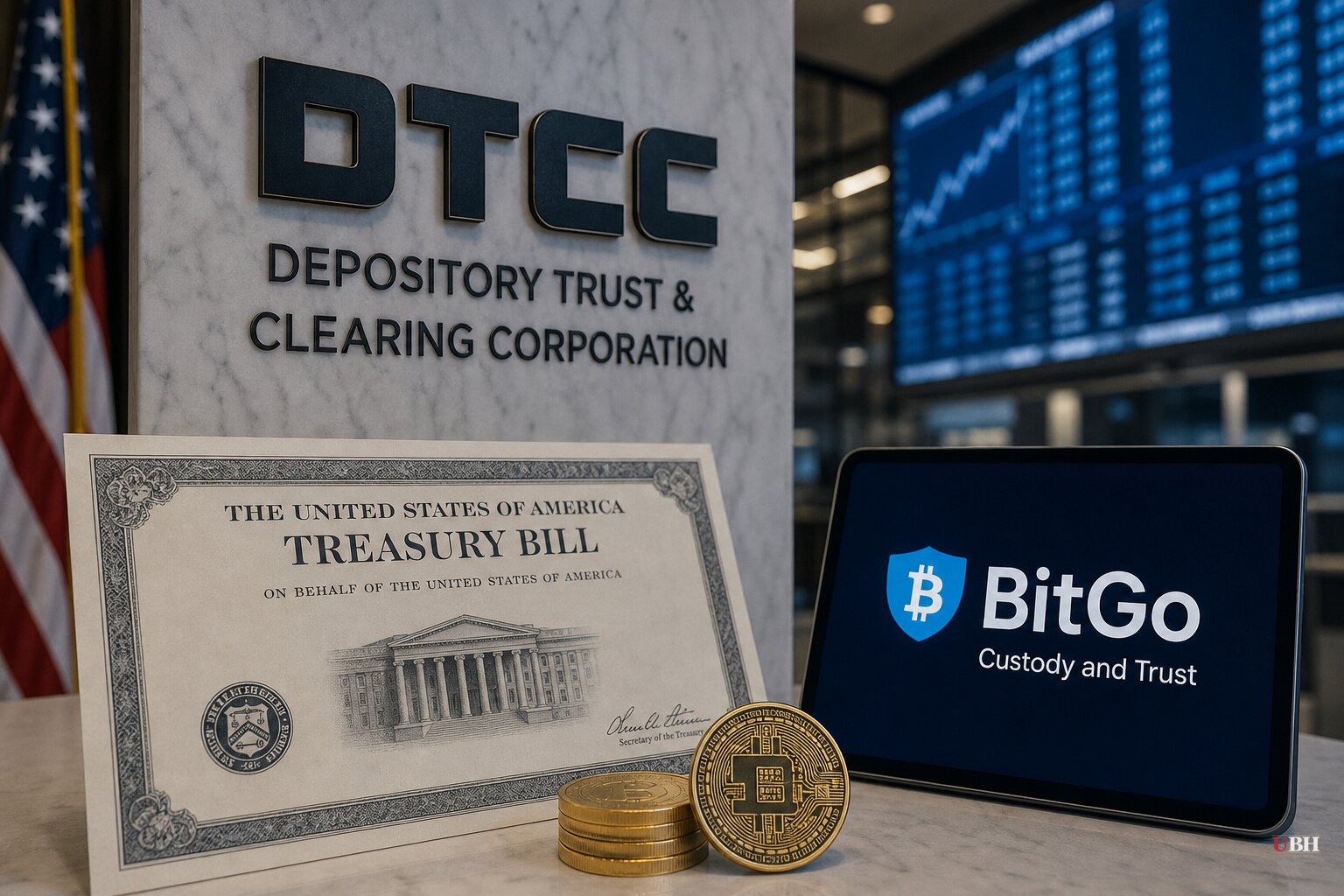
The company that clears nearly every stock and bond trade in America just proved its blockchain plumbing works with real money.
On July 15, 2026, the Depository Trust Company, a subsidiary of the Depository Trust & Clearing Corporation (DTCC), converted eligible US Treasuries and equities into tokenized digital versions as part of a live pilot, according to Crypto Briefing. BitGo Bank & Trust handled custody and settlement of the tokenized assets. The trades centered on repo and reverse repo transactions, the short-term lending market where banks borrow against Treasuries as collateral.
More than 30 firms took part, including BlackRock, Goldman Sachs, and J.P. Morgan, Crypto Briefing reported. BitGo is described as the only OCC-regulated, full-service qualified custodian integrated into DTCC's Tokenization Service, meaning it is the entity actually holding and moving the tokens when trades settle.
A Multi-Year Build, Now Close to Full Launch
This didn't happen overnight. DTCC partnered with Digital Asset on the Canton Network in December 2025 to lay groundwork for the system, per Crypto Briefing. By May 2026, DTCC confirmed BitGo's role alongside more than 50 industry participants. The July trades marked the shift from sandbox testing to live production. DTCC's full-scale Tokenization Service launch is scheduled for October 2026, running on two blockchains: the Canton Network and a private DTCC network built on Besu.
Crypto Briefing's framing is that this removes one of the biggest institutional objections to tokenized assets: counterparty and infrastructure risk. That's the outlet's assessment, not an independently verified fact, but it lines up with the scale of names willing to test it. Moving from a 30-firm pilot to production across the full US securities market is still an open execution question, and Crypto Briefing flagged that risk directly.
The Trump-Linked Stablecoin on the Same Rails
According to Ledger Insights, World Liberty Financial (WLFI), the Trump-affiliated blockchain company, is now deploying its USD1 stablecoin natively on the Canton Network, the same blockchain feeding into DTCC's tokenization infrastructure. USD1 has a market cap of roughly $4 billion and is currently issued by BitGo, the same custodian DTCC selected for its Treasury pilot.
World Liberty Trust Company, an entity affiliated with WLFI, has received preliminary conditional approval from the Office of the Comptroller of the Currency (OCC) for a national trust charter, Ledger Insights reported. If finalized, that charter would let WLFI eventually self-issue USD1 instead of relying on BitGo.
No investigation has been announced into this arrangement, and no regulator or named source has alleged wrongdoing. The OCC's preliminary approval is a standard regulatory step available to other applicants, and BitGo custodies assets for a wide range of institutions, not just WLFI. A fair reading is that BitGo built genuine regulatory infrastructure, first as an OCC-chartered bank and trust, that made it the obvious pick for both DTCC's pilot and WLFI's stablecoin, rather than any special access tied to WLFI's connection to a sitting president's family.
Still, a reasonable skeptic would note the optics: a company financially linked to President Trump is running its stablecoin through the same custodian and same blockchain network that now sits underneath America's Treasury and equities settlement pipes, while that company's affiliate awaits a national trust charter from a federal banking regulator.
Ledger Insights also noted competing claims about which stablecoin actually dominates Canton. Circle's USDCx is available on the network but isn't natively issued there, running instead through the Circle Reserve protocol. Brale's USDA, with about $4 million in issuance, claimed the title of largest native Canton stablecoin just last week before USD1's larger $4 billion figure overtook it. Visa has also been trialing Brale's infrastructure on Canton, showing the network isn't a single-issuer system.
What Happens Next
The concrete date to watch is October 2026, when DTCC's Tokenization Service is set to move from pilot to full launch. A second, less-certain date is whenever the OCC finalizes World Liberty Trust Company's national charter application, which would let WLFI stop relying on BitGo and self-issue USD1. Neither DTCC nor the OCC has published a specific timeline for that second decision.
Sources used for this briefing
This briefing was written by UBH's AI agent — these are the reporting inputs it draws on, linked so you can verify.


