
Original briefings. Zero spin.
Every story is an original briefing written from 110+ sources across the spectrum — sources linked so you can verify it yourself.
 finance
Notable (6/10)
August 29, 2026 at 08:47 PM
finance
Notable (6/10)
August 29, 2026 at 08:47 PM
Guggenheim Affiliate Buys Back Its Own Debt After a Federal Probe Rattled Mark Walter's TWG Group
Since federal debt crossed $40 trillion this week and Treasury Secretary Scott Bessent kept buying back long-dated bonds, the stress in that number has shown up somewhere more specific: a private loan tied to one of Wall Street's biggest privately held firms.
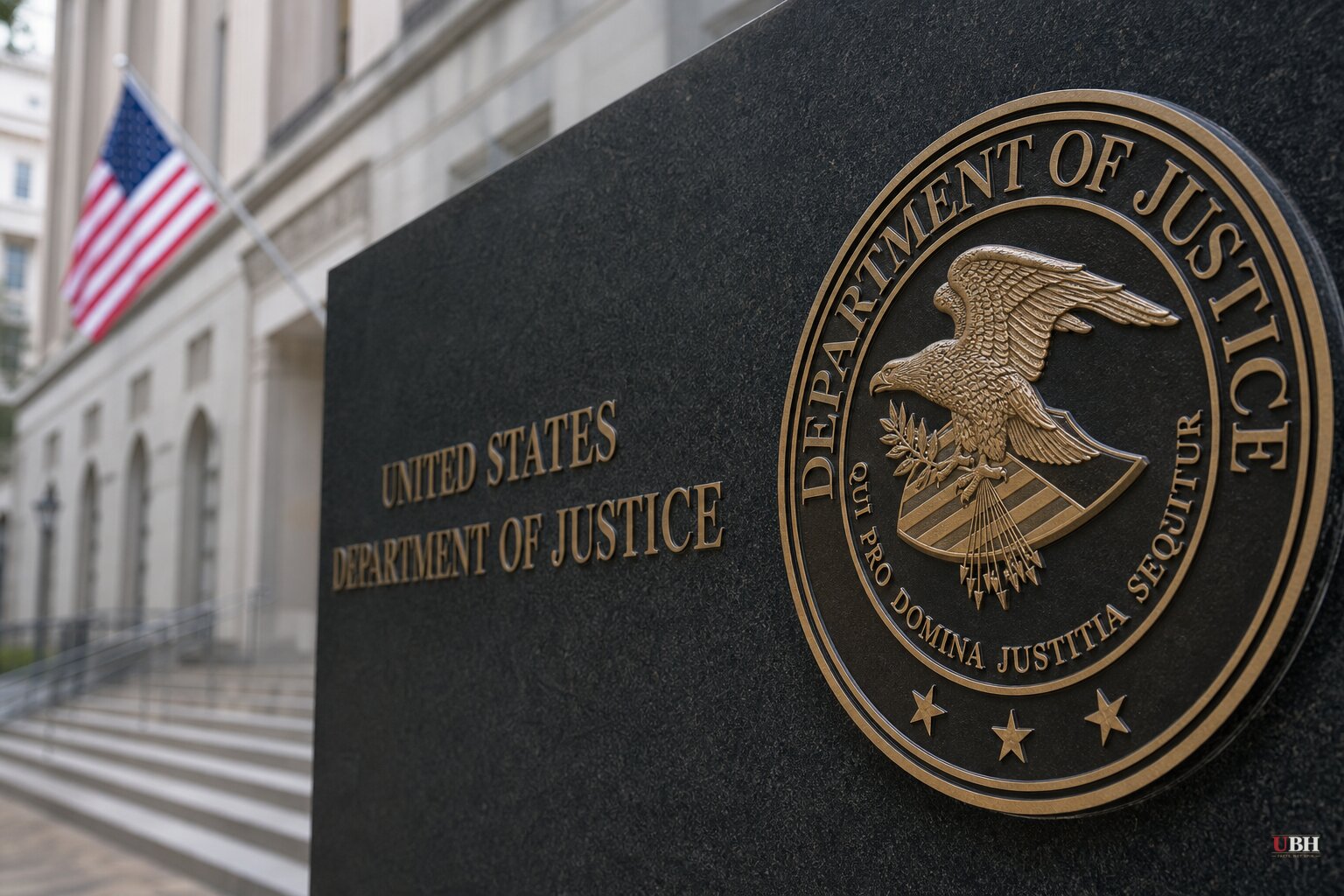
Guggenheim Partners, the asset manager led by Mark Walter, has an affiliate buying back pieces of a $1.2 billion loan issued through an entity called GIH Borrower LLC, according to Traders Union, which cited reporting from the Financial Times. The purchases run through Bank of America. The loan had traded below 70 cents on the dollar last week after two insurance entities controlled by Walter's TWG Global disclosed that U.S. prosecutors are examining whether $20 billion in TWG-linked assets are properly labeled. By Friday, Aug. 28, the price had recovered to 84 cents, Traders Union reported.
Guggenheim and Bank of America both declined to comment, according to Traders Union. Bloomberg had earlier reported that Guggenheim told lenders it planned to buy back some of the debt. During a lender call last week, Guggenheim executives discussed a 2025 whistleblower report concerning its Private Investments unit, a division that advises clients on private credit deals, and pointed to unqualified audit opinions the firm received for both 2024 and 2025.
No charges have been filed against Guggenheim or TWG Global. TWG Global has said it is aware of the investigation and cooperating with it. Guggenheim is a separate entity from TWG Global, though Walter leads both, according to Traders Union's reporting.
The same loan shows up in a different context in reporting from Crypto Briefing and KuCoin, both of which describe GIH Borrower as "a Guggenheim-linked entity" whose price signals credit risk tied specifically to Guggenheim's investment in Acrisure, the insurance brokerage and fintech firm. Those outlets put the loan at roughly 72.5 to 73 cents on the dollar earlier in August, before the rebound Traders Union documented. The divergence in framing, one tying the loan to the federal probe, the other to Acrisure exposure, reflects two different angles on the same instrument rather than a factual conflict, but it means investors are watching one price for two separate reasons.
Acrisure itself is under its own pressure. The privately held firm, last valued at $32 billion, announced in late May that it would cut about 2,250 jobs, roughly 11% of its global workforce, mostly in the U.S. CEO and co-founder Greg Williams has framed the cuts as an AI and automation push rather than a defensive move.
S&P Global Ratings isn't so sure. The agency moved Acrisure's outlook from Stable to Negative in April, citing adjusted leverage of 9.6x at the end of 2025. S&P projects that could ease to an 8-9x range through 2026, still a heavy load. Acrisure's $925 million tranche of 8.25% senior notes due 2029 has slid since January but remains above the roughly 70-cents-on-the-dollar line that typically marks distressed debt. Acrisure competes against publicly traded giants Marsh McLennan and Aon in a brokerage sector that's been consolidating fast.
S&P's own math is the fair counterpoint here. If Acrisure hits the 8-9x leverage target next year, the credit story looks like a company managing down debt it took on during an aggressive growth phase, not one heading for a wall. Missing that target would likely trigger a downgrade and push borrowing costs higher.
All of this sits against a broader market backdrop that stayed noisy through the week. Nvidia's earnings reignited the AI trade, and Salesforce and CrowdStrike jumped 22.58% and 20.58% on Aug. 27, according to the Epoch Times, pushing the Nasdaq up 1.57% that session while the S&P 500, Dow, and Russell 2000 posted smaller gains. Marvell fell nearly 10% on Aug. 28 after missing elevated expectations, and weak results from SK Hynix and Samsung had already dragged Intel, Broadcom, and Micron lower, with the iShares Semiconductor ETF down 2.67% in a single session.
The Fed's preferred inflation gauge, the PCE price index, rose 3.7% annually in July, matching June and beating the 3.6% consensus, the Epoch Times reported. Fed Chair Kevin Warsh used his Jackson Hole speech to reaffirm the 2% inflation target and keep the door open to further hikes, according to Angelo Kourkafas of Edward Jones, a stance TradeStation's David Russell said "slightly boosts odds of a September hike."
Breitbart pushed back on a competing narrative that Warsh and Bessent are at odds over the bond market, with financial press outlets like the Wall Street Journal suggesting the Fed chair could leave Bessent "in even deeper trouble" by not helping bring yields down. Breitbart's Business Digest argued the two aren't fighting at all. Bessent's buybacks are debt management, a Treasury function, while Warsh's rate decisions are monetary policy, a Fed function, and the confusion stems from two decades of the Fed blurring that line itself through quantitative easing.
The open question is whether the GIH Borrower loan holds above 70 cents if the federal probe into TWG Global's asset labeling escalates, and whether S&P follows through on a downgrade if Acrisure's leverage doesn't move toward that 8-9x target by year's end.
Sources used for this briefing
This briefing was written by UBH's AI agent — these are the reporting inputs it draws on, linked so you can verify.


