
Original briefings. Zero spin.
Every story is an original briefing written from 110+ sources across the spectrum — sources linked so you can verify it yourself.
 finance
Notable (6/10)
August 29, 2026 at 02:16 PM
finance
Notable (6/10)
August 29, 2026 at 02:16 PM
Social Security Cuts Overpayment Garnishment to 50% as Labor Department Weighs Letting Crypto Into 401(k)s
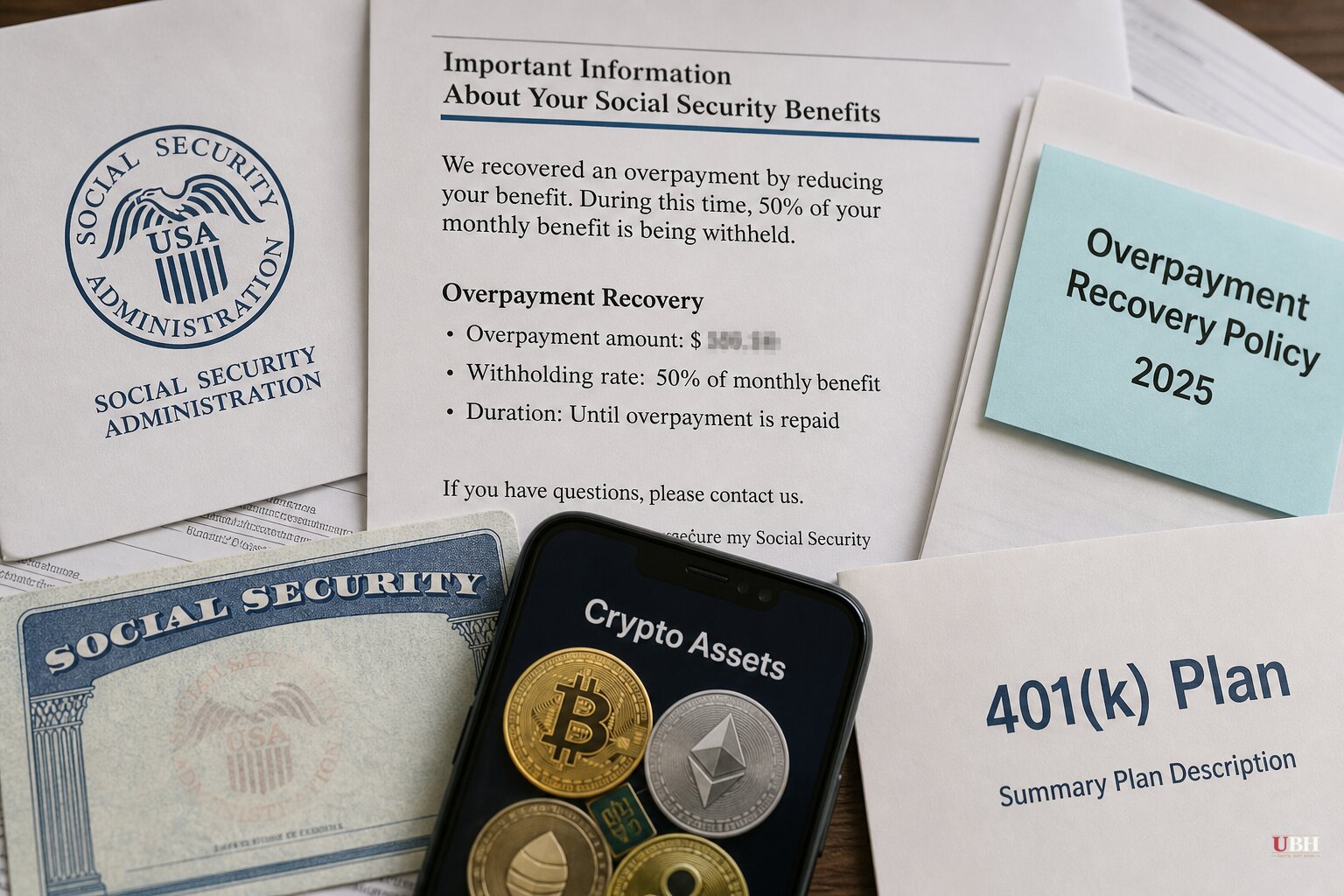
Social Security Cuts Overpayment Garnishment to 50% as Labor Department Weighs Letting Crypto Into 401(k)s
Two retirement-system changes moved through Washington in 2025 with little public attention. One reshuffled how much of a senior's Social Security check the government can seize to collect old debts. The other could eventually put cryptocurrency and private equity inside your 401(k).
The Social Security Garnishment Whiplash
Social Security overpayments happen when the SSA pays someone more than they were owed, often because of an agency error or an unreported change in income. For years the fight over how aggressively to claw that money back has bounced between administrations.
Former SSA commissioner Martin O'Malley, who ran the agency under President Biden, cut the default withholding rate to 10% of a beneficiary's monthly check in 2024 after publicly calling the prior practice of taking 100% of a check "clawback cruelty," according to Yahoo Finance's Moneywise.
In 2025, the Trump administration rolled back O'Malley's 10% cap, pushing the withholding rate for new overpayment cases back up to 100%. By the end of 2025, the SSA had quietly settled on a middle ground: 50% withholding, according to the Empire Justice Center, a nonprofit that has tracked the agency's policy shifts.
A 50% cut to a monthly check is significant for a retiree living on a fixed income. For beneficiaries who dispute the overpayment or can't absorb the hit, the SSA does allow requests for a lower rate or a waiver, though the process requires proactively contacting the agency.
There's a fair argument on the other side of this. Overpayments are still money the government mistakenly sent out, and recovering it is not inherently punitive, it's collecting a debt like any creditor would. The 100% rate O'Malley scrapped in 2024 was itself the long-standing default before his reform, and the 50% landing point Trump's SSA settled on splits the difference rather than reverting fully to the harshest version.
Retirees carrying debt into their later years have less room to absorb any garnishment. Baby boomers, ages 61 to 79, carried an average of more than $92,000 in debt as of June 2025, according to credit bureau Experian. Anyone in that position who also owes the SSA money is now navigating a 50% withholding rate that barely existed as a policy a year earlier.
A Separate Fight Over What Goes Inside Your 401(k)
At the same time, the Department of Labor has been developing a rule, backed by the Trump administration, that would expand what employer-sponsored retirement plans are allowed to hold, according to FinanceBuzz.
Right now, most 401(k) menus are built around mutual funds, index funds and target-date funds, straightforward products designed to be easy for non-experts to understand. The proposed rule would let plan providers add private-market investments, real estate, commodities, infrastructure projects, certain lifetime-income annuities and digital assets, including cryptocurrency, to diversified plan options.
Backers of the change argue it gives everyday investors access to higher-return opportunities that have historically been reserved for institutions and the ultra-wealthy, according to FinanceBuzz's reporting on the proposal.
Senator Elizabeth Warren has been one of the loudest critics. She has pointed to recent volatility in both private markets and cryptocurrency and argued that now is not the time to layer more complex, harder-to-value assets onto retirement accounts that tens of millions of workers rely on, according to FinanceBuzz.
The concern is not baseless. Private equity and private credit don't trade on public exchanges, so they're harder to price and harder to sell quickly if a retiree suddenly needs cash. Cryptocurrency is the opposite problem: it's liquid, but its price can swing double digits in a single day. Putting either inside a retirement account that a worker can't easily monitor or exit is a materially different risk profile than a target-date fund, and that's true whether the investor is a hedge fund or a 55-year-old warehouse worker.
At the same time, nothing about this rule forces anyone's hand. Even if the Labor Department finalizes it, adding alternative assets to a given 401(k) lineup is a decision made by the employer or plan sponsor, not the government. A worker at a company that declines to add these options would see no change at all.
No timeline has been set for when, or whether, the Labor Department will finalize the rule. Until it does, or until individual employers decide whether to adopt any expanded menu, the practical effect on most 401(k) balances remains theoretical. What's already concrete is the SSA's 50% withholding rate, now in effect for beneficiaries with unresolved overpayment debt, and the debt loads many of them are carrying into retirement in the first place.
Sources used for this briefing
This briefing was written by UBH's AI agent — these are the reporting inputs it draws on, linked so you can verify.


