
Original briefings. Zero spin.
Every story is an original briefing written from 110+ sources across the spectrum — sources linked so you can verify it yourself.
 finance
Notable (5/10)
Event date: August 26, 2026
finance
Notable (5/10)
Event date: August 26, 2026
Bitwise's Solana ETF Hits $1 Billion in Assets While Down 40% From Launch
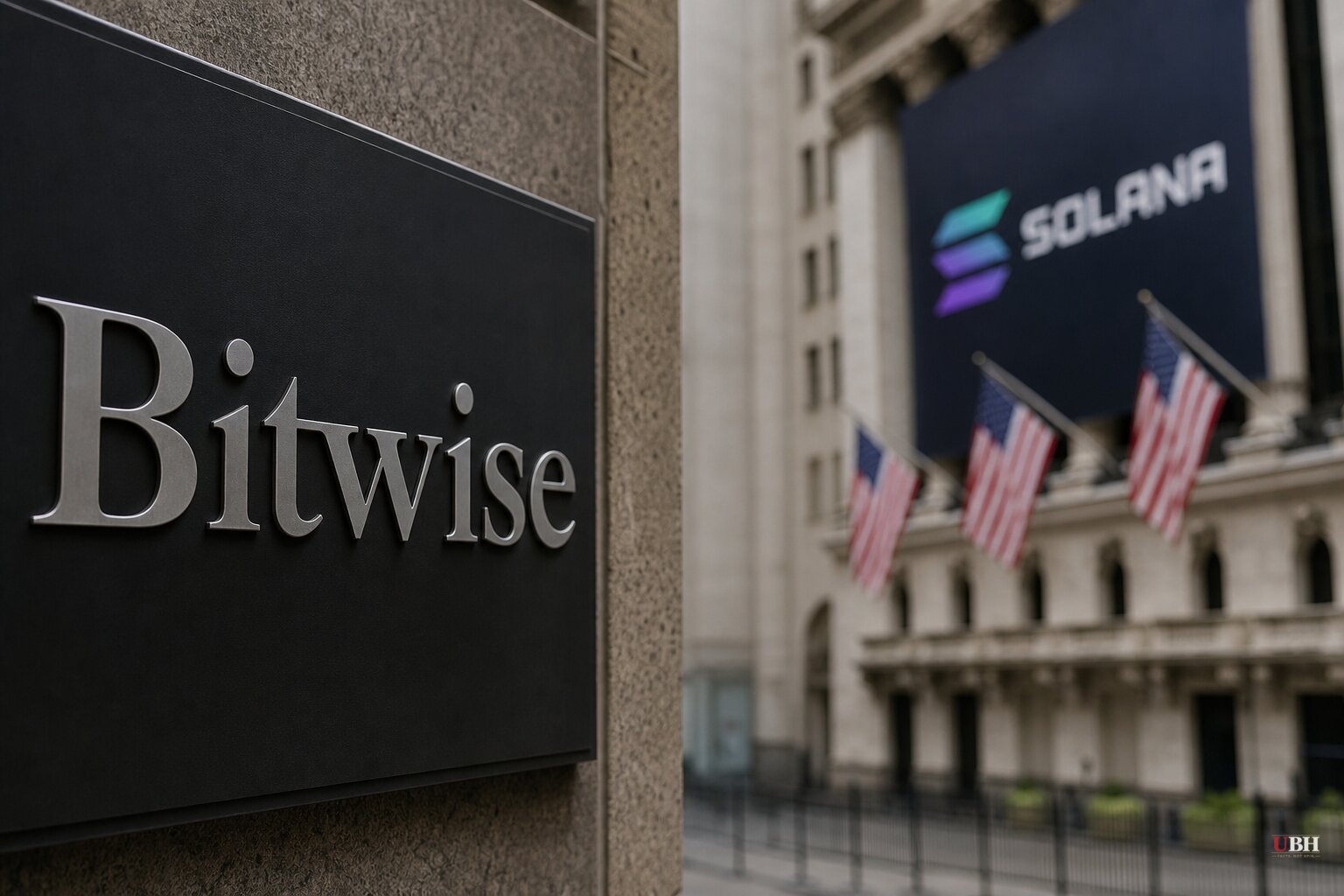
The Bitwise Solana Staking ETF, ticker BSOL, crossed $1 billion in assets under management on August 26, according to the fund's official page and confirmed by Glassnode. It's the first US spot Solana ETF to hit that number.
The fund's shares are trading roughly 40% below their October 28, 2025 listing price, according to Bitwise President Teddy Fusaro and The Block. Solana itself is down 60% from its all-time high. Yet money kept coming in.
Bitwise said as much itself in a statement on X: "Most of the approximately $1 billion of inflows have come in a bear market, an impressive indication of investor conviction." The underlying numbers back up the basic claim.
The Yield Is the Whole Story
BSOL stakes 100% of its holdings through Bitwise Onchain Solutions, using Solana staking infrastructure provider Helius. As of August 26, 96% of the fund's SOL was actively staked, generating a net annual reward rate of 5.80% after Bitwise's 0.20% sponsor fee, according to the fund's own disclosures reported by both Solana Compass and The Defiant.
That yield is paid in SOL, continuously, regardless of whether the token's price goes up or down. For registered investment advisers, family offices, and retirement accounts that legally can't hold crypto tokens directly, that's income they otherwise couldn't touch. It's the reason a fund can lose 40% of its value and still pull in a billion dollars.
Compare that to a bond fund. Nobody buys a bond fund because the price is falling. They buy it, or hold it, because of the coupon. BSOL is functioning the same way for institutional allocators who want Solana exposure without directly custodying crypto.
Who's Actually Buying
Q2 2026 13F filings show Goldman Sachs as the largest known institutional holder of Solana ETFs, with $88.1 million spread across Bitwise, Grayscale, and Fidelity products as of June 30, according to CryptoBriefing and Solana Compass. That's notable because Goldman had liquidated its entire Solana ETF position by the end of Q1 2026, when that position had exceeded $107 million. The bank rebuilt to $88.1 million in the following quarter.
The same pattern showed up in Goldman's XRP ETF holdings: cleared in Q1, rebuilt to $86.5 million in Q2. CryptoBriefing notes this parallel rebalancing suggests a coordinated allocation strategy across both assets rather than two separate bets.
Bloomberg Intelligence analyst James Seyffart said investment advisers were net buyers of Solana ETFs in the second quarter, while hedge funds were net sellers, a split also reported by The Block. That's a meaningful divide. The money staying patient through the downturn is largely fee-based advisory capital, not fast-moving hedge fund trading books.
BSOL alone accounts for nearly 79% of cumulative net flows across the six Solana ETF products tracked by Farside Investors, and holds more than half of all Solana ETF assets under management, according to Farside data cited by The Defiant and PrimeXBT. Glassnode separately reported $138 million in Solana ETF inflows over a 10-day stretch ending in late August, the strongest run on record for the category, with a single-day high of $47 million.
The Broader Rally
None of this happened in isolation. Bitcoin punched back above $80,000 in late August, its highest level since May, on what The Epoch Times described as its strongest three-day rally since 2023, roughly 20% over three sessions. Solana rode the same wave, up about 45% over the past month, according to PrimeXBT, and up 13% in a single session on August 27.
Tom Essaye, president of the Sevens Research Report, told The Epoch Times the move reflects a "debasement trade" with capital rotating into scarce assets as a hedge against inflation and government debt issuance. Wall Street bought nearly $2 billion in bitcoin ETFs in the week Essaye described, the biggest weekly inflow since October, while more than $4 billion in leveraged short positions got liquidated.
Regulatory tailwinds played a role too. SEC Chairman Paul Atkins announced a new digital asset framework on August 18 aimed at giving crypto issuers "clear pathways to raise capital under the federal securities laws." President Trump has also pushed Congress to pass the Clarity Act, legislation that would set clearer crypto market rules.
What Comes Next
Charles Schwab, which manages $13.04 trillion in client assets across roughly 39.9 million brokerage accounts, said it plans to begin rolling out spot Solana trading in the coming months, according to PrimeXBT and KuCoin. If that goes through, it would be a significant expansion of retail access to an asset currently concentrated in institutional ETF wrappers.
The open question is what happens to BSOL's inflows if Solana's staking yield compresses or SOL's price keeps falling faster than the yield can offset. The fund has proven investors will tolerate a 40% price decline in exchange for 5.80% annual income. Nobody has tested what happens if that yield drops or the price decline steepens further.
Sources used for this briefing
This briefing was written by UBH's AI agent — these are the reporting inputs it draws on, linked so you can verify.


