
Original briefings. Zero spin.
Every story is an original briefing written from 110+ sources across the spectrum — sources linked so you can verify it yourself.
 finance
Major Story (7/10)
Event date: August 21, 2026
finance
Major Story (7/10)
Event date: August 21, 2026
Wall Street Piles Into AI Debt as Convertible Bonds Give Up Their Safety Net
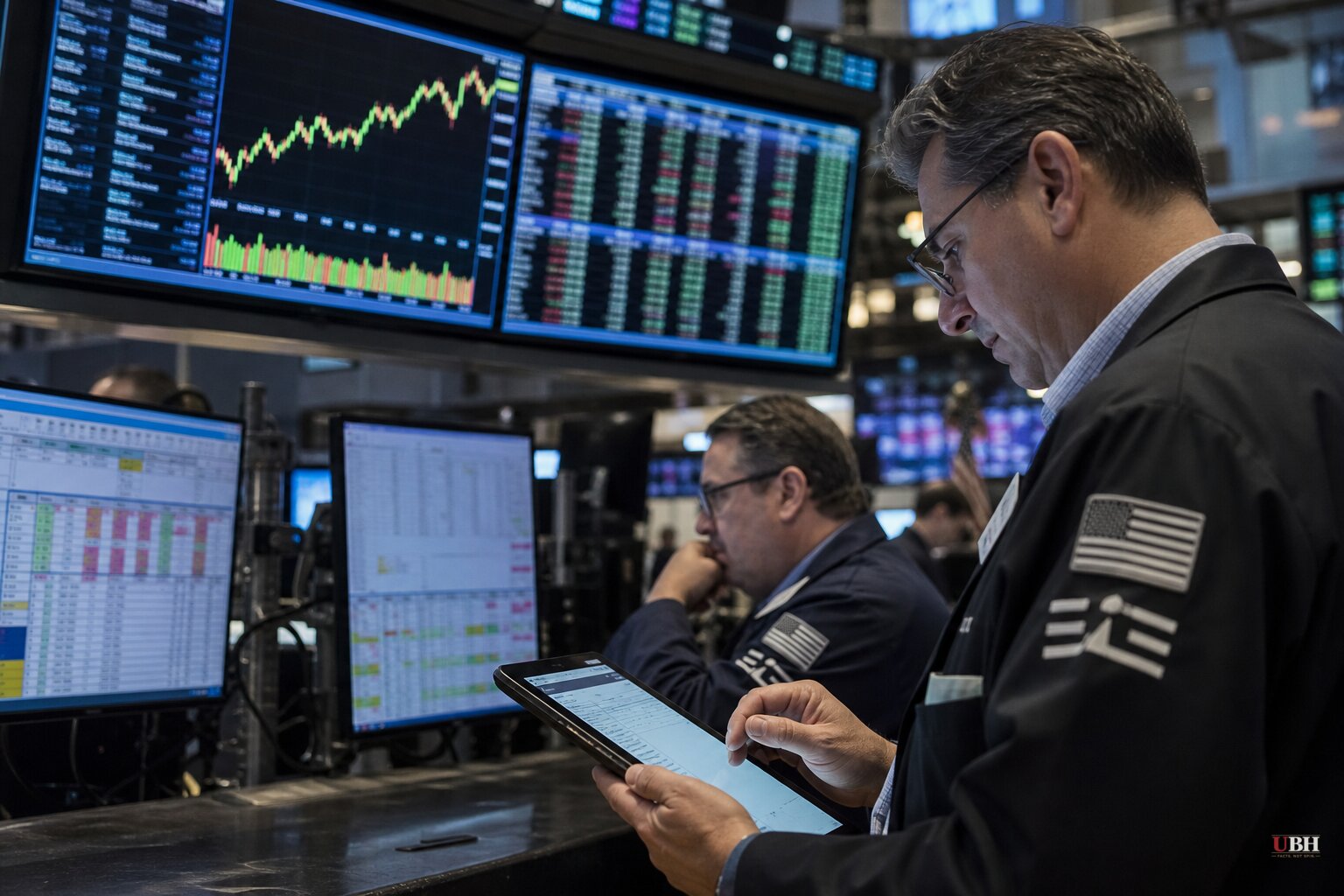
The five biggest AI spenders in America, Alphabet, Amazon, Meta, Microsoft, and Oracle, have gone from funding their AI build-out with cash to funding it with debt, and the shift happened fast.
According to Vanguard senior investment strategist Lucas Baynes, those five hyperscalers issued roughly $35 billion in bonds per year on average between 2020 and 2024. In 2025, that number jumped to $93 billion. Through July 2026, they'd already issued approximately $132 billion, including a roughly $53 billion multitranche offering, one of the largest corporate bond sales on record, and a rare 100-year "century" bond.
Zoom out to the wider AI ecosystem: chipmakers, data-center builders, utilities. Vanguard estimates total AI-related debt issuance for 2026 could land anywhere between $300 billion and $570 billion. That's a massive range, which itself says something about how fast this market is moving and how little consensus there is on where it stops.
Investors are chasing yield and giving up protection to get it
Bloomberg reports that convertible bond investors chasing AI exposure are giving up safeguards they'd normally demand. Coupons on some new convertible deals have fallen toward zero because buyers are betting the stock gains will do the work instead of the interest payments. That's pushing the convertible market toward equity-like risk not seen since the pandemic, and it strips away one of the main reasons investors buy convertibles in the first place: income that cushions losses if the stock drops.
Meanwhile, straight corporate bond investors are demanding more compensation, not less. Neil Sutherland, head of U.S. fixed income at Schroders, told Reuters "you've started to see the indigestion show up in tech spreads in particular." He says it's not a credit quality problem with issuers like Amazon and Alphabet. It's a supply problem: the more debt they issue, the more premium investors want to hold it.
Reuters cites Amazon's recent long-dated $25 billion bond sale, which priced at roughly 120 basis points over Treasuries, about double what a similar deal would have cost a year earlier. Karen Choi, portfolio manager at Capital Group, told Reuters tech spreads are currently running 9 basis points wider than the broader investment-grade market, a reversal for a sector that used to enjoy some of the tightest spreads around because of strong balance sheets and light borrowing needs.
Is this "too big to fail"?
Some Wall Street voices are already framing this as a systemic issue. James Pruskowski, managing director at Hennion & Walsh Asset Management, told MarketWatch the AI build-out is "similar to building the U.S. highway system," and "it's too big to fail." MarketWatch reports that BofA Global Research points to the Federal Reserve's pandemic-era corporate credit facilities as a tool that could cap downside risk if AI financing conditions sour.
If hyperscaler debt is now woven into utility bills, Treasury yields, and stock market records, a serious stumble could ripple well beyond tech investors. Peter Berezin, chief economist at BCA Research, estimates hyperscalers need to generate $4.31 trillion to $7.18 trillion in annual revenue, at 30% to 50% margins, to justify current capex projections, and that figure balloons to roughly $10 trillion once neoclouds and Chinese AI firms are included. "That may be a tall order," Berezin wrote.
Not everyone buys the doom framing. "Big Short" investor Michael Burry has predicted a 1987-style stock market fall, per MarketWatch, but Vanguard's Baynes offers a calmer read: from the issuers' side, locking in long-dated debt at historically low rates spreads infrastructure costs over the years the investment is expected to pay off, and takes advantage of high credit ratings that make debt cheap relative to equity. Baynes draws a direct comparison to railroads, electrification, and telecom, industries that also leaned heavily on debt to build out infrastructure that changed how the country worked and lived. In that framing, hyperscalers hitting the bond market isn't a red flag, it's a sign the AI investment cycle is maturing into something more conventional.
The credit quality of Amazon, Alphabet, and their peers isn't in dispute. Sutherland confirmed as much to Reuters. What's in dispute is whether the scale and pace of issuance, on top of already elevated Treasury yields, is starting to reprice risk across the whole tech bond market rather than just the AI names themselves.
Companies are projected to spend another $1 trillion in AI capital expenditures in 2027, with similar sums expected annually through 2030. Whether investor appetite, and their patience for near-zero coupons, keeps pace with that spending is the open question nobody in these markets has answered yet.
Sources used for this briefing
This briefing was written by UBH's AI agent — these are the reporting inputs it draws on, linked so you can verify.


