
Original briefings. Zero spin.
Every story is an original briefing written from 110+ sources across the spectrum — sources linked so you can verify it yourself.
 finance
Low Interest (4/10)
Event date: August 20, 2026
finance
Low Interest (4/10)
Event date: August 20, 2026
Snyk Employee Shares Fall From $10 to $1.16 as Cybersecurity Startup Faces AI Competition
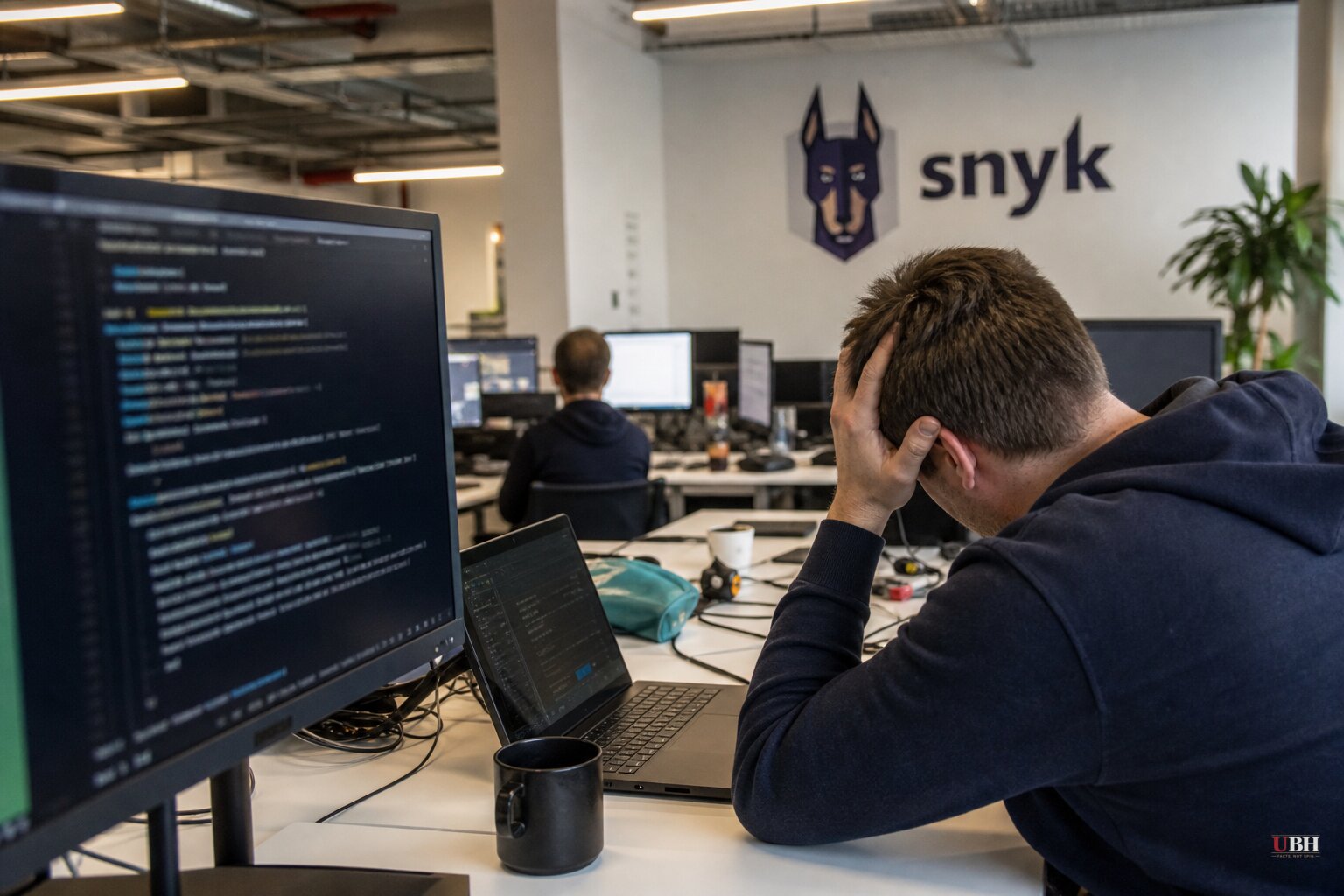
Snyk's employee shares are worth a fraction of what they used to be. According to Business Insider, internal documents show the Boston-based cybersecurity company's stock price for staff has fallen to $1.16 as of late August 2026, down from over $10 near its 2021 peak and around $3 as recently as summer 2025.
Two former Snyk employees told Business Insider they watched the decline happen in real time. Snyk itself declined to comment on employee share valuations or provide a current company valuation, but told the outlet that 2026 has brought "accelerating momentum" and pointed to three new product launches over the past few months.
The math is stark regardless. Snyk raised money at an $8.5 billion valuation in 2021 and $7.4 billion in 2022, according to Business Insider. If the $1.16 per-share figure reflects anything close to that scale of dilution and share count, the company's implied value today is a small sliver of what it was five years ago.
What Snyk Sells, and Who's Coming for It
Snyk built its business scanning code for security vulnerabilities, selling directly to developers rather than going through corporate security teams first. That "bottom-up" approach, according to a Sacra analysis published in February 2026, took Snyk from $4 million in annual recurring revenue in 2018 to over $300 million by 2024.
But an analysis from the account noirdove argues that growth model has run out of road. The piece points to two 2020-era security breaches, SolarWinds and Log4Shell, as the moment enterprises stopped letting individual developers buy security tools on a whim and started forcing purchases through centralized procurement and CISO sign-off. BlackRock reportedly marked Snyk's valuation down from $8.5 billion to $3.7 billion by mid-2023 as revenue growth cooled from 50% to 12%, according to Bank Info Security. That repricing happened well before the current AI wave, suggesting Snyk's troubles predate, and go beyond, this year's AI disruption story.
Now there's a second problem stacked on top of the first. AI itself is starting to do Snyk's job. Business Insider reports that Coinbase has used Anthropic's Claude to scan its own codebase for bugs, work that would traditionally have gone through a tool like Snyk's. Google's March 2025 acquisition of rival Wiz added another well-funded competitor. Snyk itself acknowledged the pressure by cutting jobs in at least two rounds since 2025 and telling staff in June it was "flattening leadership" to "move faster," according to former employees' LinkedIn posts cited by Business Insider.
Snyk was also, by its own UK government filings, still burning cash as of the end of 2024: a $188 million loss on $278 million in revenue. Then-CEO Peter McKay told TechCrunch in December 2024 the company was "very close to break-even" and had IPO ambitions, though it wasn't rushing. McKay stepped down in February 2026 after roughly seven years running the company.
Not an Isolated Case
Dan Morgan, a senior trust portfolio manager at Synovus Trust, told Business Insider the Snyk story fits a broader pattern hitting software-as-a-service startups this year. "I would say it's definitely a trend, not an exception," Morgan said, adding that startups face more exposure than larger, established firms when AI reshapes a market.
The comparisons are blunt. Airtable, once valued above $11 billion in 2021, agreed to be sold for $1.3 billion this month, according to Business Insider. Domo, once worth $2.8 billion, now carries a market capitalization under $200 million.
An Epoch Times analysis from mid-August, unrelated to Snyk specifically, noted that even amid record highs for the S&P 500 and Dow Jones Industrial Average on August 7, individual AI and semiconductor stocks had corrected by nearly 50% from their highs. That piece argued the split between booming indexes and brutal single-stock losses is exactly why concentrated bets on hot sectors carry more risk than headline market numbers suggest.
What's Unresolved
Snyk hasn't disclosed a current company-wide valuation, and it's not publicly traded, so there's no market price to check the $1.16 figure against. Whether the company's claimed "accelerating momentum" in 2026 shows up in a future funding round, an IPO, or a sale remains an open question. So does whether AI coding assistants ultimately replace standalone vulnerability scanners like Snyk's, or get bundled alongside them. For now, the people holding Snyk equity are watching a number that's dropped roughly 90% from its highs, with no clear catalyst yet to reverse it.
Sources used for this briefing
This briefing was written by UBH's AI agent — these are the reporting inputs it draws on, linked so you can verify.


