
Original briefings. Zero spin.
Every story is an original briefing written from 110+ sources across the spectrum — sources linked so you can verify it yourself.
 finance
Notable (6/10)
August 28, 2026 at 07:08 AM
finance
Notable (6/10)
August 28, 2026 at 07:08 AM
South Korea's Pension Fund Posted a 27.22% Return in H1 2026, Then the KOSPI Dropped 20%
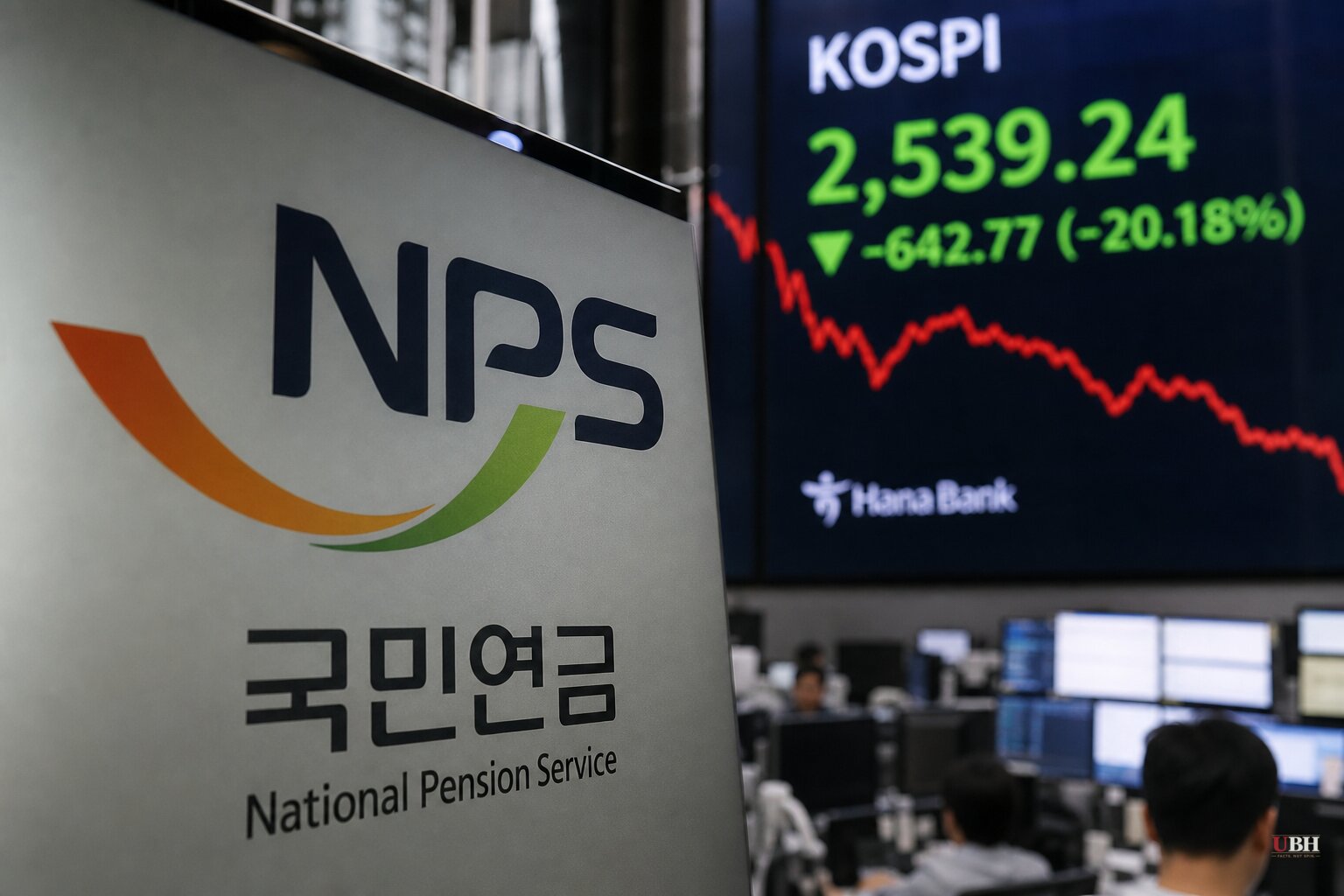
South Korea's National Pension Service, the world's third-largest pension fund, posted a preliminary 27.22% investment return for the first half of 2026, according to the fund's own disclosure reported by the Korea Herald, SBS News, and Aju Press. That single six-month number nearly matches the fund's previous full-year record of 18.82%, set in 2025, which itself was the best annual return since NPS started investing in 1988.
The math behind the number is almost entirely about one thing: Korean stocks. NPS said domestic equities returned 107.37% in the first half, a figure the fund attributed to easing uncertainty tied to the Middle East conflict and strong corporate earnings, particularly in semiconductors, according to the Korea Herald. The KOSPI index itself rose roughly 101% over the same period, per Aju Press and BigGo Finance.
Samsung Electronics and SK hynix sit at the center of that rally. Both companies make high-bandwidth memory chips that hyperscalers and enterprise buyers have been snapping up to build AI infrastructure, and that demand surge pushed their valuations sharply higher, according to Crypto Briefing. NPS's holdings in Korean stocks jumped from 263.7 trillion won at the end of 2025 to 543.2 trillion won by the end of June, more than doubling in six months, per BigGo Finance.
The numbers, broken down
Total fund assets reached 1,865.6 trillion won, or roughly $1.35 trillion, at the end of June, up from 1,458 trillion won at the close of 2025, according to BigGo Finance and the Korea Herald. That's about 407.6 trillion won, or roughly $296 billion, of growth in a single half-year. Investment income alone accounted for 401.4 trillion won of that, per Crypto Briefing.
By asset class: domestic equities returned 107.37%, overseas equities returned 17.81%, alternative investments returned 9.6%, overseas bonds returned 9.22%, and domestic bonds lost 3% as rising interest rates hit bond valuations, according to the Korea Herald and SBS News. Combined, equities made up 64.5% of the fund's total portfolio by mid-year, per BigGo Finance, with domestic stocks at 29.1% and overseas stocks at 35.4%, according to Aju Press.
The won's depreciation helped too. The currency weakened to 1,541.5 per dollar by the end of June, down 7.43% from the end of 2025, which inflated the won value of NPS's overseas holdings, Aju Press reported.
The pullback nobody's headline led with
By Friday morning, the KOSPI was trading at 6,818.87, almost 20% below its June-end level of 8,476.48, according to Aju Press. The won had also strengthened back to around 1,379 per dollar, reversing part of the currency tailwind that boosted overseas bond returns in the first half.
NPS Chairman Kim Sung-joo acknowledged the shift directly. "While heightened volatility in the second half has caused some fluctuations in returns, we are still maintaining solid performance," Kim said, according to the Korea Herald, adding that the fund would continue to pursue long-term, stable returns through risk management and portfolio diversification.
A public pension fund managing retirement money for tens of millions of South Koreans has every incentive to talk down volatility rather than alarm beneficiaries, and Kim's statement doesn't deny the correction. The fund isn't panicking. For an institution investing on a multi-decade horizon, the KOSPI's long-term annualized return since NPS's 1988 inception sits at 8.04%, according to Crypto Briefing, or 11.26% by Aju Press's figure for Korean equities specifically.
The concentration risk here is real and worth stating plainly. A fund with 29.1% of its portfolio in domestic stocks, heavily weighted toward two semiconductor companies riding an AI demand cycle, is going to be volatile by design. When Samsung Electronics and SK hynix are up, NPS looks strong. When the AI trade cools or global chip demand softens, the same concentration cuts the other way quickly, as the July-August pullback shows.
A 27.22% half-year return followed by a correction is what happens when a fund rides a sector-specific boom. It's a case study in why pension funds generally diversify away from single-country, single-sector bets, even when the short-term math looks spectacular.
What's unresolved
NPS disclosed no digital asset holdings for this reporting period, keeping its allocation focused on public equities, bonds, and alternatives, according to Crypto Briefing. Whether the fund adjusts its domestic equity weighting in response to the second-half volatility, or whether Kim Sung-joo's team views the pullback as a temporary correction within a longer AI-driven supercycle, is something NPS has not yet detailed publicly beyond Kim's brief comments.
Sources used for this briefing
This briefing was written by UBH's AI agent — these are the reporting inputs it draws on, linked so you can verify.


