
Original briefings. Zero spin.
Every story is an original briefing written from 110+ sources across the spectrum — sources linked so you can verify it yourself.
 finance
Notable (5/10)
Event date: August 19, 2026
finance
Notable (5/10)
Event date: August 19, 2026
Equal-Weight S&P 500 Fund Tops $100 Billion, Beats the Market by 3.6 Points This Year
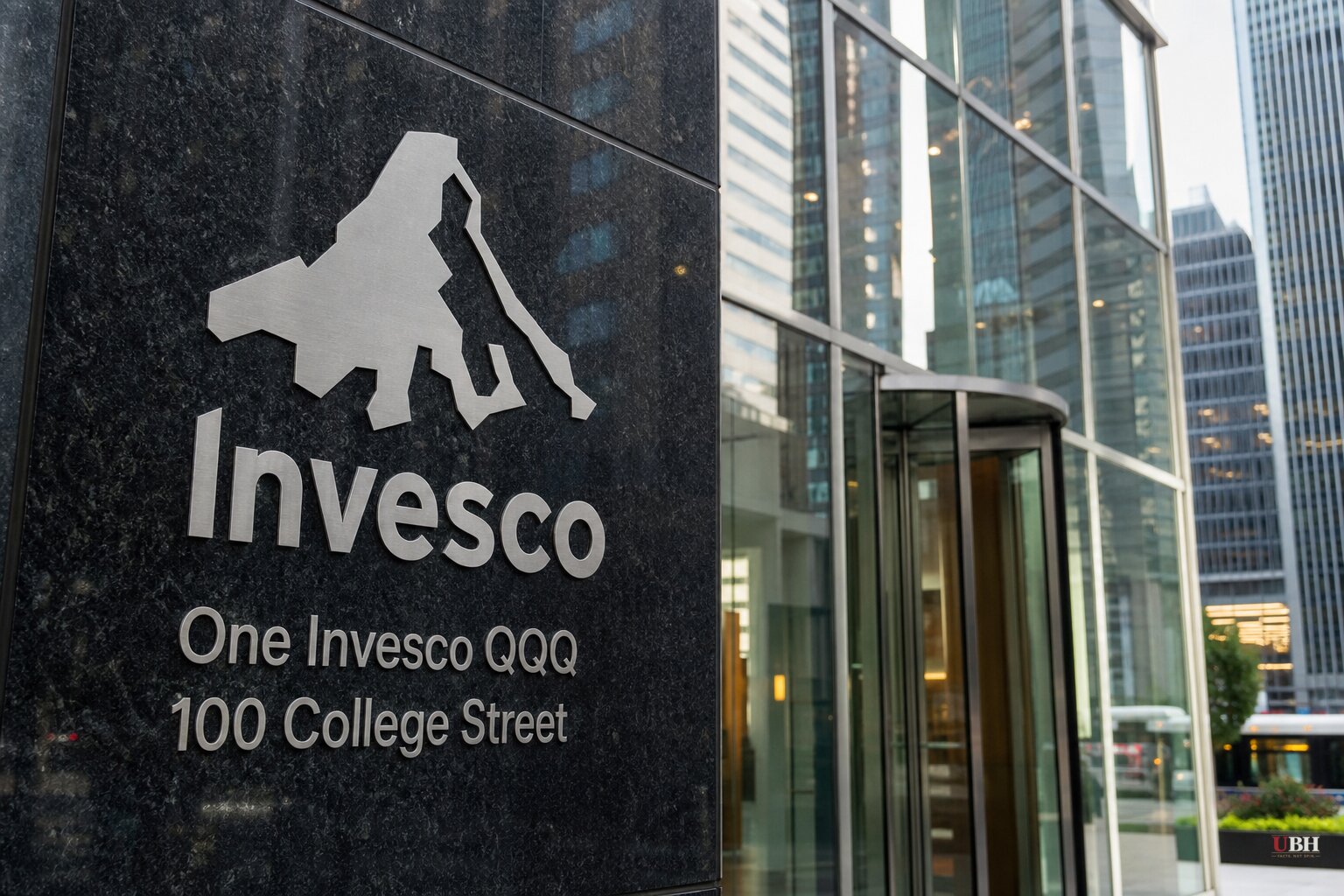
For years, betting on the S&P 500 basically meant betting on seven stocks. Not anymore, at least not in 2026.
The Invesco S&P 500 Equal Weight ETF (RSP) crossed $100 billion in assets under management for the first time on Aug. 19, according to Fortune and CNBC. The fund has pulled in more than $12 billion in net inflows this year alone. As of Aug. 26, RSP was up 15.95% year-to-date, according to Fortune, compared with 12.37% for the iShares Core S&P 500 ETF (IVV), a gap of roughly 3.6 percentage points. CNBC and Tekedia, citing data through Aug. 21, put the gap at roughly 3 percentage points, with BigGo Finance reporting RSP's year-to-date return at 14.8% through that date. The exact number depends on the day you check, but equal weight is beating the market by a wide margin this year.
Why This Is Happening
The mechanics are straightforward. A market-cap-weighted fund like IVV or the Vanguard S&P 500 ETF (VOO) gives its biggest companies the biggest slice of the pie. Right now that means Nvidia, Microsoft, Apple, and Amazon dominate the index because they're worth the most.
RSP throws that out. Every one of the 500 companies gets roughly the same weight, rebalanced quarterly. Nvidia and some random mid-cap industrial stock count the same.
That structure has paid off in 2026 because the giants have stumbled. "Several of the big names in the market, like Microsoft, Nvidia, and Apple, have underperformed the broader technology market. Since RSP underweights those companies, its performance is more insulated when those stocks underperform," Brendan McCann, senior associate manager research analyst at Morningstar, told Fortune.
The flip side matters just as much. "Several smaller S&P 500 stocks have performed exceptionally in 2026, and equal weighting gives those stocks more weight," McCann said.
CNBC and BigGo Finance both cite data showing the so-called Magnificent Seven — Alphabet, Amazon, Apple, Meta, Microsoft, Nvidia, and Tesla — were essentially flat in the first half of 2026 while the broader S&P 500 gained 9.3%. Those seven companies still make up roughly a third of the index's total weight, according to CNBC, Tekedia, and BigGo Finance.
The Concentration Concern Is Real
Nathan Geraci, president of NovaDius, told CNBC that "investors have grown increasingly concerned about the concentration risk embedded in major indices such as the S&P 500, where the top 10 names account for nearly 40% of the index." He said that exposure is "particularly concentrated in the AI theme and the major hyperscalers, where investors are raising questions about elevated valuations and whether the heavy capital spending will ultimately be justified."
This concern is widespread. J.P. Morgan Wealth Management's Sergei Klebnikov, writing Aug. 24, laid out the same problem from a different angle: owning several funds can create a "diversification illusion" if those funds all hold the same mega-cap names. A portfolio can look spread out by ticker symbol and still rise and fall with the same handful of stocks. J.P. Morgan's strategists frame the current environment as an "AI capital expenditure supercycle," where roughly half the S&P 500's earnings growth is tied to that spending. This is exactly the exposure equal-weight funds are designed to dilute.
Cinthia Murphy, director of research at VettaFi, told CNBC that equal weighting "can be forgotten when the market is led by a very narrow theme," which is precisely what happened during the Magnificent Seven's run. Now that the theme has broadened, "all of a sudden, people are paying attention," she said.
The Bull Case for Staying Concentrated
Not every voice in this conversation is bearish on mega-cap tech or bullish on rotation for its own sake. Ritholtz Wealth Management CEO Josh Brown and DataTrek co-founder Nick Colas, in comments reported by Benzinga, argue the broader market rally over the past year has been built on real earnings growth, not just multiple expansion, and Colas called this year's move "100% earnings." Their most bullish scenario for the S&P 500 over the next 12 months, up to 39%, depends on AI spending actually converting into measurable revenue across the full AI supply chain, not on investors fleeing mega-caps.
That's a fair rebuttal to the idea that concentration itself is the problem. If Nvidia, Microsoft, and the rest eventually deliver on AI monetization, the same concentration that looks risky today could look prescient. Colas was blunt about the odds: "You need all three things to go right. The sun, the moon, the stars, they all have to align."
Where the Growth Story Hits a Ceiling
McCann told Fortune he isn't worried about RSP's size yet. "I think at $100 billion the ETF still has plenty of runway," he said. But he flagged a liquidity constraint: as RSP grows, it gets harder to trade its smallest holdings.
"There's no perfect number for how large the assets could grow, but I would say if assets were to quadruple, it could be more challenging to rebalance the portfolio," McCann said, putting a potential stress point near $400 billion.
For now, cap-weighted funds still dwarf the equal-weight trade. VOO, IVV, and SPY hold nearly $3 trillion combined, according to CNBC, dwarfing RSP's $100 billion. The question going forward is whether this year's rotation is a durable shift in market leadership or a temporary pause before AI-driven mega-caps reassert themselves, and whether RSP can keep scaling without running into the trading friction McCann described.
Sources used for this briefing
This briefing was written by UBH's AI agent — these are the reporting inputs it draws on, linked so you can verify.


