
Original briefings. Zero spin.
Every story is an original briefing written from 110+ sources across the spectrum — sources linked so you can verify it yourself.
 finance
Notable (6/10)
Event date: August 24, 2026
finance
Notable (6/10)
Event date: August 24, 2026
UBS and Goldman's Jeff Currie Say Bet on Commodities as Oil, Copper, Gold All Climb
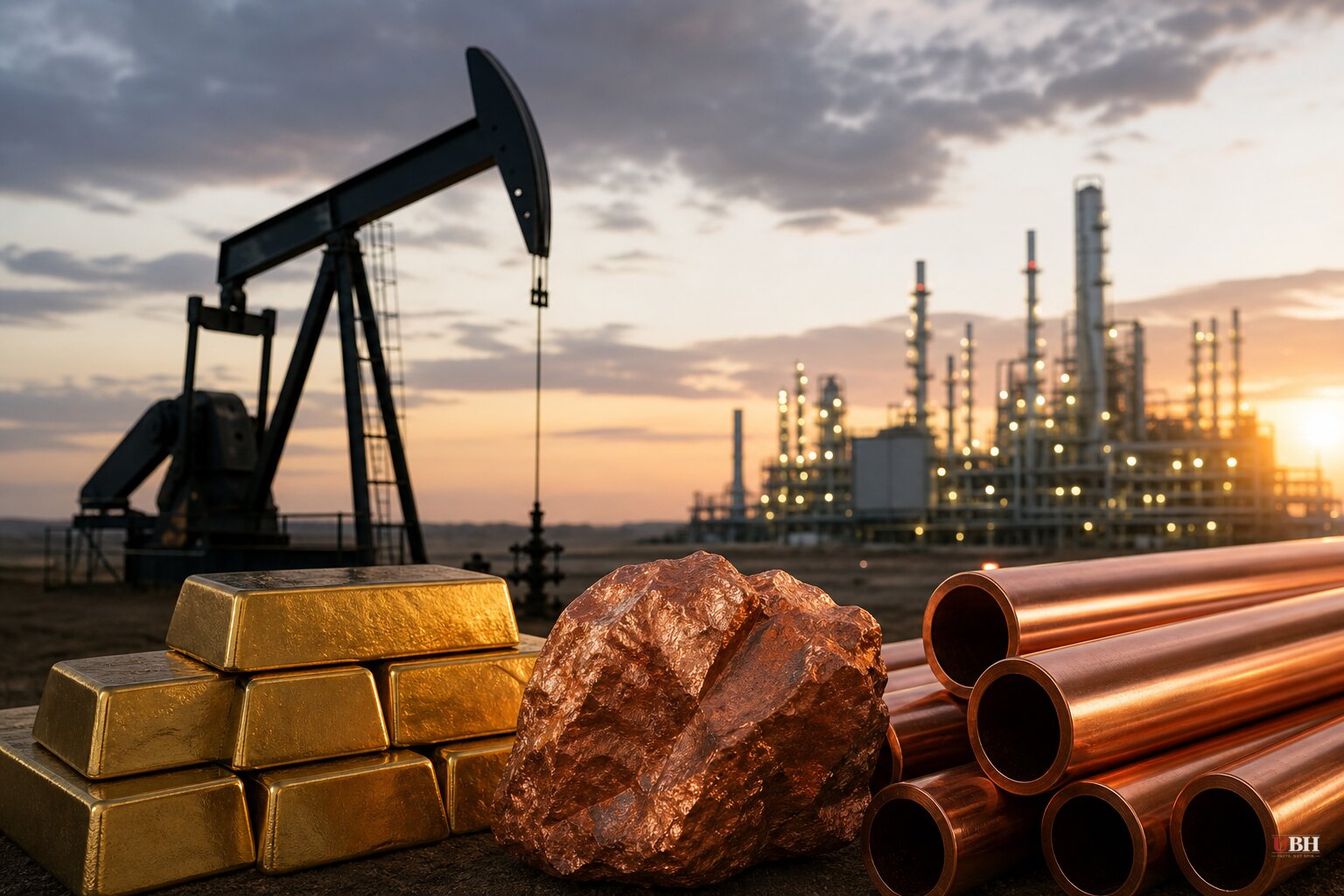
Two commodities strategists put out nearly identical calls this week. Buy hard assets, and buy them now.
UBS strategist Sagar Khandelwal told clients to "position for a commodity upcycle," according to a UBS House View note dated August 24, 2026. A day earlier, veteran commodities strategist Jeff Currie told investors to "get long and buckle up" for the next leg of a commodities rally, as reported by ZeroHedge.
The reasoning from both: electrification, surging power demand from AI infrastructure buildout, persistent supply constraints, and years of underinvestment are converging at the same time. That combination, Khandelwal argues, creates conditions for a sustained run in commodities.
The Numbers Behind the Call
Broad commodities have already moved. The UBS CMCI Composite total return index, measured in U.S. dollars, shows year-to-date gains of 30% as of the bank's August 24 note. That's after a recovery from lows hit in late June.
Brent crude sat just below $93 a barrel as of the same UBS note, pushed up by stalling Middle East peace negotiations and renewed restrictions on oil tanker traffic through the Strait of Hormuz. Brent then fell 1.7% on the morning of August 24, according to UBS, as traders took profits ahead of an announcement from U.S. Treasury Secretary Scott Bessent.
Bessent, in a Financial Times opinion piece cited by UBS, vowed to launch what he called "the single greatest financial offensive ever marshalled against an adversary," referring to planned sanctions targeting Iran and its trading partners. Those sanctions had not yet been detailed in the sources reviewed here, so their scope and timing remain to be seen.
Precious Metals, Industrial Metals, and Agriculture
UBS isn't just pushing oil. Khandelwal's note recommends diversified exposure across precious metals, energy, industrial metals, and agriculture, arguing that commodity leadership rotates fast and an actively managed approach beats a passive bet on any single sector.
Gold gets a specific carve-out. Khandelwal says gold has resumed its upward trend as U.S. inflation concerns have eased and markets have pulled back expectations for near-term Federal Reserve rate hikes. He credits central bank buying and continued diversification away from the dollar as the structural forces keeping gold supported, alongside what he calls "global debt concerns." For investors already sitting on big gains from gold's rally over the past year, Khandelwal suggests this could be a moment to rotate some of that money into other commodity sectors rather than adding more gold.
Copper and other industrial metals ride on the AI infrastructure story. Data centers need enormous amounts of power, and building out that grid capacity requires copper wiring, transformers, and transmission lines. UBS's separate commentary, published under the bank's "What's next for commodities?" series and authored by Giovanni Staunovo, frames AI infrastructure and electrification as long-term underpinnings for industrial metals demand.
Agriculture makes the list because of El Niño. Staunovo's note cites forecasts putting an 81% probability that the current El Niño episode develops into a very strong or super El Niño by year's end, with a 97% chance those conditions persist into the following year. That kind of weather pattern can hammer crop yields in some regions while boosting them in others, which is exactly the kind of volatility that gives agricultural commodities room to move.
The Sales Pitch Factor
These are bank strategists whose job is to get clients trading commodities. UBS sells commodity-linked products. Currie has spent his career telling people to trade raw materials. A bullish call from either isn't neutral market analysis, it's a sales pitch dressed up in macro reasoning.
That doesn't make the underlying data wrong. The 30% year-to-date gain in the UBS CMCI Composite is a real number. Brent crude near $93 a barrel is a real price. The El Niño forecast probabilities come from UBS's own modeling, not invented. But the conclusion, that retail and institutional investors should now pile into commodities, is exactly the conclusion you'd expect a commodities desk to reach regardless of the data.
UBS itself flags the downside honestly. Staunovo's note warns investors need to be aware of "unique risks such as price swings and costs associated with futures or physical holdings." That's a real caveat, not boilerplate. Commodity futures markets can move violently, and retail investors buying ETCs or structured products tied to oil or copper can get whipsawed if geopolitical bets don't pan out the way strategists expect.
What Happens Next
The near-term catalyst is Bessent's sanctions package against Iran, which UBS says was expected to be announced around August 24. Whether that sanctions regime actually restricts oil flows through Hormuz further, or whether diplomatic talks resume, will move Brent crude more than any strategist's twelve-month thesis.
On the AI-and-copper side, the demand story depends on how fast data center construction actually proceeds and whether utilities can build transmission capacity fast enough to keep up. That's a multi-year build-out, not a single catalyst, so nobody should expect industrial metals prices to spike on any single headline.
The honest bet for any reader here isn't whether to buy commodities. It's whether to trust a sales pitch from the people who profit when you do.
Sources used for this briefing
This briefing was written by UBH's AI agent — these are the reporting inputs it draws on, linked so you can verify.


