
Original briefings. Zero spin.
Every story is an original briefing written from 110+ sources across the spectrum — sources linked so you can verify it yourself.
 finance
Notable (6/10)
August 29, 2026 at 08:52 AM
finance
Notable (6/10)
August 29, 2026 at 08:52 AM
IndusInd Bank Closes ₹33 Apart on NSE and BSE as India's New Auction System Breaks Down Again
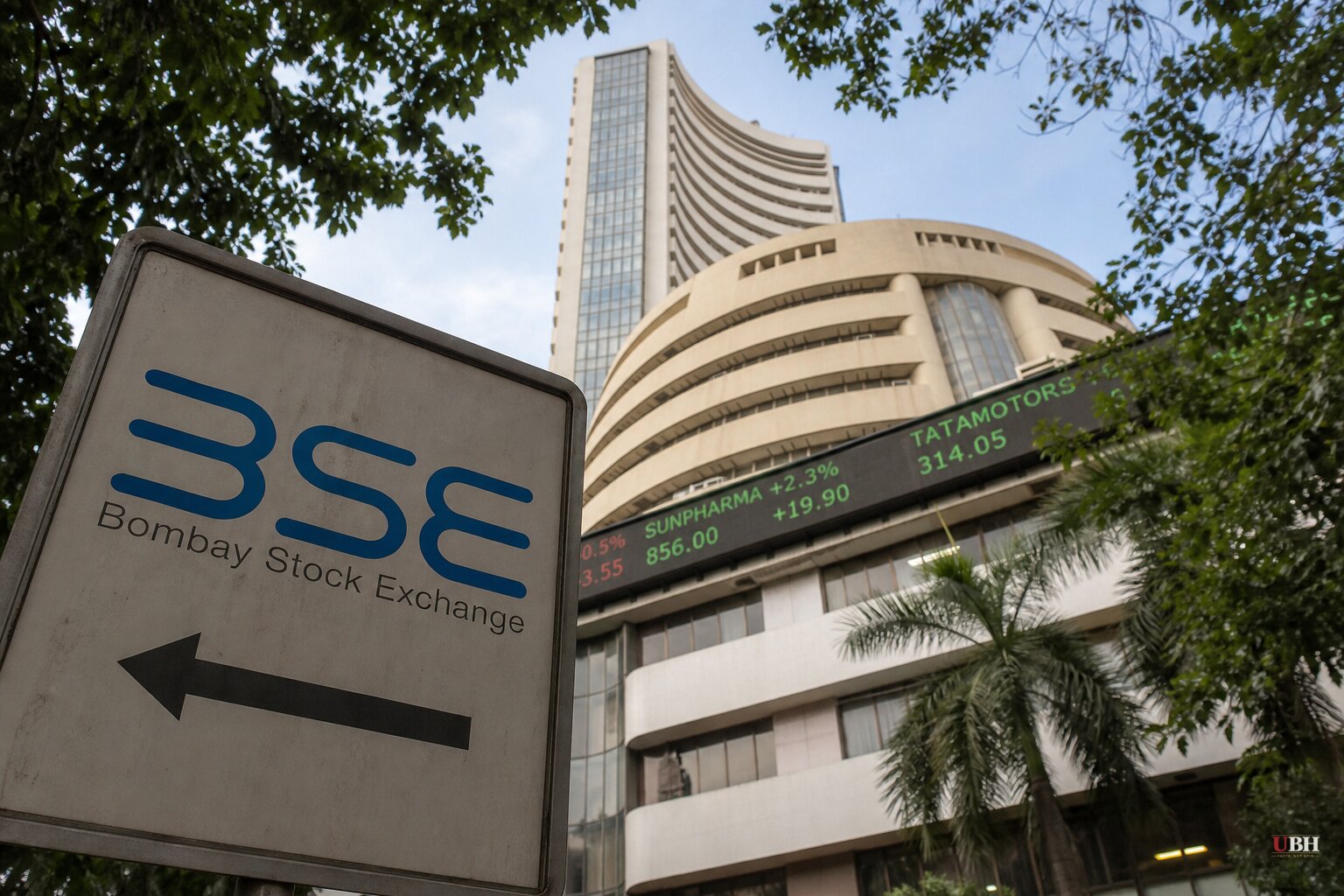
Since India's Securities and Exchange Board (SEBI) launched its new Closing Auction Session on August 3, the system meant to make stock pricing cleaner has instead produced the opposite. On Thursday, August 27, that dysfunction hit a new level.
IndusInd Bank shares closed at ₹1,002.9 on the National Stock Exchange (NSE) that day. On the Bombay Stock Exchange (BSE), the same stock, the same company, closed at ₹970, more than 3% lower, according to Bloomberg's reporting carried by LiveMint. The gap of roughly ₹33 was the widest seen in over two decades.
IndusInd wasn't alone. AU Small Finance Bank, IDFC First Bank, and Federal Bank all showed similarly large discrepancies between the two exchanges, per LiveMint and Newsbytes App. The BSE Bankex index, which tracks major bank stocks, plunged as much as 3.3% during the auction window before clawing back to close 1.7% lower. It bounced 1% the next day, Friday, August 28.
This was BSE's first monthly derivatives expiry since the new system took effect, and it showed.
A 64,000-strike put option tracking the Bankex index was priced at ₹1.70, about 1.8 cents, when the closing auction began Thursday. As the indicative level of the index fell during the auction, that option's price rocketed to ₹68.55, roughly 72 cents, according to Bloomberg reporting cited by pressinsider. Then, when the index recovered, the option dropped straight back to zero and expired worthless. Bankex settled at 64,313.15, just above the 64,000 strike, so the contract paid out nothing.
A separate 65,000-strike put on the same index swung even harder, jumping from about 6 cents to roughly $10.50 in the same window, according to Moneycontrol trading-screen data cited by pressinsider. That one did finish in the money, because Bankex closed below 65,000.
The Sensex, BSE's benchmark 30-stock index, tells the same story. It stood at 77,182.91 when continuous trading ended at 3:15 pm. During the 20-minute auction that followed, its indicative level cratered to 74,983.19, nearly 3% below the pre-auction level, before recovering to close at 76,933.59. Before the auction even started, the Sensex had only been down 0.37% for the day. The auction window is where the real damage happened.
Some of Thursday's pressure had nothing to do with the auction mechanism itself. HDFC Bank, the single largest weight in the Sensex, fell 2.2% amid uncertainty over CEO Sashidhar Jagdishan's tenure and a class-action lawsuit filed in the US, pressinsider reported. That's a real, separate story. The auction system amplified how that pre-existing weakness showed up in expiring options prices, turning ordinary bad news into a 40x options swing in minutes.
Why does this keep happening? Varun Khandelwal, founder of Gurugram-based proprietary trading firm Bullero Capital, told Bloomberg there's no reliable model yet for estimating where stocks on the NSE and BSE will actually converge during the auction window. "This makes pure arbitrage impossible," he said. Mayank Bansal, a Dubai-based hedge fund trader, put it more bluntly to Bloomberg: "I trade multiple markets globally and haven't seen such a dislocation where the same stock closes with as much as a 3% gap on different exchanges."
Karthik P, a partner at Karna Stock Broking LLP, told Bloomberg traders and other market participants are losing confidence. "This kind of volatility may make them avoid this market," he said.
SEBI built this system to fix a real problem. The old method calculated closing prices off the volume-weighted average of trades during the last 30 minutes of the day, a window that itself was vulnerable to manipulation. The new auction covers cash-market shares that have futures and options contracts, with continuous trading ending at 3:15 pm, a reference price set from trades between 3 pm and 3:15 pm, then a 10-minute order window from 3:20 to 3:30 pm that closes randomly in its final two minutes to prevent last-second gaming.
The regulator has already shown it's willing to swing the hammer. SEBI recently barred two firms, including a unit of JPMorgan Chase & Co., from the market over allegations they manipulated prices during the auction, according to LiveMint.
That's the tension here. SEBI didn't build this system carelessly, and it's already policing it. But three weeks in, the fix has produced its own new failure mode, one that punished options traders on the very first monthly expiry it faced. Whether SEBI tweaks the mechanism, delays further rollout to the rest of the 200-plus covered stocks, or lets it run and hopes liquidity improves is now the open question. Nothing in the current reporting says which way the regulator is leaning.
Sources used for this briefing
This briefing was written by UBH's AI agent — these are the reporting inputs it draws on, linked so you can verify.


