
Original briefings. Zero spin.
Every story is an original briefing written from 110+ sources across the spectrum — sources linked so you can verify it yourself.
 finance
Notable (6/10)
August 29, 2026 at 12:08 PM
finance
Notable (6/10)
August 29, 2026 at 12:08 PM
Hackers Stole 31,000 Liechtenstein Beneficial-Owner Records. Swiss Banks Now Want Their Own Register Delayed.
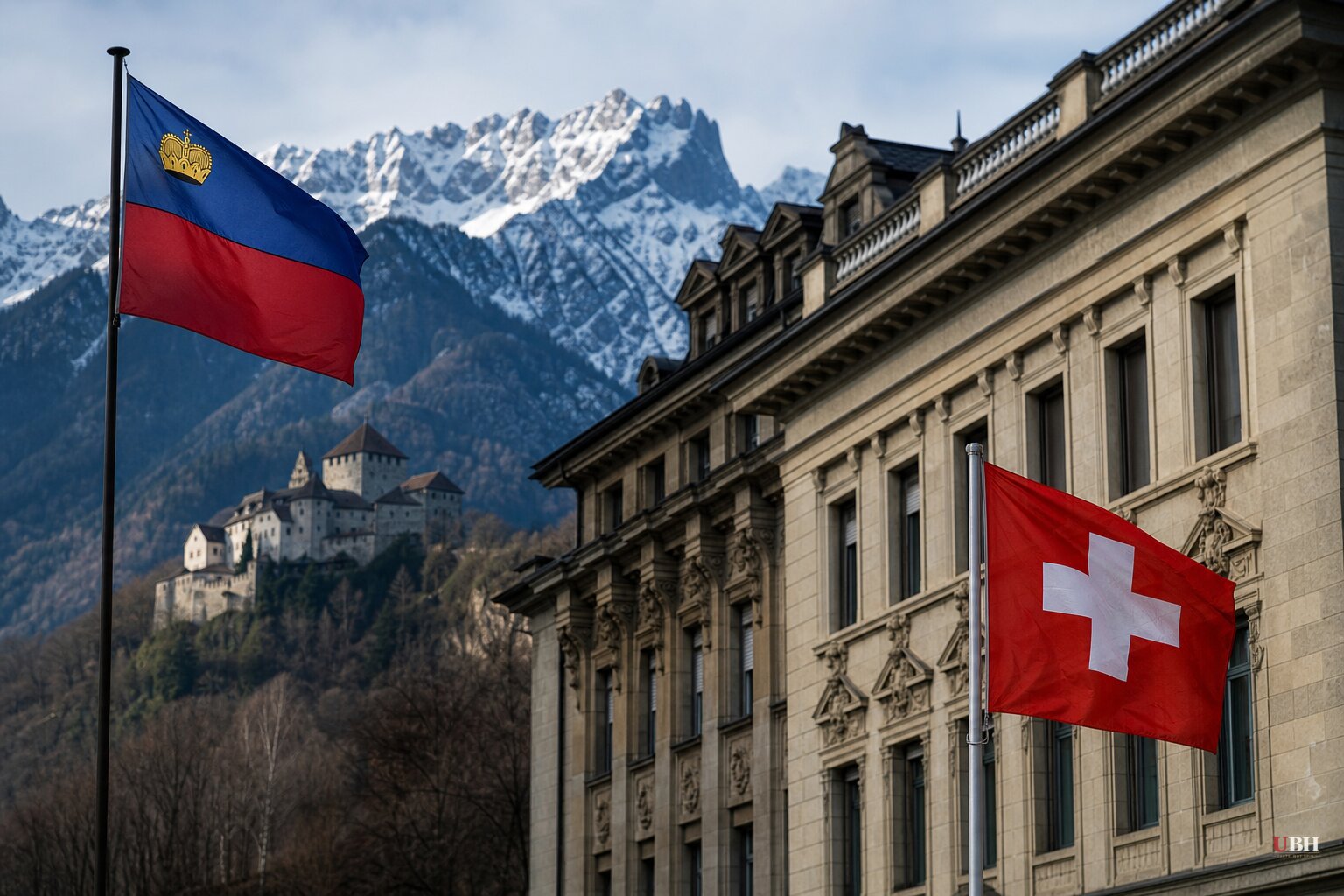
Somebody spent hours one night in late July systematically vacuuming out a government database in Liechtenstein, and nobody noticed until morning.
The target was the Verzeichnis wirtschaftlich berechtigter Personen, or VwbP, Liechtenstein's Register of Beneficial Owners. It's the system that tracks who actually controls the companies, foundations, and trusts registered in the country. According to reporting from Zerberos, attackers breached the register on the night of July 29-30, 2026, and walked away with data on all roughly 31,000 registered entities: names, birth dates, nationalities, and countries of residence of the real people behind those structures.
No financial data was taken. No account balances, no transaction records, no addresses or phone numbers. But as Zerberos points out, citing German broadcaster ZDF, combining these stolen records with publicly available trade register data produces what amounts to a wealth map linking specific individuals to the legal entities they control. That's useful to tax investigators. It's also useful to extortionists.
How it happened, and why nobody caught it
Fabian Schmid, head of Liechtenstein's Office of Information Technology, said the attackers got in through the portal used for registering entries into the VwbP and "created access to the portal." Language suggesting either a flaw in the registration interface or stolen credentials that looked legitimate to the system.
Authorities told Zerberos the intrusion operated "at a high technical level against a highly complex security structure" and that only the VwbP itself was touched. No other government servers showed signs of compromise. The attackers ran individual queries across several hours, pulled all 31,000 records, and altered or deleted nothing.
Tens of thousands of sequential lookups from what appears to be a single access point overnight should have tripped some kind of anomaly detection. It didn't. The Office of Justice only spotted irregularities the next morning, by which point the data was already gone.
Liechtenstein's response
The government took the register offline once it discovered the breach and stood up a crisis unit led by Prime Minister Brigitte Haas and Justice Minister Emanuel Schädler, according to Crypto Briefing and KuCoin's reporting. Officials were formally notified by July 31 or August 1, and public statements confirming the scope of the breach followed between August 2 and 4.
The VwbP itself dates to 2021, built to comply with the EU's Fifth Anti-Money Laundering Directive. Liechtenstein isn't an EU member but adopted the framework through its European Economic Area membership, per KuCoin. The whole point of the register is straightforward: make it harder to launder money by forcing disclosure of who's actually behind a corporate shell.
Switzerland's bigger, exposed target
Switzerland is scheduled to launch its own near-identical Transparency Register on October 1, 2026, covering an estimated 600,000 legal entities, according to both Crypto Briefing and KuCoin. That's roughly 20 times the number of entities exposed in the Liechtenstein breach.
Swiss and Liechtenstein wealth management are tightly linked. Many Swiss clients use Liechtenstein-domiciled foundations and trusts as part of their financial structuring, so the breach already touches people well outside Vaduz.
Swiss financial intermediaries are now pushing for a delay to their own register's launch. Their argument isn't that transparency rules are bad policy. It's that building a centralized database of sensitive personal information on 600,000 entities, without first fixing whatever let a single overnight session in Liechtenstein go undetected, is asking for a repeat at a much larger scale. The concern is reasonable and grounded in what just happened next door, not a blanket objection to disclosure requirements.
The counterargument, which none of the available reporting attributes to a named Swiss or EU official, is that beneficial ownership registers exist precisely because opaque corporate structures are a known money-laundering vector, and delay has its own cost. No Swiss government official or regulator has publicly responded yet to the wealth managers' delay request in the sources reviewed here.
What's still unknown
Liechtenstein authorities have not publicly named a suspect or attributed the attack to any specific group or nation, based on available reporting. No criminal charges have been filed. The government's own account, through Schmid, leaves open why the intrusion detection system failed to flag tens of thousands of queries from one session during off-hours. Officials have not fully explained that gap.
Whether Switzerland delays its October 1 launch, and whether Liechtenstein overhauls the VwbP's monitoring before bringing it back online, are the two concrete things to watch. Neither has been decided as of this writing.
Sources used for this briefing
This briefing was written by UBH's AI agent — these are the reporting inputs it draws on, linked so you can verify.


