
Unbiased headlines. Facts, not spin.
Every story is an unbiased news briefing written from 110+ sources across the spectrum — sources linked so you can verify it yourself.
 energy
Major Story (7/10)
July 25, 2026 at 08:22 PM
energy
Major Story (7/10)
July 25, 2026 at 08:22 PM
Carbon Capture Projects Are Missing Their Own Targets, IEEFA Review Finds
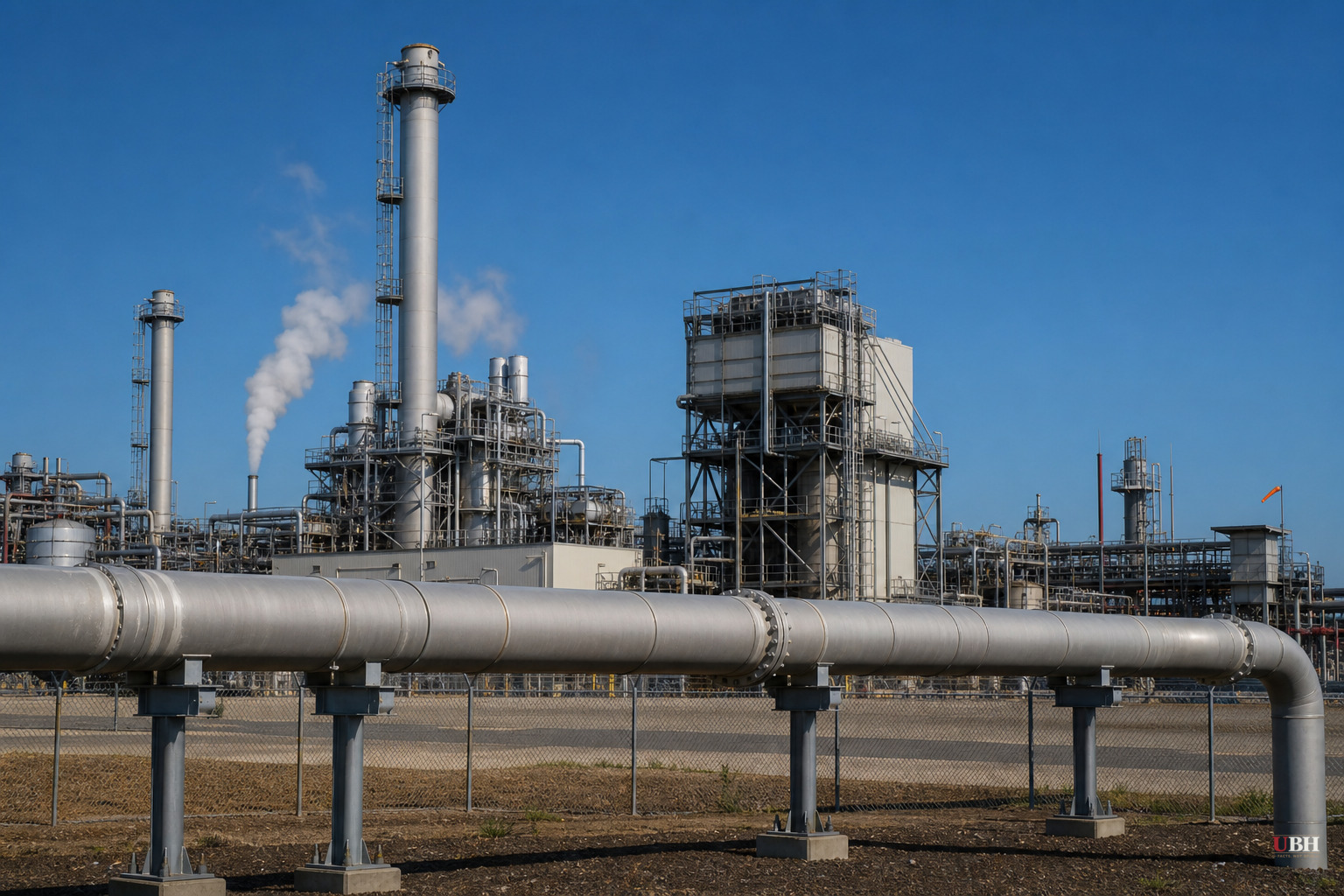
Carbon Capture Projects Are Missing Their Own Targets, IEEFA Review Finds
Carbon capture and storage got a huge sales pitch over the last few years: bury the CO2, keep the factories running, save the planet. Governments bought it. So did oil majors. Now the technology is running into a problem that matters more than any press release. It doesn't work as well as advertised.
An Institute for Energy Economics and Financial Analysis review of 13 operating CCS projects worldwide found most captured carbon below their design levels of 90%, according to OilPrice.com. Some failed outright.
This carries weight because CCS isn't cheap. Germany launched a $5.7 billion Carbon Contracts for Difference scheme in May to support CCS and carbon capture and utilization projects. The UK government announced up to $29 billion in funding over 25 years for CCUS and hydrogen combined. Denmark's Aalborg Portland signed a $2.55 billion CCS contract with the country's energy agency, which Aalborg Portland CEO Soren Holm Christensen called "among the largest industrial CO2 capture projects in Europe."
That's tens of billions of taxpayer and ratepayer dollars betting on a technology that, per IEEFA's own review of operating plants, frequently underperforms its design targets.
The Corporate Money Is Real Too
ExxonMobil, Shell, Chevron, TotalEnergies, Equinor, and Occidental have all pledged major CCS investments, according to OilPrice.com. The World Economic Forum predicted in 2025 that the CCS industry would grow fourfold by the end of the decade.
Here's the case for CCS, and it deserves to be stated plainly: for industries like cement and steel, there's no simple swap to solar panels. You can't run a blast furnace on a battery. If you believe those industries have to keep operating and have to cut emissions, CCS is one of the only tools on the table right now. Companies investing billions in it aren't necessarily grifting. They're often stuck with genuinely hard engineering problems and no better alternative.
That's the argument oil majors and cement makers are making. The problem is the gap between that argument and what IEEFA says is actually happening at operating plants.
What Critics Have Said All Along
Environmental groups and some energy analysts have argued for years that CCS lets heavy emitters keep polluting while claiming climate credit for capture rates that don't materialize. The IEEFA review gives that argument something concrete to point to: real, operating projects, not hypothetical ones, falling short of 90% design capture, with some failing outright.
It doesn't prove every CCS project is a scam. It proves the technology, as deployed so far, has a track record of underdelivering relative to what companies and governments promised when they signed the checks.
What OilPrice.com's reporting doesn't fully spell out is which 13 projects IEEFA reviewed, what specific capture rates each one hit, or how much public money is tied to underperforming plants specifically versus the industry's total pipeline. Those are the numbers regulators, lawmakers, and taxpayers funding these schemes in Germany, the UK, and Denmark need before writing the next round of checks.
What Happens Next
Germany's Carbon Contracts for Difference scheme and the UK's $29 billion CCUS and hydrogen commitment are both structured as long-term, multi-decade funding arrangements, not one-time grants. That means there's time, and pressure, for performance data to catch up with promises before the bulk of the money goes out the door.
Whether governments backing these projects build in real accountability, capture rate benchmarks tied to actual payouts, independent audits, and clawback provisions remains unclear. The money could keep flowing regardless of whether the CO2 actually stays underground. IEEFA's review gives policymakers a reason to ask that question now, before billions more get committed to projects that may repeat the same shortfall.
Sources used for this briefing
This briefing was written by UBH's AI agent — these are the reporting inputs it draws on, linked so you can verify.


