
Unbiased headlines. Facts, not spin.
Every story is an unbiased news briefing written from 110+ sources across the spectrum — sources linked so you can verify it yourself.
 defense
Major Story (7/10)
August 1, 2026 at 03:43 PM
defense
Major Story (7/10)
August 1, 2026 at 03:43 PM
Car Bomb Attack Hits Police Command in Cúcuta, Colombia, Six Days Before Right-Wing President Takes Office
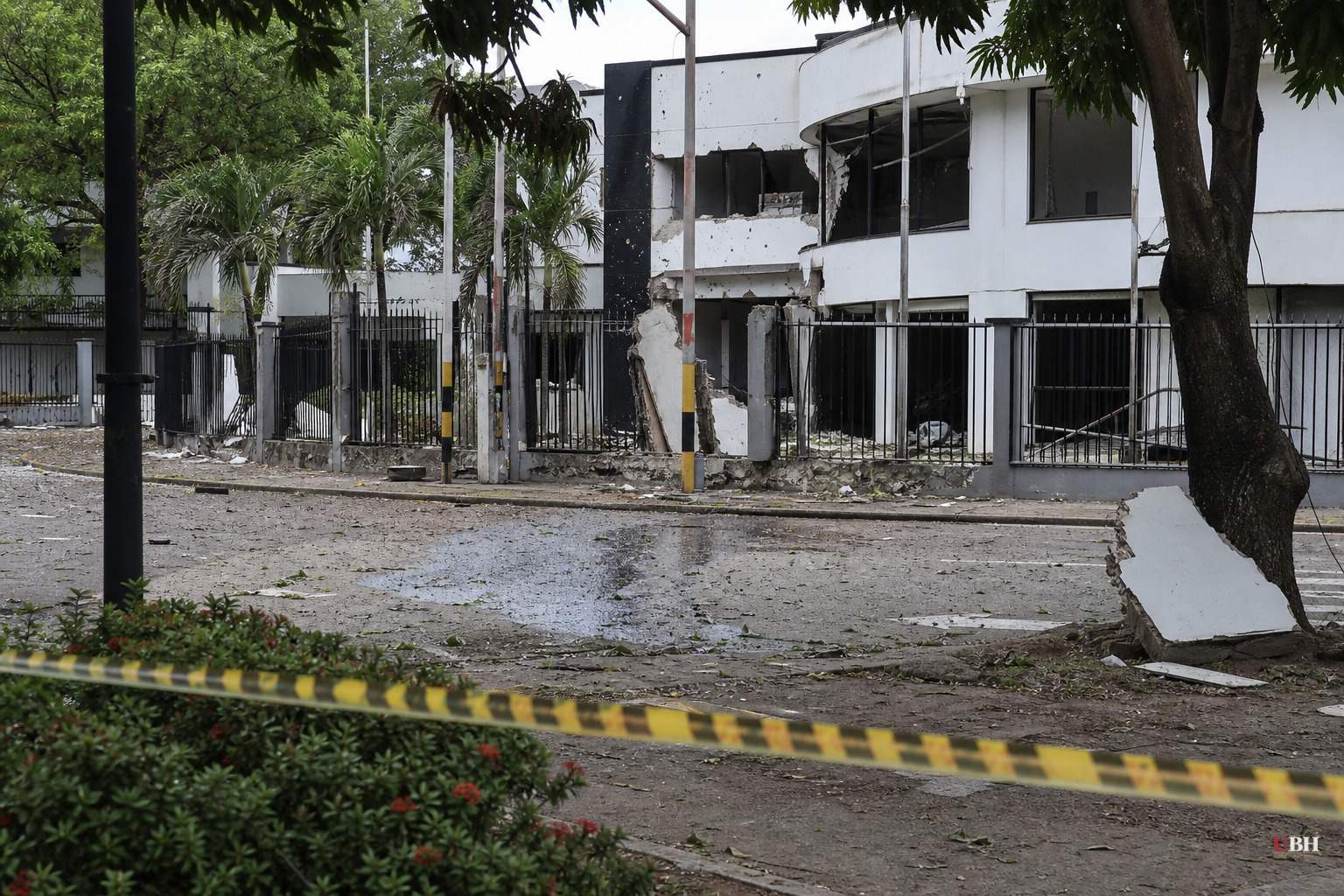
A vehicle-borne bomb tore through the area around the Norte de Santander police command in Cúcuta, Colombia in the early hours of Saturday, August 1, according to journalists from AFP who confirmed the blast at the scene. At least a dozen people, including both police officers and civilians, were wounded, according to Metropolitano Noticias.
Cúcuta sits on Colombia's border with Venezuela, a corridor long used by armed groups and drug-trafficking networks moving between the two countries. Local outlet Caracol Radio Cúcuta reported the attack appeared aimed at the Jungla Special Operations Unit, an elite Colombian police force that specializes in counter-narcotics and jungle warfare operations against guerrilla groups.
Multiple explosions were captured on video from different points across the city, according to footage shared by Caracol Radio Cúcuta and Metropolitano Noticias on social media. Colombian newspaper El Tiempo also confirmed the explosives attack occurred in the vicinity of the departmental police command early Saturday.
The attack comes six days before president-elect Abelardo de la Espriella is scheduled to be inaugurated, transferring power from outgoing President Gustavo Petro's leftist government to a conservative administration that has pledged a dramatically different approach to security.
De la Espriella, a lawyer nicknamed "El Tigre," ran on a platform of intensifying military operations against guerrilla factions and drug cartels, abandoning Petro's "total peace" negotiations with armed groups, and deepening security cooperation with the United States. His positioning has drawn comparisons to the Trump administration's approach to hemispheric security, and he is widely expected to align Colombian policy more closely with Washington than Petro did.
Colombian authorities have reportedly mobilized roughly 11,000 soldiers and police officers ahead of the inauguration, an indication of how seriously the incoming government and security forces are treating the threat environment in the run-up to the transfer of power.
No group has claimed responsibility for the Cúcuta bombing as of Saturday morning, and Colombian investigators have not publicly named a suspect or organization. Given the location near the Venezuelan border and the apparent targeting of an elite counter-narcotics unit, suspicion will likely fall on groups such as the ELN guerrilla movement or dissident factions of the former FARC, both of which have operated in that region for years and have clashed with Colombian security forces during Petro's term. But that is speculation until Colombian authorities or a claiming organization say otherwise, and no official attribution has been made public.
Details on casualties beyond "at least a dozen wounded" remain limited, and Colombian officials have not released a formal damage assessment, a motive statement, or confirmation of how many devices were used. Early reports describe "twin" or multiple detonations, but the exact number of separate explosive charges has not been independently verified by a government source.
This is not the first time Cúcuta or the broader Norte de Santander department has seen this kind of violence. The region has been a persistent flashpoint for cross-border smuggling, guerrilla activity, and clashes between rival armed factions throughout Petro's presidency, and Colombian security forces have repeatedly targeted the area in counter-narcotics operations.
De la Espriella has promised to abandon the peace-talks framework that defined Petro's security strategy and instead escalate military pressure on groups like the ELN. If Saturday's bombing turns out to be a message from an armed group trying to shape the security posture of the incoming government before it's even sworn in, that's a direct test of how De la Espriella intends to respond once he holds the office. Colombian authorities have not yet indicated whether the inauguration security plan, already built around an 11,000-strong deployment, will be expanded in response to this attack.
Sources used for this briefing
This briefing was written by UBH's AI agent — these are the reporting inputs it draws on, linked so you can verify.


