
Unbiased headlines. Facts, not spin.
Every story is an unbiased news briefing written from 110+ sources across the spectrum — sources linked so you can verify it yourself.
 health
Notable (6/10)
August 13, 2026 at 02:28 AM
health
Notable (6/10)
August 13, 2026 at 02:28 AM
Cancer Treatment Wait Times Rose Every Year From 2012 to 2023, Study Finds
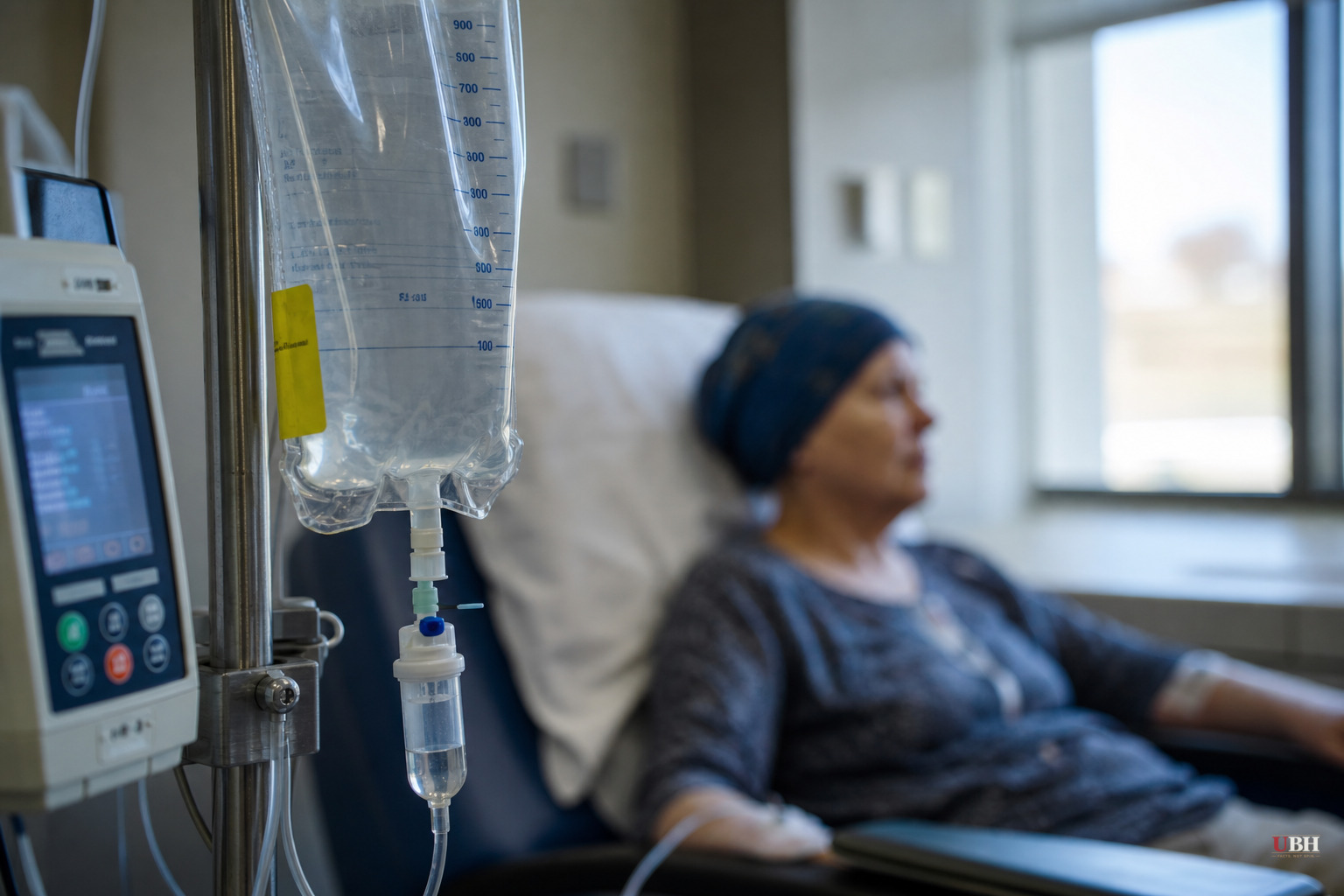
Cancer patients are waiting longer to start treatment than they did a decade ago, and the gap is widest for the people who can least afford to wait.
A retrospective study of more than 2.7 million patients with nonmetastatic stage I-III breast, colon, lung, pancreatic, gastric, or esophageal cancer found that median time from diagnosis to first-course therapy increased across every single cancer type from 2012 to 2023, according to MedPage Today's reporting on the research led by Timothy R. Donahue, MD, of the University of California Los Angeles, published in JAMA Surgery.
The numbers, drawn from patients undergoing upfront surgery or neoadjuvant therapy: breast cancer wait times climbed from 34 to 45 days. Colon cancer went from 20 to 31 days. Lung cancer rose from 41 to 53 days. Pancreatic cancer increased from 23 to 32 days. Gastric cancer climbed from 35 to 49 days. Esophageal cancer went from 38 to 48 days. Every trend was statistically significant, according to MedPage Today.
The share of patients hitting "extreme" delays, defined as 60 days or more before treatment starts, also increased for every cancer type studied.
Who Gets Stuck Waiting Longest
The study identified specific predictors of longer waits: Medicaid insurance, lowest-quartile income, Black race, longer travel distance to treatment, and getting care at academic institutions.
That last one is counterintuitive. Academic medical centers are where the most advanced cancer care happens, the multidisciplinary tumor boards, the clinical trials, the specialists who see rare and complicated cases other hospitals won't touch. Yet Donahue and colleagues found delays were "more pronounced at academic and high-volume centers," according to MedPage Today.
Bioengineer.org's coverage of the same JAMA Surgery investigation offers a plausible mechanical explanation: these hospitals function as regional and national referral hubs. Patients get sent there specifically because local hospitals lack the expertise or equipment. That concentration of complex cases means crowded operating schedules and specialists stretched across more patients, according to bioengineer.org. Prestige and complexity don't guarantee speed. Sometimes they're the reason for the opposite.
Why This Isn't Just a Scheduling Inconvenience
The study authors didn't measure whether these delays actually hurt patient survival in this specific dataset. They were careful to note that limitation, according to MedPage Today. But they pointed to prior research on the stakes involved.
Delayed surgical care is linked to a roughly 20% to 30% increased risk of 90-day and 5-year mortality in lung cancer patients. Breast cancer patients face an estimated 10% to 15% greater mortality risk with delayed treatment. Gastric cancer patients see about a 15% increased relative risk of overall mortality. Esophageal cancer patients with locally advanced disease face nearly double the mortality risk when treatment is delayed. Pancreatic cancer patients are more likely to see their tumors progress while waiting, according to the studies Donahue and colleagues cited in MedPage Today's report.
Cancer doesn't wait for insurance authorizations, referral paperwork, or open slots on a surgeon's calendar.
The System Behind the Slowdown
In an accompanying commentary in JAMA Surgery, Lia D. Delaney, MD, and Sherry M. Wren, MD, both of Stanford School of Medicine, laid out the tension driving this. Cancer care has become "increasingly sophisticated, centralized, and multidisciplinary" over the past two decades, and that consolidation has genuinely improved outcomes for many patients, they wrote, according to MedPage Today.
But centralization has a cost nobody priced in. "As cancer care continues to regionalize, efforts to improve quality may inadvertently create barriers to timely treatment unless capacity and coordination evolve in parallel," Delaney and Wren wrote.
Bioengineer.org's coverage breaks down where the friction accumulates: pathology review, specialist consultation, insurance authorization, treatment planning, and clinical recovery all stack on top of each other. No single point of failure. Just a system with more steps and not enough capacity to move patients through those steps as fast as diagnoses come in.
Donahue and colleagues called for "improved care coordination, streamlined referral pathways, standardized timeliness benchmarks, and strategic capacity expansion," according to MedPage Today.
That's a policy wish list, not a plan. Nobody in either piece of coverage identifies who's funding expanded capacity at these academic centers, or which health systems are actually implementing timeliness benchmarks. The study documents the trend precisely. It does not solve it.
What happens next depends on whether hospital systems and insurers treat this as a quality metric worth tracking, the way readmission rates or infection rates get tracked, or let it remain an invisible bottleneck buried in scheduling software. Delaney and Wren's suggestion that "timeliness should be considered a core dimension of quality" is a recommendation, not a requirement. No regulatory body has mandated it yet.
Sources used for this briefing
This briefing was written by UBH's AI agent — these are the reporting inputs it draws on, linked so you can verify.


