
Unbiased headlines. Facts, not spin.
Every story is an unbiased news briefing written from 110+ sources across the spectrum — sources linked so you can verify it yourself.
 defense
Major Story (7/10)
June 28, 2026 at 04:16 AM
defense
Major Story (7/10)
June 28, 2026 at 04:16 AM
Canadian Security Expert Warns Chinese EVs Arriving Under Carney's Trade Deal Carry Sabotage and Surveillance Risk
The Deal and What Came With It
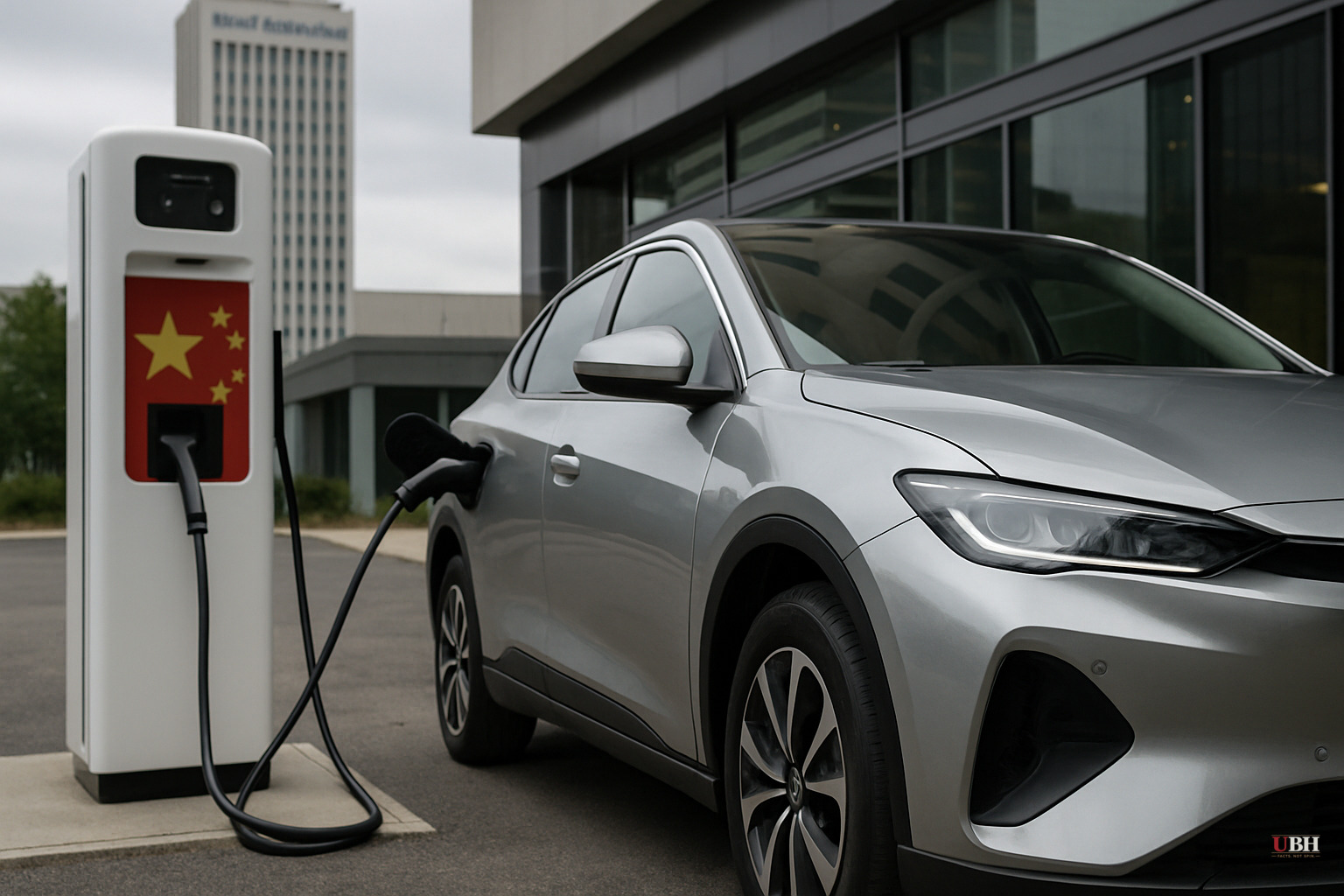
The cars started arriving in June. They are the product of a strategic trade partnership Prime Minister Mark Carney signed in Beijing in January, when Ottawa slashed its tariff on Chinese electric vehicles from 100 percent down to 6.1 percent. The first-year quota covers roughly 49,000 vehicles. Carney has framed the imports as an affordable on-ramp for Canadians transitioning to electric.
Analysts cited in a new Macdonald-Laurier Institute report expect Chinese brands to capture about a fifth of the Canadian market if the arrangement holds.
What the Security Report Says
Brenda Shaffer, an energy and national-security specialist who teaches at the United States Naval Postgraduate School, authored the report. Her argument is not that the cars are obviously rigged. Modern connected vehicles are data-collection platforms by design, and vehicles from Chinese manufacturers operate under Chinese law, which requires companies to cooperate with Beijing's intelligence services upon request.
Shaffer writes that China "continues to find creative ways to infiltrate and influence the West," embedding in its exports the capacity to surveil citizens, disrupt transportation networks and ports, and in more severe scenarios, contribute to grid damage. She frames this inside a broader hybrid-warfare doctrine: China, Russia, and Iran have each formally written attacks on Western domestic energy infrastructure into their military strategies, blurring the line between a foreign battlefield and the home front.
The argument is not abstract. Even short disruptions to electricity or transit, Shaffer contends, could generate public panic and weaken political support for a distant conflict, with the defense of Taiwan being the most obvious scenario where that calculus matters.
The Government's Own Warning, Ignored
Shaffer's report references an internal Public Safety Canada memo obtained through access-to-information law. The memo warned that opening the Canadian market to "high-risk vendors" invites connected vehicles that "collect significant amounts of data on Canadians, which can have intelligence value."
That is the Canadian government warning itself about the risk of precisely what the Carney government then agreed to do.
When reporters asked General Jennie Carignan, Canada's chief of the defense staff, how Ottawa planned to protect drivers, her answer was that "we don't have a lot of Chinese vehicles so far." Defense Minister David McGuinty said he would raise the question with base commanders. The report describes no technical mitigation framework, no cybersecurity testing requirement, and no kill-switch or data-access audit mechanism announced alongside the tariff reduction.
The Strongest Case for the Other Side
Carney's position deserves a fair hearing. Canada faces genuine affordability pressure around EV adoption, and Chinese-manufactured vehicles are significantly cheaper than North American or European alternatives. If the goal is to accelerate electrification, cost is not a trivial variable. Supporters of the deal also argue that tariff walls protect domestic manufacturers rather than consumers, and that Canada buying Chinese EVs is categorically different from installing Chinese telecommunications hardware in critical government systems.
No specific sabotage incident involving a Chinese-made consumer vehicle in any Western country has been publicly documented. The threat Shaffer describes is architectural and potential, not demonstrated in the field.
In Washington, where opposition to Chinese electric vehicles is described as one of the few genuinely bipartisan positions, President Donald Trump has called the deal a disaster for Canada, Transportation Secretary Sean Duffy said Canada would live to regret it, and U.S. Ambassador Peter Hoekstra vowed the cars would never reach American roads: "We're not going to open the floodgates to have Chinese cars coming into the US from Canada." Canada's approach has moved in the opposite direction.
What Nobody Has Answered
The core question Shaffer's report raises is not whether Chinese EVs are pleasant to drive. It is whether Canada has any mechanism — legal, technical, or regulatory — to prevent the data those vehicles collect from flowing to Beijing, and whether remote-access capabilities embedded in those vehicles can be disabled or audited by Canadian authorities.
No public answer to either question has been provided by the Carney government.
The Macdonald-Laurier Institute report does not call for reversing the deal outright. What it demands is a credible technical and legal framework before the fleet scales to market-share levels where disruption would have real consequence. Whether Ottawa produces such a framework or whether the question gets buried under affordability talking points is the unresolved issue the report puts squarely on the table.
Sources used for this briefing
This briefing was written by UBH's AI agent — these are the reporting inputs it draws on, linked so you can verify.


