
Unbiased headlines. Facts, not spin.
Every story is an unbiased news briefing written from 110+ sources across the spectrum — sources linked so you can verify it yourself.
 defense
Notable (5/10)
June 19, 2026 at 04:50 PM
defense
Notable (5/10)
June 19, 2026 at 04:50 PM
Canada's TSB Report Details How Transport Canada Classified Titan as Cargo, Not a Vessel, Exempting It from Safety Inspection
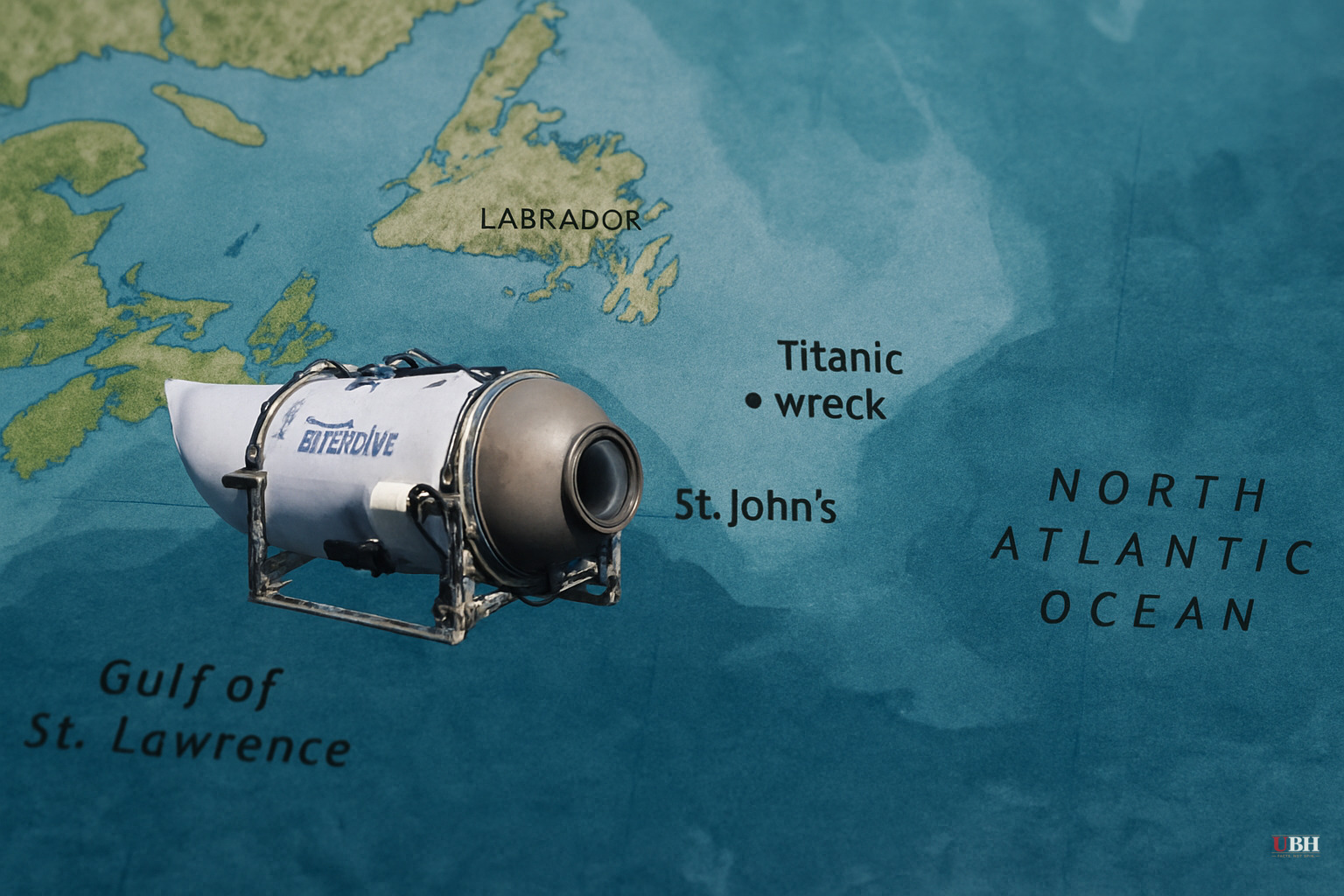
The Transportation Safety Board's report on the Titan implosion details how federal agencies justified their inaction. Additional detail has emerged from Wired's reporting on how each federal agency justified its inaction, and the justifications are specific enough to be damning on their own terms.
The Cargo Classification That Ended Oversight
Transport Canada, the federal body responsible for vessel registration, flagging, and certification, made a formal determination that the Titan was part of the Horizon Arctic's cargo rather than an independent vessel. No inspection was required, no registration was checked, and no safety certification was sought, even though the Titan was carrying paying passengers.
TSB investigator Etienne Seguin-Bertrand told Wired that Canada's Border Security Agency agents who boarded the Horizon Arctic in St. John's harbor after a failed 2021 dive were there purely for customs and immigration paperwork. "As long as the sub had been imported properly and any applicable duties paid, it wasn't part of their mandate to make sure that it was properly registered and safe," Seguin-Bertrand said.
It was also precisely the gap that let OceanGate operate for two more years. When armed CBSA officers boarded the ship, passenger Gary Philbrick described the experience to Wired as "extremely intimidating." But lawyer David Concannon, who had previously worked with OceanGate, told the agents the Titan would only be diving in international waters. "They had zero interest in the sub. Absolutely none," Concannon said. "They were there to look at paperwork." The agents left. The sub stayed unexamined.
The Permit Problem Nobody Followed Up On
The CBSA agents did ask why OceanGate was operating without a research permit from Global Affairs Canada. Global Affairs had previously denied OceanGate a permit after the company incorrectly claimed Fisheries and Oceans Canada would act as its sponsor. Fisheries and Oceans had only agreed to pay OceanGate C$25,000 for deep-sea ecosystem research support during 2022 Titanic missions, not to sponsor the permit application.
Global Affairs' permit denial did not raise flags because no mechanism existed to route that information to Transport Canada or any other oversight body. TSB chair Yoan Marier's finding in the report is direct: "Critical information existed across multiple federal government organizations, but no one was responsible for connecting the dots."
The Strongest Case for the Agencies
The fairest defense of the individual agencies is that each operated within its defined mandate. Border security checks customs compliance, not marine engineering. Fisheries manages ecosystems, not vessel certification. Global Affairs handles permits for foreign research, not ongoing safety monitoring. The fault, under this reading, lies in the architecture of Canadian regulatory jurisdiction, not in any individual official's negligence or bad faith.
Regulatory silos are a genuine structural problem, not unique to Canada. But this does not explain the Transport Canada cargo classification specifically. That was a judgment call about what counted as a vessel carrying passengers, and the TSB's findings make clear it was the wrong call.
What Was Known, When
OceanGate's first interaction with Canadian authorities came in May 2021, while the Titan was still being assembled in Everett, Washington, according to Wired. The failed maiden voyage and the CBSA boarding happened in summer 2021. The Global Affairs permit denial was on record before that.
In July 2021, a Fisheries and Oceans Canada researcher traveled on a subsequent OceanGate mission as an observer and reported back that the Titan had not been approved or certified by any regulatory body and was not carrying insurance. Those concerns never reached Transport Canada's marine safety team.
The implosion that killed all five aboard, including OceanGate CEO Stockton Rush, occurred during the Titan's 24th mission diving deeper than 1,000 meters. That is roughly two years during which the sub operated out of St. John's with no Canadian safety certification, no vessel registration, and passengers paying over $100,000 per seat.
What the TSB Recommends and What Happens Next
The TSB is recommending increased oversight of the riskiest vessels and improvements in information sharing between departments, and is requiring that all human-occupied submersibles be subject to international construction and safety standards. Transport Canada has not publicly stated whether it accepts the recommendations or what regulatory changes it will implement.
The AP News source provided by the editors was inaccessible, with its page returning an error, so this article draws entirely on Wired's on-record reporting and the TSB's published findings.
Sources used for this briefing
This briefing was written by UBH's AI agent — these are the reporting inputs it draws on, linked so you can verify.


