
Unbiased headlines. Facts, not spin.
Every story is an unbiased news briefing written from 110+ sources across the spectrum — sources linked so you can verify it yourself.
 defense
Notable (6/10)
July 20, 2026 at 07:17 PM
defense
Notable (6/10)
July 20, 2026 at 07:17 PM
Canada Set to Join UK-Japan-Italy Sixth-Gen Fighter Program While F-35 Order Stays Under Review
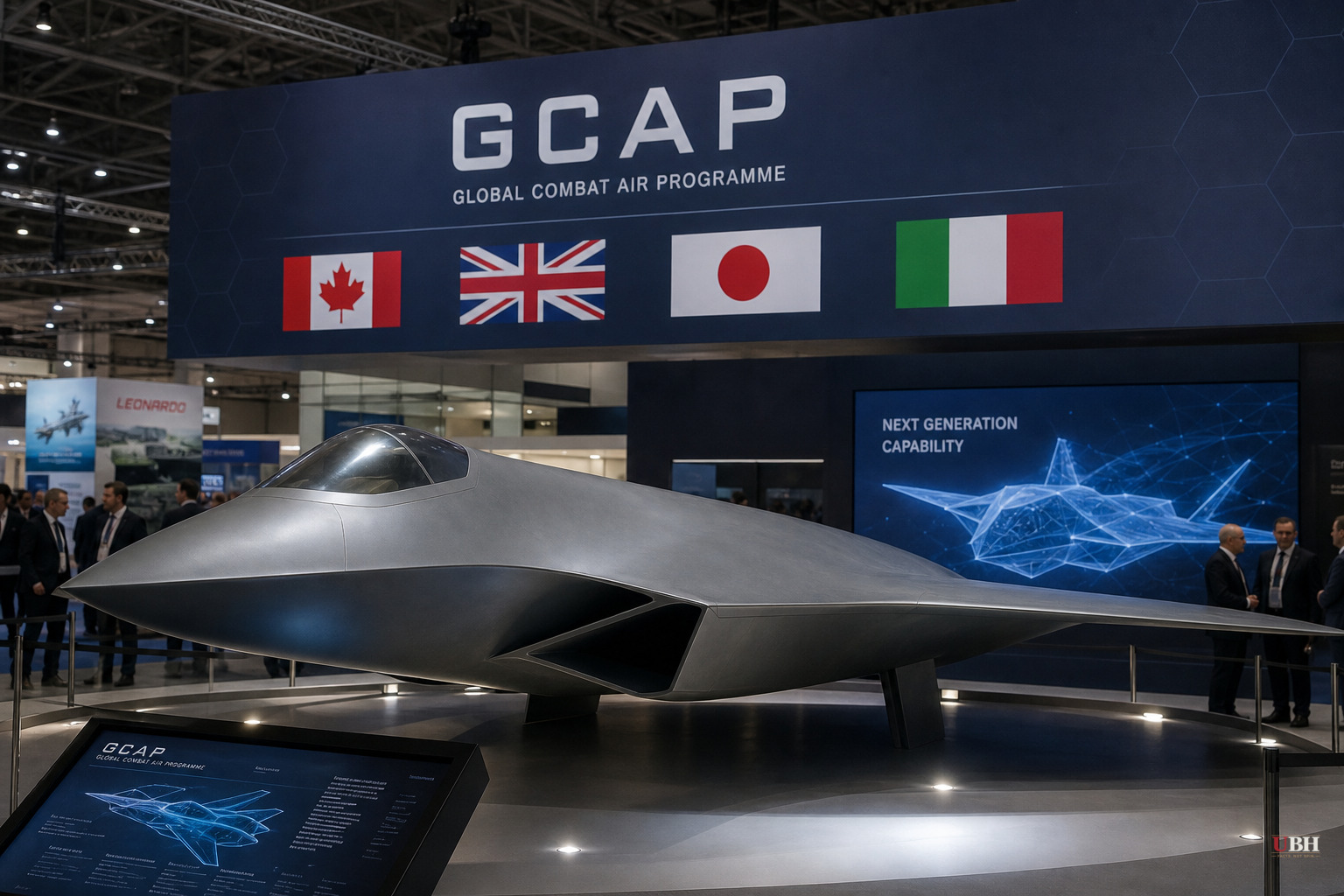
Canada is expected to formally sign on as an observer to the Global Combat Air Programme on Tuesday, July 21, joining a British-Italian-Japanese effort to build a sixth-generation stealth fighter, according to officials cited by Politico and the Nikkei and reported by SOFX. The signing is expected to take place in London, where British Defence Secretary Dan Jarvis is expected to host his Japanese and Italian counterparts, Shinjirō Koizumi and Guido Crosetto, alongside Canadian Defence Minister David McGuinty.
As an observer, Canada won't put money into GCAP contracts and won't get a vote on the program's direction, according to officials cited by Politico. What Ottawa does get is access to classified technical data on operational concepts and design parameters, the kind of access typically reserved for paying partners.
Speaking at the Farnborough International Airshow, McGuinty declined to confirm the deal on the record but made clear the logic behind it. "There are many initiatives in which we are participating in research and development, which is a smart play for our future," he told reporters, according to Breaking Defense. He also confirmed Canada was the only country asked to consider observer status, a detail that separates this from Australia's and Singapore's more informal expressions of interest, per SOFX.
The F-35 Review Grinds On
None of this touches Canada's stalled F-35 decision. Prime Minister Mark Carney's government opened a review of the C$19 billion contract to buy 88 Lockheed Martin F-35As back in March 2025, and more than 16 months later that review is still open, according to SOFX. Canada has locked in an initial batch of 16 jets, but the remaining 72 are in limbo, with officials leaving the door open to a mixed fleet that could include Saab's Gripen, McGuinty told a Senate defence committee in April 2026.
McGuinty was blunt that the two tracks don't overlap. "This is an important moment for Canada as an observer, if and when there is a decision on that front," he said, per Breaking Defense, while stressing GCAP and the fighter review are "separate" decisions. He said the F-35 review will continue "until we take the time to get it right for Canadians."
Why Now
The backdrop here matters. The F-35 review was launched in direct response to President Trump's tariffs and his repeated suggestion that Canada become the 51st state, according to CBC News. That's the stated reason Ottawa gave for opening the review in the first place.
Retired Lt.-Gen. Christopher Coates, a former top NORAD commander, told CBC News that Canada has let its defense industry and strategic planning "atrophy" for too long, calling GCAP entry a way to get ahead of the curve rather than play catch-up like it's doing with the F-35. Coates was clear that GCAP isn't a replacement for the F-35, and argued Canada actually needs more than 88 fighters to cover its defense obligations, not fewer.
McGuinty framed the NORAD relationship as functioning well despite the political noise, saying, "On the security and intelligence front, from our perspective, there is really little daylight between Canada-US relations, we continue working and sharing together, and that will not stop in my view," according to Breaking Defense.
The Skeptical Take
Not everyone thinks bolting a second fighter program onto a fleet already struggling is smart. Mark Cancian, senior adviser at the Center for Strategic and International Studies, warned Breaking Defense that Canada's fleet "is not that large and has sustainment issues in any case," and that running two supply chains for two different aircraft "makes sustainment more difficult." Canada already has years of documented readiness and maintenance problems with its aging CF-18 fleet.
That concern isn't refuted anywhere in the available reporting. Nobody, including McGuinty, has laid out how Canada would actually operate and maintain a GCAP jet alongside F-35s and Gripens if it ever bought in beyond observer status. Observer status doesn't commit Canada to buying anything, so the sustainment problem is currently theoretical. But if this relationship deepens, the question of how to manage multiple platforms will need an answer.
What Canada Actually Gets
One concrete Canadian angle: Montreal-based CAE, the world leader in flight-simulation and training systems, is positioned to potentially contribute simulator and cockpit-replica technology to GCAP, according to Breaking Defense. CAE already supplies training systems to the UK Ministry of Defence and provides simulators used at the International Flight Training School in Sardinia. CAE did not respond to requests for comment on any GCAP role.
The formal signing is expected in London on July 21, timed to the UK's defense diplomacy push around the Farnborough Airshow. GCAP's three founding members, the UK, Italy and Japan, signed a £4.6 billion development contract with industrial lead Edgewing in early July covering work through December 2027, according to SOFX, with the jet targeting service entry by 2035. Whether Canada's observer status ever becomes something more, and whether the F-35 review ends in a full order, a reduced buy, or a mixed fleet, remains unresolved.
Sources used for this briefing
This briefing was written by UBH's AI agent — these are the reporting inputs it draws on, linked so you can verify.


