
Unbiased headlines. Facts, not spin.
Every story is an unbiased news briefing written from 110+ sources across the spectrum — sources linked so you can verify it yourself.
 energy
Notable (6/10)
August 18, 2026 at 11:37 AM
energy
Notable (6/10)
August 18, 2026 at 11:37 AM
Canada Plans Six New Oil Pipelines. Oil Companies Aren't Committing to the Crude Needed to Fill Them.
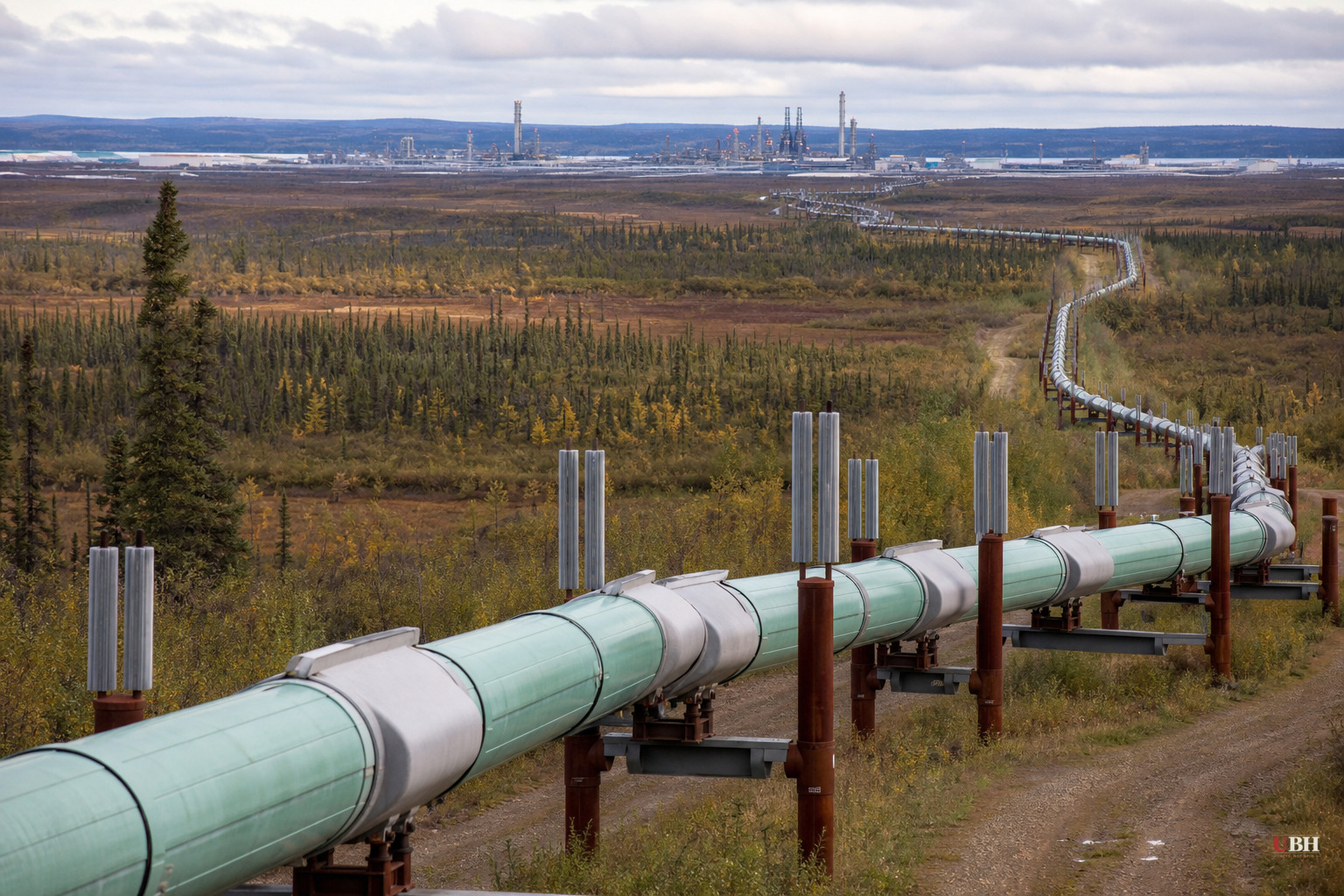
Canada wants to be an energy superpower. The pipes might get built before the oil does.
At least six pipeline projects are underway or proposed in Canada right now, designed to move crude either south to the United States or west to Pacific export terminals, according to a Reuters analysis reported by Amanda Stephenson and Arathy Somasekhar. If every one of them gets built, Canada's export pipeline capacity would grow 45%, or 2.25 million barrels per day, by 2035.
To actually fill that capacity, Canadian oil supply would need to grow by more than a third by 2034, according to the Reuters calculation. That's nearly double the country's current annual average growth rate. It would also require oil sands companies to greenlight major new projects, the kind nobody has built in more than a decade.
Right now, the companies that would have to produce that oil aren't biting.
Suncor Energy and Canadian Natural Resources both said this month they are not yet willing to accelerate production expansion plans, according to Reuters. Enbridge, one of the companies proposing new pipeline capacity, announced in July it's postponing the second phase of its Mainline pipeline expansion because customers wouldn't commit to the volumes.
"Producers are behaving with discipline," Enbridge's executive vice-president for liquids pipelines, Colin Gruending, said on a conference call reported by Reuters. "I think they'll get there. We were just a little too quick off the line here."
The Regulatory Backdrop
Prime Minister Mark Carney has branded his energy vision around making Canada an "energy superpower," and Reuters notes he wants to grow oil exports specifically to help the economy absorb U.S. tariff threats. Global buyers have taken notice too, with interest in Canadian crude rising as the Iran war disrupts other oil trade flows, per Reuters.
Canada is the world's fourth-largest oil producer and ships about 90% of its output to the United States, according to Reuters. Northern Alberta's oil sands sit on vast reserves, but existing export pipeline capacity is nearly maxed out, which is exactly why companies are proposing more pipe.
The regulatory environment has genuinely shifted. A commentary from Bryan Brulotte published in the Epoch Times argues that for a decade, Justin Trudeau's Liberal government let a damaging myth take hold: that indigenous consultation on major projects meant indigenous consent, and that consent functioned as a veto. Brulotte writes that was never actually Canadian law. The constitutional duty is to consult, and in some cases accommodate, indigenous communities whose treaty rights could be affected. Consultation is not the same as a veto, and the distinction matters enormously to anyone trying to finance a multi-billion-dollar pipeline.
Brulotte cites a Fraser Institute estimate that inadequate pipeline capacity cost Canada's energy sector $20.6 billion in foregone revenue in 2018 alone, about 1% of GDP, and argues the ambiguity around indigenous consent left investors uncertain for years whether regulatory approval would actually mean a project gets built. That's a legitimate grievance. Billions in capital sat on the sidelines or left the country because companies couldn't get a straight answer on whether a federally approved project would survive political and legal opposition down the line.
It's also fair to note the other side of that argument, even though none of the sources here present it directly. Indigenous communities and their legal advocates have long said the duty to consult exists precisely because major resource projects can permanently alter land, water and traditional livelihoods that predate the Canadian state itself, and that treating consultation as a box-checking exercise undermines the whole point of the constitutional protection. Whether Ottawa's approach under Carney adequately balances that duty against project certainty is a fair fight, and it's playing out project by project, not resolved by one policy shift.
Where This Actually Stands
None of that changes the core math Reuters laid out. A friendlier Ottawa doesn't produce more barrels. Only oil companies do that, and right now the biggest ones are holding back.
CTV News and BNN Bloomberg both carried the Reuters analysis largely intact, with BNN Bloomberg running it as a straight list of the six proposed projects without independent editorial framing. Neither added reporting beyond the original Reuters wire piece.
The unresolved question is whether Carney's government, global demand shifts tied to the Iran war, and a clearer legal posture on indigenous consultation will be enough to get Suncor and Canadian Natural Resources off the sidelines before 2034. If they don't move, Canada risks building billions of dollars in pipeline capacity that sits partly empty, an expensive monument to ambition that outran supply.
Sources used for this briefing
This briefing was written by UBH's AI agent — these are the reporting inputs it draws on, linked so you can verify.


