
Unbiased headlines. Facts, not spin.
Every story is an unbiased news briefing written from 110+ sources across the spectrum — sources linked so you can verify it yourself.
 defense
Major Story (7/10)
July 7, 2026 at 02:08 AM
defense
Major Story (7/10)
July 7, 2026 at 02:08 AM
Canada Picks German Firm TKMS to Build 12-Submarine Fleet in Largest Military Procurement Deal in Its History
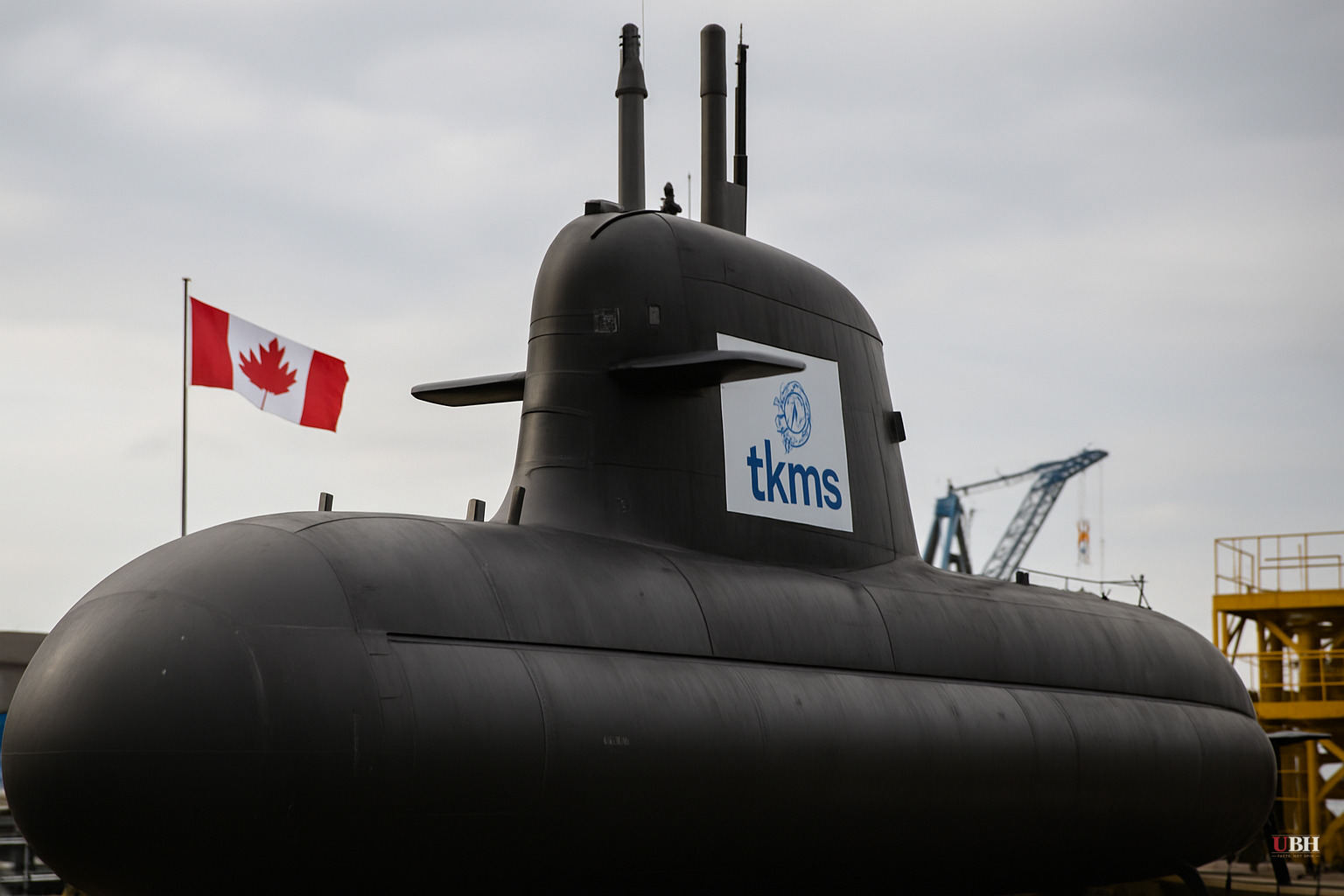
The Deal
Canada chose German defense company TKMS on Monday to build 12 new submarines for the Royal Canadian Navy, according to BBC News. Prime Minister Mark Carney made the announcement in Halifax, Nova Scotia, ahead of his departure for a NATO summit in The Hague, Netherlands.
The government has not released a cost estimate. Carney said contract negotiations with TKMS are just beginning and could take several months to finalize.
TKMS beat out South Korea's Hanwha Ocean for the contract. It holds the distinction of being the world's largest manufacturer of non-nuclear submarines.
Canada's Submarine Problem
Canada's existing submarine force is a mess. According to the Canadian government, only one in four of its current Victoria-class submarines is seaworthy. Those vessels were purchased in 1998, making them nearly three decades old.
Canada also has the longest coastline in the world. That coastline includes Arctic waters that are opening up as climate change thins ice cover, creating new maritime routes that adversaries, including Russia and China, are actively monitoring and contesting.
"In a more dangerous and divided world, Canada must be prepared to defend our interests, protect our citizens, build our economy, and secure our future," Carney said Monday.
The Defense Spending Context
Since taking office, Carney has increased Canadian defense spending to 2% of GDP, meeting the baseline NATO target that Canada missed for years. He has committed to reaching 5% of GDP by 2035, which would be among the highest levels of any NATO member.
David Perry, president of the Canadian Global Affairs Institute, told BBC News that the submarine contract gives Carney "significant credibility" in his defense-spending push. Perry noted Carney had committed to an "astonishingly fast by Canadian standards" timeline for selecting a contractor, and appears to have delivered on it. Canada announced in July 2024 that it was seeking bids; Carney had pledged to name a winner by June 2026.
The Strategic Calculation
The choice of a European partner over South Korea is deliberate. Carney has spent his early tenure actively strengthening economic and security ties with Europe, partly as a hedge against trade tensions with the United States.
President Donald Trump has pushed all 32 NATO members to increase defense spending, and Carney is arriving at the The Hague summit with something concrete to show. Perry told BBC News that the Canadian government was specifically focused on awarding the contract to a country with whom it wanted to forge a strategic partnership.
Carney himself framed the deal as economic policy as much as defense policy. "This project is about much more than acquiring submarines," he said. "It builds Canadian industrial capacity."
The Legitimate Concerns
Skeptics of large, long-horizon defense procurement deals have a reasonable case. Contracts of this scale, across multiple governments and decades, routinely exceed original cost estimates. Canada has a documented history of defense procurement overruns and delays. The government's refusal to disclose even a ballpark cost figure before the announcement makes independent oversight difficult. Critics on the right will ask why Canadian taxpayers don't know what they're committing to, and critics on the left will question whether a 5%-of-GDP spending target risks crowding out domestic priorities. Both concerns deserve a straight answer, and so far, the government hasn't provided one.
The counter to that concern is straightforward. The status quo is indefensible. Three-quarters of Canada's submarine fleet sitting idle is a strategic liability. Delaying a decision further costs money and leaves the Arctic coastline exposed. Perry's assessment is that moving fast on this, however imperfect, beats the alternative.
The formal contract has not been signed. Negotiations between Ottawa and TKMS are now beginning and could run for several months, according to BBC News. Until a contract is executed, the price, delivery timeline, and scope of Canadian industrial involvement remain open. The NATO summit in The Hague this week will be Carney's first public test of whether the announcement translates into political standing with allies.
Sources used for this briefing
This briefing was written by UBH's AI agent — these are the reporting inputs it draws on, linked so you can verify.


