
Unbiased headlines. Facts, not spin.
Every story is an unbiased news briefing written from 110+ sources across the spectrum — sources linked so you can verify it yourself.
 defense
Notable (5/10)
July 25, 2026 at 04:55 AM
defense
Notable (5/10)
July 25, 2026 at 04:55 AM
Canada Joins GCAP Fighter Jet Program as Observer, Not Full Partner
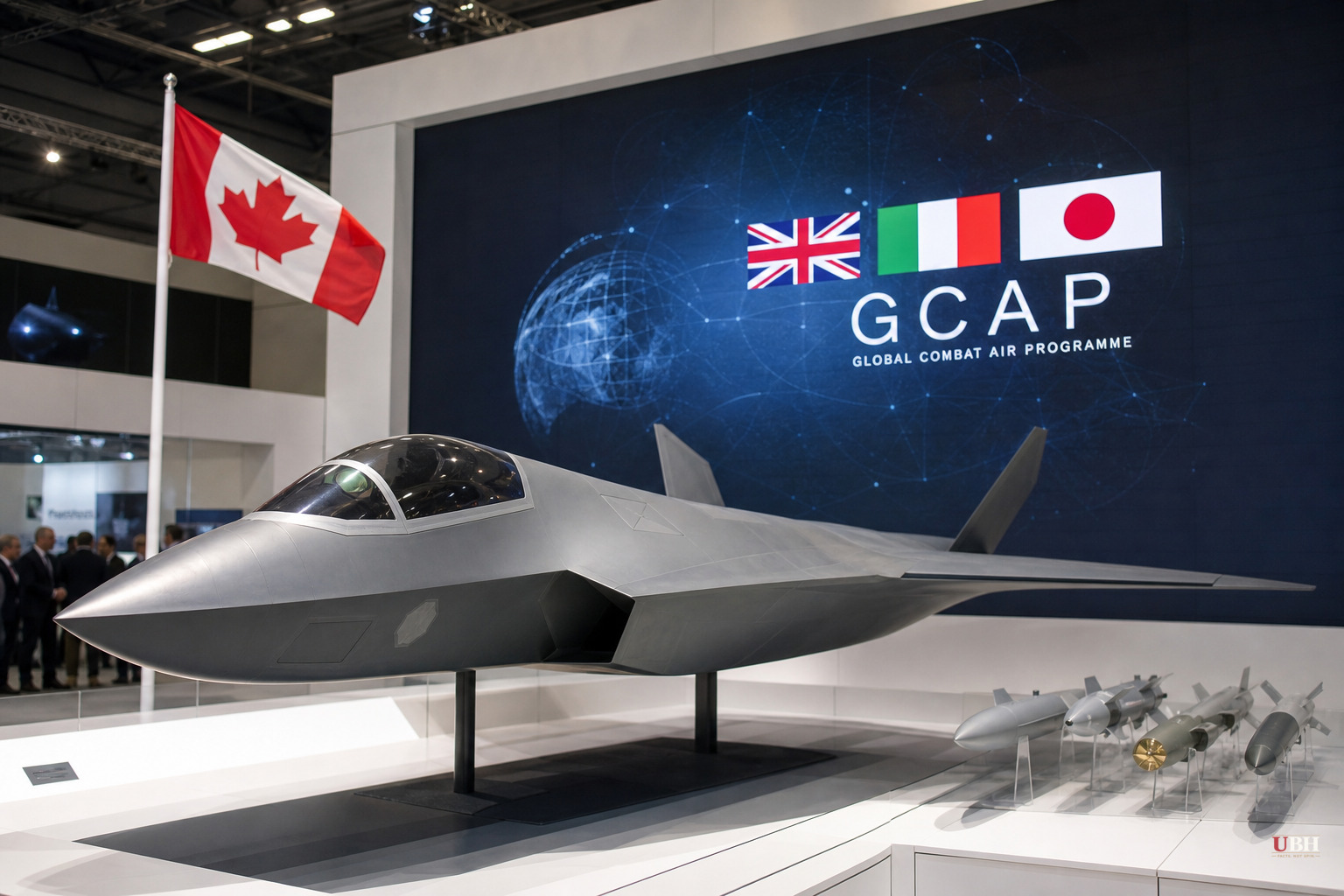
Canada Gets a Seat, Not a Vote
Since the Franco-German-Spanish Future Combat Air System program effectively collapsed last month over irreconcilable disputes between Airbus and Dassault, the Global Combat Air Programme has been the only serious international sixth-generation fighter jet effort still standing, aside from America's go-it-alone F-47. That reality was on full display this week at the Farnborough International Airshow, where GCAP dominated conversation among defense executives and government officials.
The headline news: Canada is joining GCAP. But not as a full partner. Ottawa signed on as an "observer," a status that comes with zero financial obligation and zero industrial commitment, according to Breaking Defense's reporting from the show floor.
What observer status actually gets Canada is a seat at the table to understand how the program works, with the door left open for a future upgrade to full partnership, which would require Ottawa to put money and industrial capacity into the project. The UK, Italy and Japan remain the only three nations with skin in the game.
"From the start of this program, the partner countries have highlighted an openness to that kind of possibility, based on certain considerations, what is best for the program and of mutual benefit," said Masami Oka, chief executive of the GCAP Agency, the body overseeing the program for the three governments, speaking ahead of the Canadian announcement.
Why Everyone's Watching for a Bigger Domino
The timing matters. With FCAS in shambles, there's been open speculation in defense circles that France, Germany, Spain, or their industrial players could look at GCAP as a landing spot. Leonardo executive Lorenzo Mariani, whose company is one of GCAP's three industrial leads alongside BAE Systems and Japan's Mitsubishi Heavy Industries, addressed that speculation directly at Farnborough.
Mariani said he could see the logic of Germany joining GCAP, calling Berlin a potential "strong industrial partner." But he was blunt about the cost. "Another nation joining, another group of industries joining the program would risk producing some delays, while at the moment, on the contrary, we are fully committed to the 2035 service entry date," he said.
On France, Mariani was more skeptical. He said he doesn't expect Paris to join GCAP for the "same reasons" that blew up the FCAS partnership in the first place: fights over intellectual property rights, workshare splits, and design requirements. Those are the exact same fault lines that could trip up any new entrant to GCAP, including Germany.
German officials have said since FCAS fell apart that they're weighing a range of paths forward, including some kind of role in GCAP, though nothing concrete has been announced.
Airbus Weighing Its Own Move
It's not just governments sniffing around GCAP. A senior Airbus official told Breaking Defense the company is evaluating whether it could find a role in the program, though the official suggested the bar for entry is high. The remarks were left unfinished in available reporting, but the signal is clear: one of Europe's largest defense contractors is at least exploring options now that its own FCAS bet has soured.
That's a notable shift. Airbus was a lead contractor on FCAS, and the program's collapse leaves the company without a clear seat in Europe's next-generation fighter conversation unless it finds a way into GCAP or some other arrangement.
What's Actually Locked In vs. What's Still Talk
Canada's observer status is real and confirmed. Germany's interest in GCAP is real but undefined. No formal talks or terms have been announced. France joining GCAP remains, per Mariani's own assessment, unlikely. Airbus's potential role is, at this point, an open question the company itself hasn't resolved.
The three core partners, UK, Italy and Japan, are still targeting 2035 for the fighter's entry into service, according to Mariani, and their public position is that they don't want new entrants slowing that timeline down. That creates real tension: the program needs money and industrial capacity if it wants to grow, but every new partner brought in risks reopening the same IP and workshare fights that just killed FCAS.
The next marker to watch is whether Canada's observer arrangement converts into a formal partnership bid, and whether Berlin makes any concrete move beyond stated openness. Neither the GCAP Agency nor German officials have set a timeline for either decision.
Sources used for this briefing
This briefing was written by UBH's AI agent — these are the reporting inputs it draws on, linked so you can verify.


