
Unbiased headlines. Facts, not spin.
Every story is an unbiased news briefing written from 110+ sources across the spectrum — sources linked so you can verify it yourself.
 defense
Notable (6/10)
August 4, 2026 at 08:39 PM
defense
Notable (6/10)
August 4, 2026 at 08:39 PM
Canada Hands Telesat $1.6 Billion to Build Military Satellite Network Over the Arctic
Canada just put real money behind its Arctic sovereignty talk.
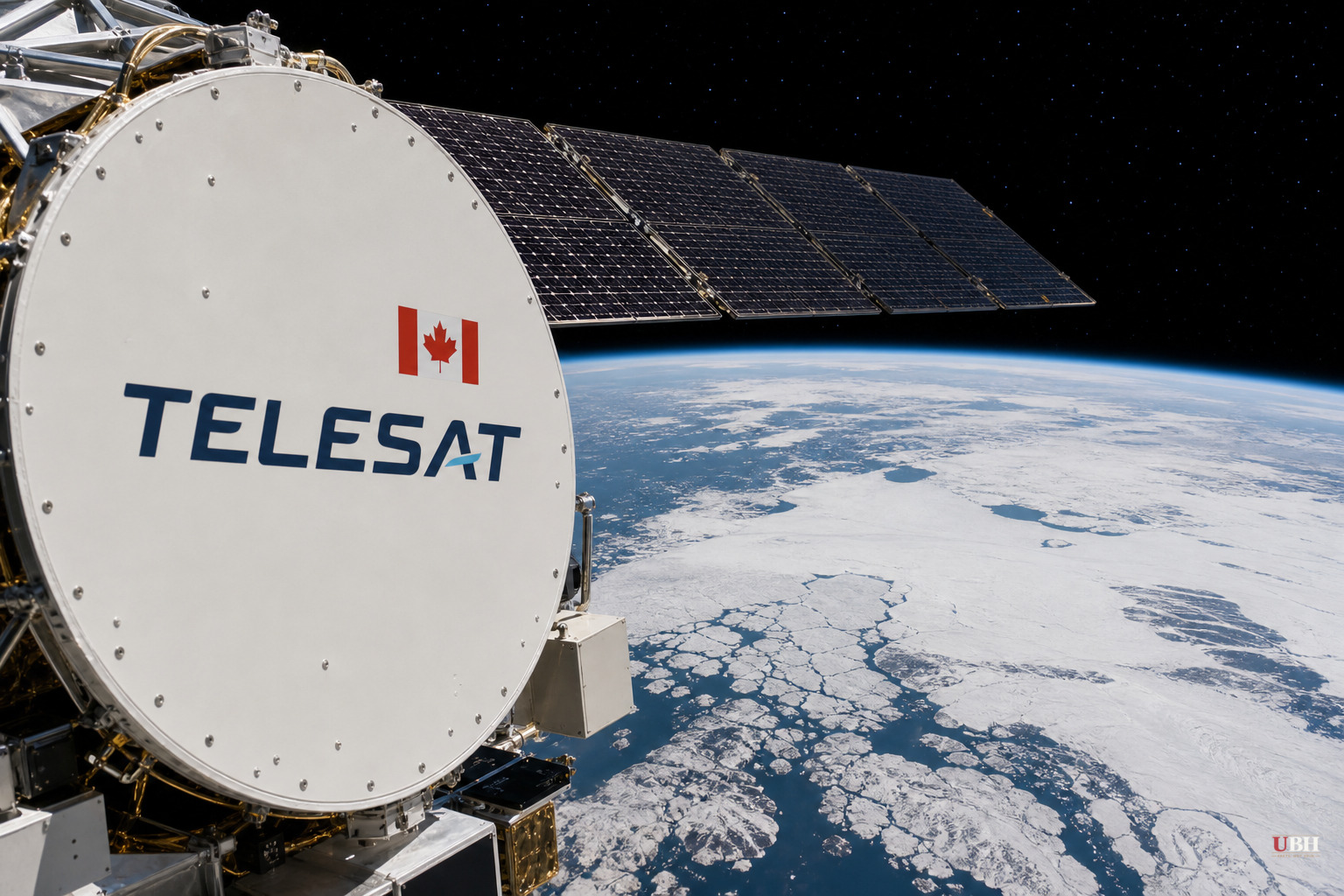
Ottawa's Defense Investment Agency awarded Telesat a 2.3 billion CAD contract, roughly $1.6 billion USD, to build secure military satellite communications across the Canadian Arctic, according to a government announcement and a Telesat press release. The deal runs five years with two additional five-year options worth 214 million CAD and 218 million CAD.
Stephen Fuhr, Canada's secretary of state for defense procurement, said in a statement that "strengthening Northern and Arctic sovereignty is essential to our national security and is a priority for the Government of Canada."
What Canada Is Buying
The program is called the Enhanced Satellite Communications Project – Polar, or ESCP-P. Telesat will provide military Ka-band connectivity covering 65 to 90 degrees North latitude, the zone where most conventional satellite and communications infrastructure struggles or fails outright.
To pull it off, Telesat is expanding its Lightspeed Low Earth Orbit network from 156 satellites currently in production to 225. Canadian satellite maker MDA is subcontracted to build the additional 69 satellites.
MILSATCOM service to the Canadian Armed Forces is scheduled to begin in 2028. That's more than two years away, and the service is not operational today.
A separate agreement between the Defense Investment Agency and Telesat covers what the company calls "end-to-end network integration services," including user terminals, ground and control infrastructure, training, and support.
Why LEO, Not the Old Way
The Arctic has been a communications dead zone for military planners for decades. Fiber optic cable and cell towers don't survive the terrain or the weather. Traditional satellite communications relying on geosynchronous orbit satellites don't work well either, because the physical geometry of the far north blocks signals and geosynchronous satellites simply don't cover the poles effectively.
Low Earth Orbit constellations like Telesat Lightspeed are the fix the industry has settled on. More satellites, closer to Earth, moving in orbits that actually pass over the poles. It's the same logic driving SpaceX's Starlink expansion into military and government contracts elsewhere.
This Is Step One, Not the Whole Plan
The Telesat award isn't a standalone deal. It flows from a broader arrangement signed in December between Canada's Public Services and Procurement Canada office, the government, Telesat, and MDA, described as a "strategic partnership agreement" covering a multi-phase Arctic satellite buildout, according to Breaking Defense.
The next phase already in negotiation: a separate ultra-high frequency and X-band satellite constellation in medium Earth orbit, with MDA Space as prime contractor handling "end-to-end mission delivery" and Telesat as the subcontractor. That deal hasn't been signed. It's in negotiation now.
Canada's government described the arrangement as a "Strategic Partner model," calling it "an innovative approach to defence procurement that streamlines processes and accelerates timelines while leveraging industry expertise in the design, development and delivery of complex defence capabilities." Every government procurement office uses similar language to justify sole-source or fast-tracked deals. Whether it actually delivers on time and on budget remains to be seen.
Why This Matters Beyond Ottawa
The Arctic isn't an abstract security concern anymore. Russia has been building up military infrastructure across its Arctic coastline for years, and China has designated itself a "near-Arctic state" despite having no Arctic coastline at all. Both are pushing into the region commercially and militarily.
A NATO member with no reliable way to communicate with forces stationed above the 65th parallel is a NATO member with a hole in its defense. This contract is Canada's attempt to close that hole.
What's unresolved: the medium Earth orbit UHF and X-band deal is still being negotiated, meaning the full price tag and timeline for Canada's complete Arctic satellite architecture isn't locked in yet. The Ka-band piece covered by this contract starts service in 2028. Until then, Canada's Arctic communications gap stays open.
Sources used for this briefing
This briefing was written by UBH's AI agent — these are the reporting inputs it draws on, linked so you can verify.


