
Unbiased headlines. Facts, not spin.
Every story is an unbiased news briefing written from 110+ sources across the spectrum — sources linked so you can verify it yourself.
 energy
Low Interest (4/10)
July 21, 2026 at 02:28 AM
energy
Low Interest (4/10)
July 21, 2026 at 02:28 AM
Cambridge Study: Fan Travel Drove 82 Percent of World Cup Emissions, Total Hit 4.23 Million Tons
Spain beat Argentina 1-0 in extra time Sunday to close out the 2026 World Cup. Now comes the accounting for what it cost, not in dollars, but in carbon.
A University of Cambridge research team published a new framework in the journal Communications Sustainability last week measuring what they call the "climate viability" of mega-events. They ran the numbers on this year's expanded 48-team World Cup and, separately, on Coldplay's 2024 European tour. The comparison is not between soccer and a rock band. It is about who actually drives emissions at events like these, and the answer is straightforward: the fans.
The Numbers
Cambridge professor Shaun Larcom's team estimates the 2026 tournament generated roughly 4.23 million metric tons of carbon dioxide equivalent. That is about 590,000 metric tons more than the old 32-team format would have produced, according to the study. For context, the researchers say that total is roughly on par with Iceland's entire annual emissions output.
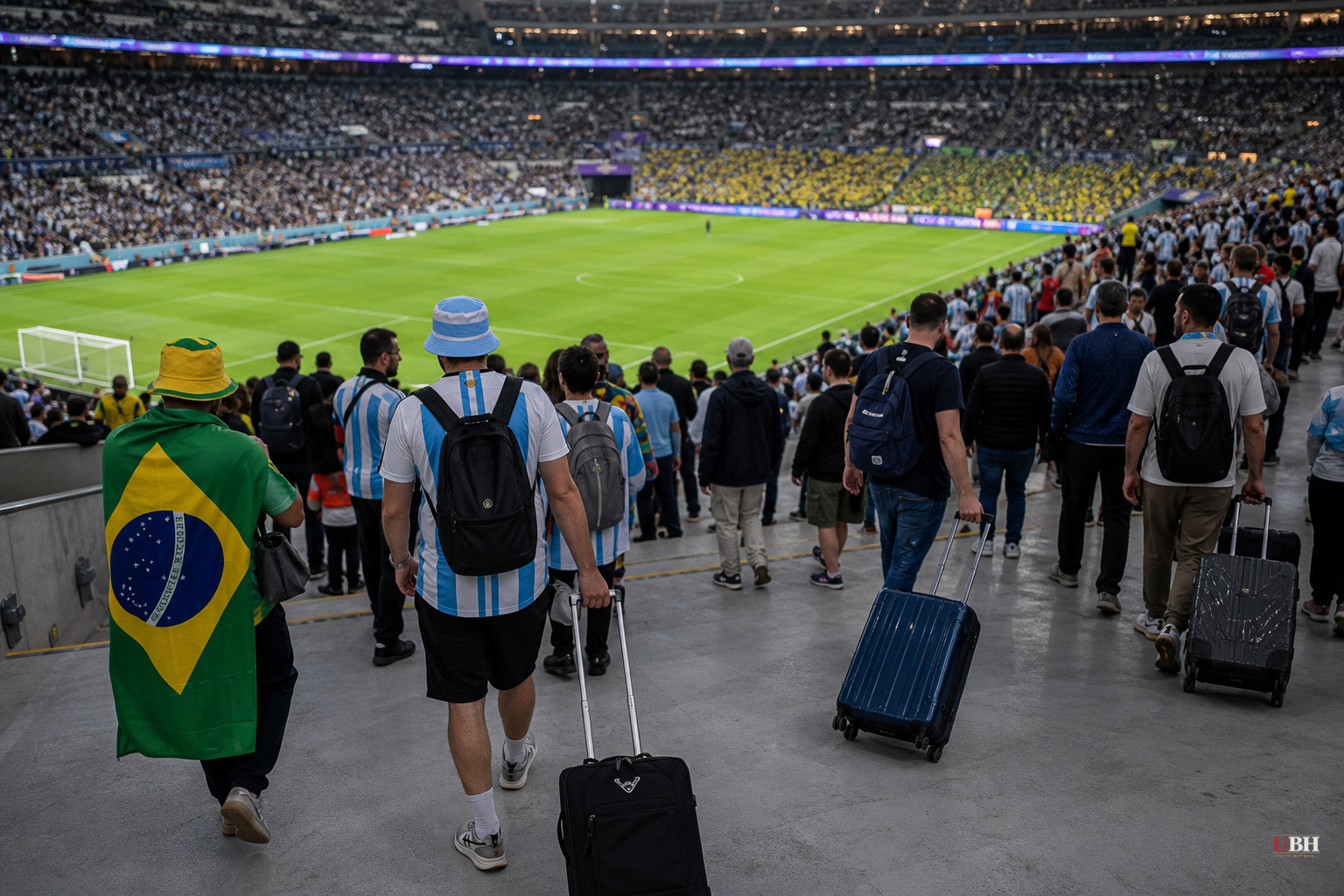
Here is the part that should reframe how FIFA and host cities talk about "green" World Cups going forward: 82 percent of that footprint came from fan travel, and international travel alone accounted for about 3.07 million metric tons, according to the Cambridge estimates. Stadium construction, venue operations, and the logistics FIFA typically highlights in its sustainability materials are a rounding error by comparison.
"Effective climate strategies for mega-events like the World Cup go well beyond reducing operational emissions at venues, as this is only a fraction of the overall footprint," Larcom said in a statement announcing the findings.
The researchers also ran a thought experiment: what if the climate cost were simply passed on to ticket buyers? Their model puts that number at an additional $114 per match ticket, on average, if organizers tried to offset the full footprint rather than absorb or ignore it.
The Coldplay Comparison
The Cambridge team also applied their framework to Coldplay's 2024 European tour, 10 cities, 32 shows, 1.9 million tickets sold. The equivalent climate cost there came out to just $11 per ticket, a fraction of the World Cup figure. The researchers are careful to note they weren't trying to directly compare a global sporting tournament to a concert tour, since the scale and travel distances are wildly different.
But the tour offers a data point on what actually moves the needle. Coldplay used mobile battery systems, solar power, and a kinetic dance floor to cut operational emissions. Useful, but small. The study found that roughly 98 percent of the tour's emissions reductions came from fans voluntarily choosing lower-carbon travel, not from anything the band did on stage.
Coldplay pushed that shift with a dedicated app letting fans compare low-carbon transportation options and offering merchandise discounts to those who traveled greener. The result: a 48 percent cut in fan-travel emissions for the tour, according to the study.
What This Means for FIFA
The World Cup has no equivalent system. FIFA has faced criticism this year over the tournament's expanded format and its handling of climate conditions, including scorching heat and humidity at several venues, plus concerns raised separately about wildfire smoke risk at some sites. None of FIFA's public materials have offered fans a Coldplay-style tool to shrink their individual travel footprint.
A 48-team format spread fans across more cities, more countries, and more flights than the 32-team version ever did. FIFA chose to expand the tournament for competitive and commercial reasons. Nobody in the federation has publicly disputed the emissions tradeoff that comes with that choice, because so far nobody has had to.
The study does not call for canceling mega-events or shaming fans for flying to see a final. It makes a narrower point: if organizations want to claim climate credibility, they have to target the travel decisions of the people who actually generate the emissions, not just the concrete and floodlights at the venue.
Whether FIFA, or any future host committee for a men's or women's World Cup, adopts anything resembling Coldplay's opt-in travel-incentive model remains an open question. No such program has been announced for future tournaments. The 2026 edition is done. The bill, measured in metric tons rather than dollars, has just been tallied.
Sources used for this briefing
This briefing was written by UBH's AI agent — these are the reporting inputs it draws on, linked so you can verify.


