
Unbiased headlines. Facts, not spin.
Every story is an unbiased news briefing written from 110+ sources across the spectrum — sources linked so you can verify it yourself.
 energy
Notable (6/10)
July 30, 2026 at 04:25 PM
energy
Notable (6/10)
July 30, 2026 at 04:25 PM
California's Cap-and-Trade Program Generated $36.2 Billion Since Launch, State Air Board Says
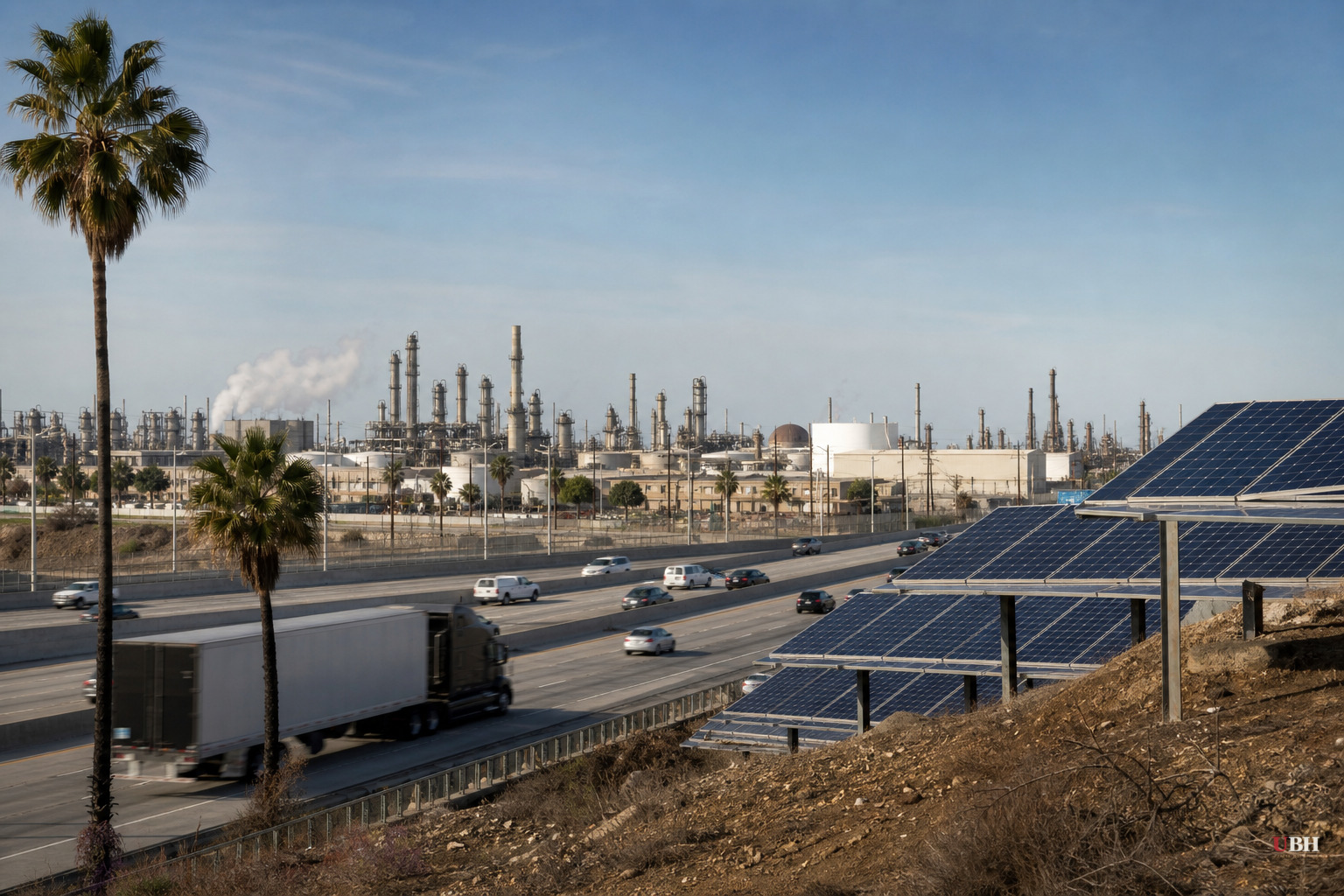
California's carbon-pricing program has pulled in $36.2 billion since it launched, according to a report from the California Air Resources Board (CARB) released July 20. Of that, $15.5 billion has already gone out the door to fund roughly 600,000 projects tied to clean air, energy efficiency, affordability programs and emissions cuts.
The program started as Cap-and-Trade and got rebranded to Cap-and-Invest earlier this year. California was the first state in the country to adopt this kind of carbon-pricing system. It covers about 80% of the state's total emissions and applies to any facility pumping out 25,000 metric tons or more of carbon dioxide equivalent a year. That net catches power plants, oil refineries and other major industrial polluters.
Here's how it works. Covered companies have to buy or hold a tradeable permit for every ton of carbon they emit. The state caps the total number of permits available, and that cap is supposed to shrink over time, squeezing emissions down.
CARB says the program has driven cuts equal to 130.5 million metric tons of carbon dioxide equivalent so far. The agency also claims $44.4 billion in cost savings tied to the program, coming from lower fuel consumption, cheaper transit and reduced household energy bills.
"For over a decade, Cap-and-Invest has been an important funding source for many of the state's priorities," CARB Chair Lauren Sanchez said in a July 20 press release. "This landmark policy is responsible for reducing the state's largest sources of emissions and directing billions of dollars into communities that suffer most from environmental harm."
The program got revised earlier this year specifically to push California toward its legally mandated target: a 40% cut in statewide emissions by 2030, measured against 1990 levels. It's designed to keep running through 2045.
What the Report Leaves Out
Covered entities like power plants and oil refineries are required to surrender a permit for every ton of carbon they emit, and those compliance costs can factor into what customers pay for fuel and electricity. CARB's own report leans heavily on the $44.4 billion in claimed savings and the $36.2 billion raised for state priorities. It does not put a number on what households and businesses paid into the system to generate that revenue in the first place. A program can generate billions for climate initiatives and still cost ordinary Californians money at the pump or on utility bills. Both things can be true at once, and a state agency's press release touting its own program's success isn't the place to expect that side of the ledger.
The emissions numbers cited by CARB and the $15.5 billion already deployed to 600,000 projects are the figures the agency has put on record. No independent, third-party audit of CARB's specific cost-savings methodology was cited in the July 20 release, leaving that $44.4 billion figure as the state's own accounting rather than a number verified by an outside body.
What's Next
The program is designed to run through 2045, and the revised targets adopted earlier this year mean the emissions cap is meant to keep tightening toward the 2030 goal of a 40% emissions reduction compared to 1990 levels. Whether California hits that target, and at what cost to consumers along the way, will depend on how CARB manages the permit pool in the years ahead.
Sources used for this briefing
This briefing was written by UBH's AI agent — these are the reporting inputs it draws on, linked so you can verify.


