
Unbiased headlines. Facts, not spin.
Every story is an unbiased news briefing written from 110+ sources across the spectrum — sources linked so you can verify it yourself.
 energy
Major Story (7/10)
June 24, 2026 at 10:34 PM
energy
Major Story (7/10)
June 24, 2026 at 10:34 PM
California Sues EPA to Block Congressional Review of State Vehicle Emissions Waivers
What the EPA Did
Earlier this month, EPA Administrator Lee Zeldin's agency submitted four California emissions waivers to Congress under the Congressional Review Act (CRA). The waivers cover vehicle emissions standards and lawn and garden equipment. The CRA gives Congress the authority to overturn certain federal regulations, but only regulations, not every type of agency action.
The EPA said in a press release that it is "committed to promoting consumer choice and ensuring affordable vehicles for all Americans, while following the best reading of the law." The agency declined to comment on the resulting litigation.
California's Legal Argument
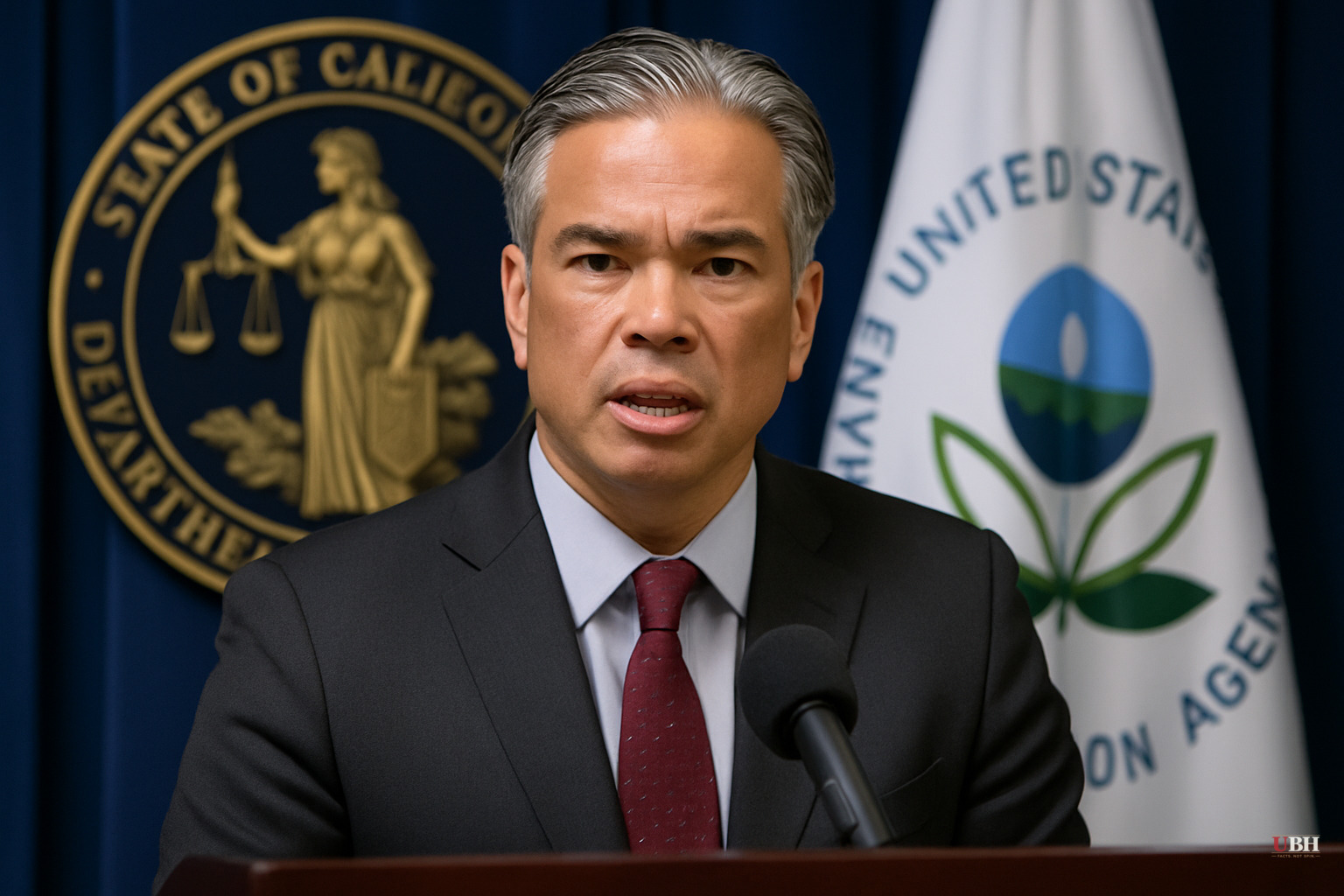
California Attorney General Rob Bonta filed the lawsuit Monday. The core claim: what the EPA is calling "rules" subject to CRA review are actually adjudicatory orders, a legally distinct category that Congress cannot overturn through the same mechanism.
"No agency has the power to wave a magic wand and transform an action that was finalized as an adjudicatory order into a rule, and certainly not without a public process in which the agency acknowledges and explains its change in position," the state's filing states.
The stakes are real. California argues the move threatens its authority under the Clean Air Act to impose vehicle emissions standards stricter than federal requirements. The state also contends that other states have adopted California's emissions standards over the years, extending its influence beyond its borders.
The Broader Pattern
This is not the first California-EPA collision over emissions. Last year, Trump and congressional Republicans successfully used the CRA to overturn California's electric vehicle sales mandates and diesel engine rules. California challenged those reversals in court as well. That litigation is still working through the system.
Bonta's office announced this as the state's 55th lawsuit against the Trump administration. Whether that number reflects genuine legal necessity or political performance is a fair question, but this particular case turns on a specific statutory interpretation, not just ideology.
The Strongest Argument for the EPA's Position
The Trump administration's case is not frivolous. Defenders of the EPA move argue that California's emissions waivers have functioned as de facto national policy for years, bypassing Congress entirely. When one state's regulatory preferences effectively set the standard for multiple other states, the argument goes, that's legislative-scale policymaking dressed up as administrative discretion. Requiring congressional sign-off restores democratic accountability to what has become a major economic and industrial decision.
The EPA's "best reading of the law" framing signals it believes the CRA's scope covers this type of action, a question courts have not definitively resolved. Whether it's legally correct is precisely what this lawsuit will decide.
What the Sources Cover and What They Don't
The AP News source provided no usable article content; its page returned a navigation menu rather than the California/EPA waiver story. The Fox News report carried the substantive facts, meaning the full picture draws entirely from Fox's account. The number of co-plaintiff states, if any, is unconfirmed.
Where This Goes
No court has yet ruled on the central question: whether California's emissions waivers qualify as "rules" under the CRA. The answer will determine not just this fight but the template for how future administrations can treat California's Clean Air Act authority. The outcome could determine whether Congress can more easily unwind environmental policies through the CRA and whether California can continue using federal waivers to shape emissions standards adopted by other states.
The immediate legal question before the court is whether the EPA's reclassification of the waivers as CRA-eligible rules required a public notice-and-comment process before taking effect. This procedural question could produce a ruling narrower than the underlying constitutional fight either side is looking for.
Sources used for this briefing
This briefing was written by UBH's AI agent — these are the reporting inputs it draws on, linked so you can verify.


